
According to Rainier Kriek, Managing Director of Sentinel Homes, the Constitutional Court's recent Tafelberg decision, while advancing constitutional principles of spatial justice, may inadvertently reduce access to affordable housing.
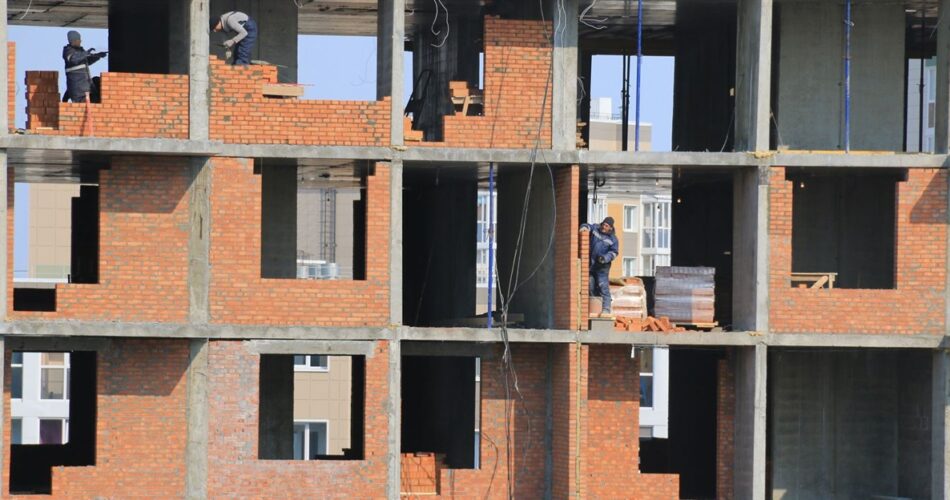
Source: Pexels.
They argue that prioritizing housing space over speed and scale of delivery risks increasing planning delays, hindering private investment and increasing costs. Kriek argues that South Africa's biggest housing challenge is not just where homes are built, but also how quickly affordable homes can be provided to meet growing demand.
“The Court recognized that space is essential to adequate housing,” he says. “But how much should space matter when public money, public land, planning capacity and housing supply are all severely constrained?”
Cases like Tafelberg's become troubling when they prioritize symbolic spatial integration in affluent areas rather than maximizing housing access for the largest number of South Africans.
Access and location
Crick says that the Constitutional Court is absolutely right to say that location is important.
Section 26 of the Constitution gives everyone the right to access to adequate housing. A house is not enough just because it has walls, a roof and a toilet. Where it is located affects how easily people can access work, schools, clinics, transportation, and opportunities.
“So, yes, location matters because it is integral to housing adequacy, which is part of the constitutional right, but when location for some is elevated above access for all, it defeats the goal of section 26,” Crick says.
The Tafelberg decision introduces the idea of endemic apartheid into our law as a central villain, and Cape Town's geography of exclusion is certainly very real.
However, the decision does not grapple with the real mechanics of the housing market, and completely fails to diagnose the real causes of the housing shortage.
speed over distance
South Africa's housing problem is not just that poor people live away from wealthier suburbs. This is because we build very slowly.
Our metros produced about 265,000 residential units in a decade, while the backlog stands at about three million houses.
The development timeline is ridiculous. Approval of the plan may take years. In some cases the necessary consent for agricultural land from the Minister of Agriculture may take a decade or more. Brownfield housing developments can take from seven to 18 years to progress from concept to business.

Housing activists win historic battle over disputed Sea Point site
Crick says, “South Africa doesn't need more constitutional poetry about housing. It needs more housing. And this decision will make it harder.”
Those who must now implement policies accommodating the Tafelberg judgment do not have a Constitutional Court judge on a shelf. Therefore, to avoid adverse judicial scrutiny, any new process would be over-engineered, cumbersome and time-consuming.
In plain English: More meetings, more memos, more checklists, and more lawyers, but less house.
Results and costs
It will not stop in C point. Local and provincial governments across the country will need to re-think policies, land-release processes, participation processes, settlement rules and housing plans.
Many programs already in planning will be pushed further down the pipeline to be reevaluated in the new paradigm. Officials will not respond with elegant constitutional minimalism. They will respond with risk management.
“The court has made a decision about access, but the bureaucracy will make a decision about the process,” Kriek says.
This matters because each additional layer of compliance and administrative uncertainty is a tax. A tax that is not paid by housing suppliers but by consumers through higher prices, higher rents, higher deposits, tighter credit, slower projects and fewer opportunities for housing access.
A deterrent to investment
Private capital is not an alternative in solving South Africa's housing crisis. The fiscus cannot fund, build, finance and manage the millions of homes required without external help.
Private capital will not hold seminars about constitutional theory if the rules make participation slow, risky, or less predictable. It will simply go elsewhere – not because investors hate poor people, but because capital has alternatives. For example, investing in listed shares rather than housing does not raise the specter of a decade-long legal struggle over endemic apartheid concerns.
the people who will suffer
Ubuntu is often remembered as compassion for the person before the court. Properly understood, it also requires concern for the broader community. The case of the household is in the court, but there are also many invisible houses which never get approval, never get rent, never enter the formal market and never appear on paper.
“Just because they are invisible does not make them any less deserving of human dignity,” says Crick.
The mistake is to treat symbolic spatial improvement as if it automatically advances housing access. Sometimes this may happen, often it will not.
A constitutional housing policy must ask: how many houses, how quickly, at what price, with what transportation, with what infrastructure, and with how much private capital?
“If these questions aren't asked, housing rights becomes moral theater,” says Crick.

Macpherson orders investigation of 6,238 government-owned houses
a choice of location
The focus on location suggests that travel is a concern. The Concordat relied heavily on this concern in its decision. The need for change is relevant, but not automatically evidence of constitutional failure.
“Access can be created through location, but also through connectivity,” says Crick.
The Western Cape has reduced its reliance on the Passenger Rail Agency of South Africa (Prasa), and is on track to achieve devolution, meaning it will operate the commuter rail service itself. Because of its efforts, subsidized commuter rail is again becoming a meaningful part of its accessibility story.
Similarly, the Cape Town Integrated Rapid Transport System (MyCiTi) is leading the country in public-transport construction.
“If public transit works, housing rights considerations can't be limited to whether a family lives in Sea Point or not,” says Crick.
Nevertheless, the decision gives insufficient importance to this distinction. It prioritizes the symbolism of visible inclusion in high-cost neighborhoods rather than the hard empirical question: how many households get access, at what price, and how quickly?
If limited public funds produce a small number of subsidized units in one of the country's most expensive neighborhoods, fewer households elsewhere will be supported. This is simple arithmetic, not a political slogan.
“Sea Point symbolism is expensive,” says Kriek.
Fast access, big wins
The Court is right that location matters. However, South Africa's deeper crisis is that it cannot provide affordable housing fast enough, and the debate over location risk is overshadowing practical solutions to the housing shortage.
Now, the Tafelberg decision threatens to cause additional delays to the plan, putting the greater community at risk of continued and unending homelessness.
Kriek says, “The Tafelberg decision may add to the vibrancy and energy of a suburb like Sea Point, but unless we as a country build faster, release land faster and rationalize capital participation, it will not solve and may make the housing crisis worse.”
Section 26 promises access to adequate housing. The scale and speed with which access is achieved should be the ultimate test.