
Audio by Vocalize
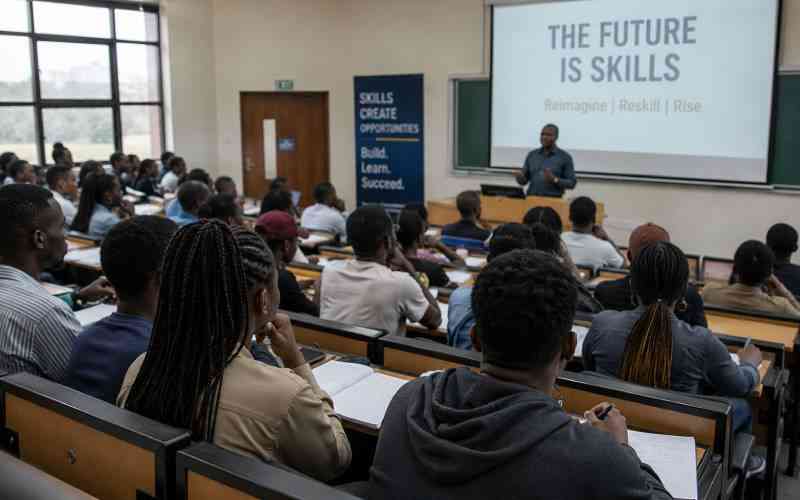
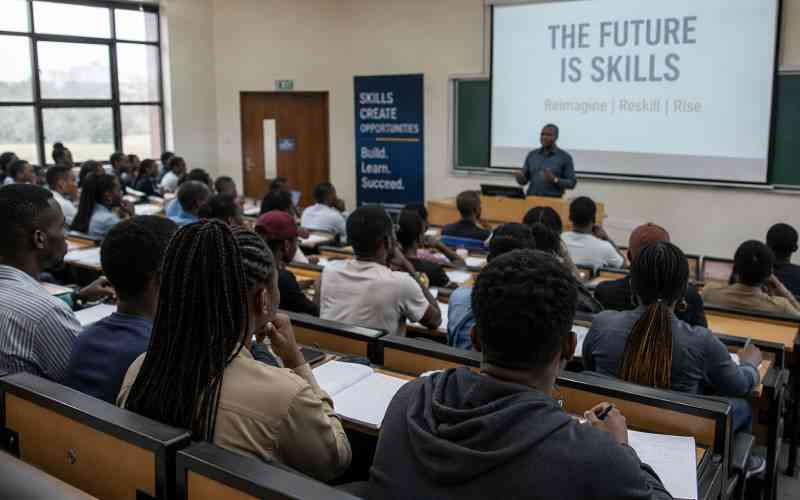
Experts have warned that Africa's higher education systems cannot absorb the growing number of youth.
Experts have warned that African universities cannot absorb the continent's young population, forcing governments to consider technical training and professional certifications as equivalent pathways to jobs.
George Azanami, Managing Director for Sub-Saharan Africa at the Project Management Institute, and Dr. Gavin Nkabinde, Senior Lecturer in Project Management at the University of South Africa, say Africa faces the dual challenge of limited university capacity and rising expectations among youth.
The authors say Africa has more than 460 million people aged 15 to 51 and is expected to have the world's largest workforce by 2040. Tertiary enrollment is about 9 percent, compared to the global average of 38 percent.
“Degrees have long been associated with life-changing opportunities and pathways to better job prospects, higher incomes and social mobility,” Azanami said.
He warns that when university becomes the only perceived route to success, exclusion from entry can cause long-term occupational and personal damage to young Africans.
“When university becomes the only gateway to success, young people who don't get in don't just lose a place – they feel as if they've lost their future,” Nkabinde said.
Experts argue that African governments must confront the gap between demand and capacity, noting that education systems are not expanding fast enough to match demographic pressure.
In South Africa, public universities offered approximately 215,000 first-year places for the 2025 academic year, while more than 265,000 candidates passed the 2023 National Senior Certificate examinations at the graduate level.
“This gap is a door to the future for at least 10,000 young people,” the pair explained.
Private universities face similar pressure, with more than 160,000 applicants competing for fewer than 10,000 places.
Experts say global labor markets are shifting toward skill-based work due to artificial intelligence, technological change and economic uncertainty.
Nkabinde stressed, “The goal cannot simply be to get into university. The goal must be to build employability, to enable youth to earn income, grow and adapt to changing circumstances.”
They call for expanded technical and vocational education and training, apprenticeships, work-integrated learning and globally recognized certifications to open more pipelines into employment.
The article cites project management certifications such as the Certified Associate in Project Management and Project Management Professional as examples of pathways that can begin immediately after high school.
Stay informed. Subscribe to our newsletter
Whitney Johnson, Azanami concludes, “Africa's future will be built not by any single educational pathway, but by an ecosystem of pathways that recognize skills, competencies, and character.”
Experts say universities are essential for economic growth, but warn that relying on a single education route risks locking millions of young Africans out of meaningful participation in the economy.