
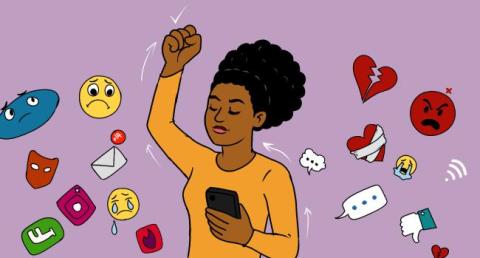
This report presents research conducted at four South African universities: the Independent Institute of Education (IIEMSA campus); University of the Witwatersrand Main Campus; the Mahikeng and Vanderbijlpark campuses of North-West University; Westville and Howard campuses of the University of KwaZulu Natal. The research combined both qualitative and quantitative methods to provide a holistic understanding of South African university students' understanding of technology-facilitated gender-based violence (TFGBV), their experiences of TFGBV on social media as well as online dating apps, types of TFGBV as well as the emotional impacts of TFGBV incidents. Based on survey responses and focus group discussions, the study provides valuable insights into how South African students navigate digital relationships and the vulnerabilities that emerge in online environments.
Key quantitative and qualitative findings revealed widespread unfamiliarity with the term TFGBV among participants, despite many students having directly experienced or witnessed technology-based abuse. It has also been noted that there is general ignorance about the harm caused by TFGBV, resulting in under-reporting. Additionally, the study highlights the intersectional vulnerabilities of groups such as LGBTQI+, racial prejudice and single mothers.
This work is part of the third edition of the Feminist Internet Research Network (FIRN) project supported by the APC Women's Rights Program and the International Development Research Center (IDRC).