
Africa's energy future will depend on whether the continent can raise capital, integrate regional markets, build technical skills and avoid reproducing old patterns of dependency in digital and clean-energy economies.
Africa's energy challenge This is often presented as a question of resource availability. However, finance, institutional capacity, technology, skills and regional integration are becoming more decisive issues.
The continent has abundant energy resources, but many projects remain undeveloped because they cannot secure affordable long-term capital, reliable revenue structures or stable regulatory conditions. At the same time, emerging sectors such as artificial intelligence, data centers, renewable energy and critical minerals are creating new forms of demand and new risks of economic dependence.
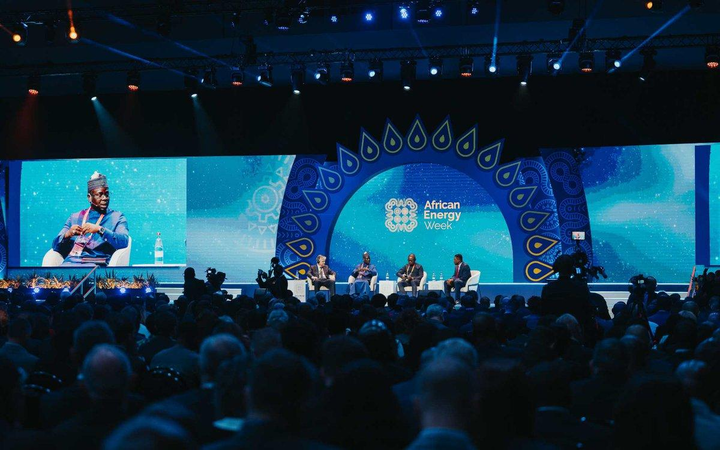
These questions will form an important part of the broader policy environment surrounding African Energy Week 2026Scheduled for 12–16 October in Cape Town.
The conference will come as African governments attempt to reconcile multiple competing priorities: expanding electricity access, supporting industrial development, attracting investment, strengthening household ownership and responding to international pressure for a clean energy system.
The real issue is whether these priorities can be brought together under a coherent African development strategy.
Lack of bankable projects
Large energy and infrastructure projects require long-term capital, stable regulation, reliable contracts and predictable revenues.
These conditions remain weak in many African markets.
Currency instability increases the cost of imported equipment and foreign-denominated debt. State-owned utilities often struggle to collect sufficient revenues. Governments sometimes change fiscal or regulatory conditions after an investment has been made. Political instability and institutional uncertainty increase the returns sought by financiers.
As a result, commercially attractive resources may remain undeveloped because the broader financial and regulatory framework is considered too fragile.
african bankPension funds, insurance companies, sovereign wealth funds and development-finance institutions hold significant pools of capital. Yet relatively little of this money is directed toward long-term energy infrastructure.
Part of the problem is regulatory. Pension and insurance funds often need to prioritize liquid and low-risk assets, while energy projects can involve long construction periods, uncertain demand, and considerable political risk.
There is also a lack of adequately prepared projects.
Many proposals are announced before technical studies, environmental approvals, purchase agreements, tariff structures and risk-allocation mechanisms are completed. What governments publicly present as investment-ready opportunities may still be years away from financial feasibility.
This contributes to a familiar pattern in which refineries, pipelines, power plants and industrial corridors are repeatedly announced but never built.
So the continent's financing problem is not simply a lack of funds. It is also the lack of ready-made projects of the standard required for serious long-term investors.
Regional integration and refinement
Africa's dependence on imported refined petroleum products remains one of the clearest examples of lost economic value.
Many oil producing countries export crude oil and then import petrol, diesel, aviation fuel and other petroleum products. This leaves them exposed to international price fluctuations, shipping costs and pressure on foreign exchange reserves.
Expanding refining capacity could reduce these vulnerabilities, but the economics are more complex than national political debates often acknowledge.
Refineries require large and reliable markets, continuous crude oil supplies, competent management, and extensive storage and transportation infrastructure. Smaller national refineries may struggle to compete unless they cater to regional markets or specialized demand.
This makes regional integration necessary.
The African Petroleum Producers Organization's National Oil Companies Forum, expected to be held alongside AEW, will examine refining, cross-border trade, gas markets and African energy financing.
The discussion reflects a growing recognition that energy security cannot always be achieved within national boundaries.
Regional pipelines, shared storage facilities, interconnected power systems and coordinated refining capacity can reduce costs and improve supply. But African energy markets are divided by differing regulations, tariffs, currencies and political priorities.
National oil companies could help overcome this fragmentation, but many are constrained by weak balance sheets, political interference, and conflicting commercial and social mandates.
Their ability to support regional integration will depend on whether they can operate as commercially disciplined enterprises rather than extensions of short-term government policy.
Artificial intelligence becomes an energy issue
The expansion of data centers and artificial intelligence is adding a new dimension to Africa's energy debate.
Nigeria, South Africa, Kenya, Ghana and Egypt are attracting increasing interest from telecommunications companies, data-center operators and global cloud-service providers.
These investments are usually discussed as part of the digital economy, but are also major energy projects.
Data centers require constant power, cooling systems, fiber connectivity, and backup power. artificial intelligence The workload is particularly energy-intensive. In countries with unstable power grids, operators may rely on gas-fired generation, diesel backup systems, renewable installations, or a combination of multiple energy sources. This creates a direct link between digital development and national energy policy. Nigeria's expanding data-center market reflects the emerging relationship between gas supply, power generation, telecommunications infrastructure and cloud computing.
It also raises a deeper question about ownership and value.
African countries can provide the land, electricity, labor and consumers while foreign companies control the software platforms, data, cloud services and the most profitable commercial applications.
This would reproduce the same pattern in the digital economy that characterizes many of Africa's extractive industries: local resources support global value chains while the greatest financial gains are achieved elsewhere.
So the growth challenge is not limited to attracting data-center investment. It also includes building local engineering capacity, data-governance frameworks, domestic technology companies and African ownership of critical infrastructure.
Without these elements, Africa risks becoming a host of digital assets rather than an equal participant in the digital economy.
Skills as essential infrastructure
Africa's ability to expand its energy system will depend largely on human capital.
Oil and gas development requires geologists, engineers, welders, project managers, environmental experts, and safety professionals. Power systems require grid engineers, regulators, technicians, and financial experts. Renewable energy, Automation and data infrastructure present further demands in storage, cybersecurity, software, advanced manufacturing and systems management.
Institutions such as Namibia's Petrofund, Nigeria's Materials Development and Monitoring Board and international technical-training organizations have supported scholarships, workforce development and industry partnerships.
However, many skills programs are disconnected from real investment pipelines.
Workers can be trained for projects that are delayed or never built. Employers may continue to import specialist workers because local instructions do not meet industry standards. Universities may teach courses that do not reflect current technology or operational requirements.
Effective workforce planning requires governments, educational institutions and companies to coordinate more closely.
Training should be linked to realistic projections of future demand. It must also prepare workers for an energy system that is becoming more diverse, digital and technologically complex.
Local-content goals cannot be achieved sustainably without the skills needed to do the work safely and competitively.
Human capital should therefore be considered as an infrastructure rather than a secondary social commitment associated with energy projects.
A new form of infection and dependence
Africa's energy transition will differ from that of Europe, North America and parts of Asia.
Countries start from widely different situations. Some have mature infrastructure and high electricity access. Others face weak grids, limited industrial capacity and widespread energy poverty.
Renewable energy will be central to increasing supply. Africa has significant solar, wind, hydro and geothermal potential. Distributed solar and mini-grid systems can reach communities that may live years off the national grid.
But renewable generation alone will not solve the continent's energy challenge.
Power systems also require transmission infrastructure, storage, grid management, financially viable utilities, and adequate demand from industries and households.
African governments must also consider the risks of relying on imported renewable-energy equipment while exporting the minerals used in its production.
A transition that replaces imported petroleum products with imported solar panels, batteries, turbines, and electrical components would change the structure of dependency without necessarily eliminating it.
Therefore industrial policy should be linked with energy policy.
If Africa is to gain a larger share of the clean-energy economy it needs to expand mineral processing, equipment manufacturing, technological research and domestic supply chains.
The objective should not be merely to install renewable capacity. It must build an energy system that supports industrialization and local technological capacity.
Security and Continental Reliability
AEW 2026 will also take place in the background of concern xenophobia and the treatment of African immigrants in South Africa.
These issues have implications beyond organizing a conference.
South Africa remains one of the continent's most important economies and a major center of finance, industry and diplomacy. Yet repeated attacks and hostile rhetoric against the African diaspora have harmed its claim to continental leadership.
The South African government has a responsibility to provide protection to visitors and to confront the political and social conditions that allow xenophobic mobilization to continue.
Continental integration cannot be based only on trade, investment and energy agreements. It must also include the protection and respect of African citizens across national borders.
The credibility of Pan-African economic cooperation is weakened when citizens of neighboring countries are perceived as a threat.
measure of progress
AEW 2026 should ultimately be understood as part of a broader debate on the structure of Africa's energy economy.
Key questions will remain even after the delegates leave Cape Town.
Can African institutions finance more infrastructure? Can regional markets replace fragmented national systems? Can local companies and professionals capture a greater share of the technology value? Can the continent expand renewable energy without creating a new cycle of import dependence?
The answers will not be determined by conference announcements.
They will depend on regulation, project preparation, cross-border cooperation, investment discipline and the ability of African states to link energy policy to industrial strategy.
Africa's future energy system will not be measured solely by how much electricity it produces or how many resources it exports.
This will be decided on the basis of who owns the infrastructure, who supplies the technology, who finances the projects, who develops the skills and ultimately where the economic value lies.