
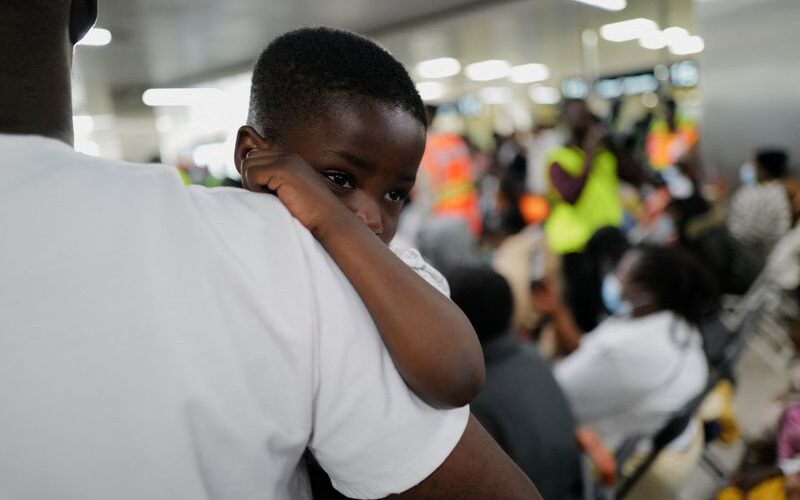
JOHANNESBURG/ACCRA, May 27 (Reuters) – About 300 Ghanaians returned home on Wednesday as a wave of anti-immigrant protests in South Africa raised security concerns.
The group, which also included children, boarded a flight from Johannesburg to Accra in what officials described as a voluntary repatriation process for Ghanaian citizens who say they no longer feel safe.
South African authorities are working with Ghanaian authorities on a list of about 800 people who have indicated they want to leave.
A South African immigration official, who could not be identified on screen, told local television station eNCA: “What we found is that out of 300, only about 10 are legal in the country, so a significant number of them are not complying with our immigration act.”
The Ghana Embassy in South Africa issued emergency travel certificates, allowing citizens who had overstayed their allowed time in the country to return home.
Ghana's Foreign Minister, Samuel Okudzeto Ablakwa, welcomed the returnees at Accra Airport and said they would be able to receive psychosocial support and allowances to help them get their lives back on track.
“Wherever Ghanaians you are, we will ensure that you are safe, your dignity is respected, and we will do everything in the world to bring you back home,” Abalakwa told the group after they disembarked.
He said 26 of the returnees were detained in South Africa due to visa issues and Ghanaian authorities were in talks to bring them back.
Violence against migrants drives departure
The return home follows a wave of anti-immigration protests in South Africa in recent weeks, with campaigners demanding tighter controls on what they describe as undocumented immigrants, and accusing foreigners of contributing to crime and unemployment.
The protests have been accompanied by incidents of violence against migrants from other sub-Saharan African countries.
Earlier on Wednesday, a man preparing to leave Ghana said the decision was due to repeated harassment.
Refusing to reveal his name, he said, “I am happy that I am going to my country… It is not easy to live in someone else's country and be troubled all the time.”
Migrant-rights groups say they are being scapegoated by South Africans, who blame them for the country's economic problems, namely high unemployment, which exceeds 30% and disproportionately affects the black population.
Diplomatic efforts to reduce tension
Ghana's High Commissioner to South Africa, Benjamin Quashie, said the departure was part of efforts to de-escalate tensions while preserving strong diplomatic relations between the two countries.
Quashi dismissed speculation of diplomatic rift with South Africa, saying, “The protesters have said they want us to work together. We must ensure that those who are undocumented return home and institutions are allowed to function.”
South African officials have condemned violence against foreign nationals and promised to crack down on xenophobic attacks, saying such acts have no place in the country's constitutional democracy.
(Reporting by Siyabonga Sishi and Siphiwe Sibeko in Johannesburg and Emmanuel Bruce in Accra; Additional reporting by Anathi Madubela in Johannesburg; Writing by Bette Felix and Anite Miridzhanian; Editing by Alison Williams and Matthew Lewis)