
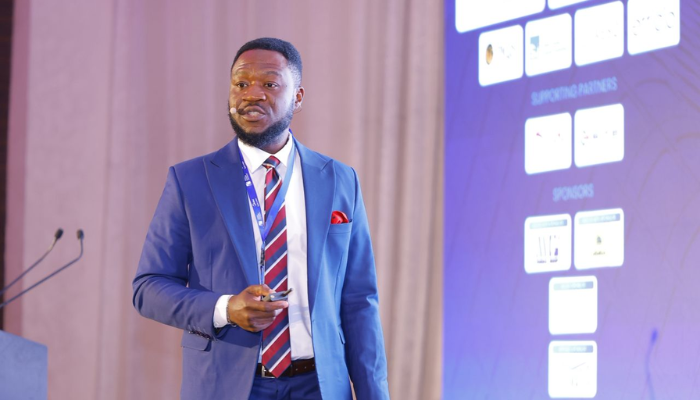
Africa is emerging as one of the most powerful business and cultural powers in the world, says Onom Andrew Amugeh, a distinguished business development and strategic partnerships professional with over 17 years of experience in engineering, energy and complex project-driven environments.
Amugeh, who currently serves as Manager Business Development and Strategic Partnerships at MG Vogas Group, told BusinessDay in an interview that African countries are shifting from oil and gas giants to agricultural empires that feed millions of people across the continent to provide global energy supplies, adding that the continent is producing industries that are impossible to ignore.
Their position is supported by the Africa Wealth Report 2025, which reports that Africa's millionaire population is projected to grow by 65% over the next decade, adding that the continent is currently home to 25 billionaires, 348 centi-millionaires and 122,500 millionaires – a remarkable change from the late 20th century, when there were only a few billionaires and many African economies were in long-term decline.
Pointing to the energy sector, Amugeh said Africa has contributed to global energy power. He said gas production is increasing rapidly across Africa as many countries continue to discover and develop new natural gas reserves. He said countries like Nigeria, Mozambique and Senegal are investing heavily in gas projects to boost energy supply, industrial development and economic growth.
Also read: Morgan Stanley expects high returns in Nigeria's mobile banking, consumer market
Studies show that gas and renewable energy have helped Africa contribute to global energy growth in the last decade. Natural gas production has increased, although fossil fuels still account for more than 60% of the continent's energy supply.
The expert said solar energy has emerged as the fastest growing renewable resource, accounting for the majority of new renewable investments. He said the continent has hit record highs in solar deployment, with installations such as South Africa and Nigeria increasing capacity to unprecedented levels.
Gas is said to remain the largest single source of electricity in Africa. Other sources said that over the past decade, expanding natural gas production has been a priority for many African countries to balance industrialization with the need for reliable baseload electricity.
On agriculture, he said Africa's agricultural sector is becoming one of the strongest pillars of its economy, with vast fertile lands supporting the production of cocoa, palm oil, cassava, rice, maize, coffee and livestock for both local consumption and export.
Studies show that Africa's agricultural sector has expanded steadily over the past decade, with agricultural value doubling to more than $400 billion. This growth is said to be mainly driven by expansion in cultivable land, yield-enhancing technologies and increasing regional investments. However it is acknowledged that the sector still faces major structural and productivity challenges.
The most explosive sector in Africa in the last 10 years may, perhaps, be in the entertainment industry. According to Amuge, this development has evolved into a cultural and economic force. Other authorities say this global dominance was led by the rapid expansion of Afrobeats and Nollywood. They say this creative surge has reshaped global music charts, redefined streaming platform content libraries, and placed African talent at the forefront of international awards ceremonies. Top Nigerian musicians have performed at global events including receptions held in top cities around the world. Streaming is seen to boost the charts and boost Nigeria's revenues.
Amugeh, who drives new businesses, expands markets, forms strategic alliances, and who ensures successful delivery of large-scale energy and infrastructure projects in the energy sector of Nigeria and West Africa, drives initiatives from concept to execution with a proven ability to get things done.
Experts support their position with the international report, which states that Africa's continued economic expansion, coupled with significant growth in the high-net-worth-individual (HNWI) population, positions the continent as a major player in the emerging global wealth landscape. 'The investment migration sector is now working both ways, with African investors seeking greater global mobility and diversification, while international investors are increasingly identifying Africa as a destination for long-term, stable capital deployment,' the report said.
Amugeh has a bachelor's degree in Petroleum Engineering from the University of Port Harcourt, which provides a strong technical foundation for his work in the energy value chain. With deep engineering, procurement and construction (EPC) lifecycle experience, Onome has extensive experience in building and managing strategic partnerships with government, public and private sector stakeholders globally, enabling effective collaboration, risk mitigation and sustainable project outcomes in complex regulatory and commercial environments.
He said that across the continent, modern agricultural technologies, agro-processing industries and large-scale investments are transforming agriculture into a billion-dollar industry capable of feeding millions of people and creating massive employment opportunities.
Amugeh is highly qualified to adjudicate on Africa's prospects as his professional practice is further strengthened by executive training in disruptive strategy from Harvard Business School Online and negotiation strategies from Yale School of Management, equipping him with advanced tools for strategic thinking, complex negotiation and high-level decision making in multi-stakeholder, cross-border project settings. Above all, he is a member of the Society of Petroleum Engineers (SPE).
He said African fintech companies are revolutionizing digital payments and financial inclusion faster than many developed economies, while fashion brands are redefining luxury, identity and creativity with bold African originality.
Amugeh is recognized for his strategic insights, results-driven approach and execution-focused mindset. Guided by practical experience, strategic rigor and an ongoing commitment to excellence, he continues to contribute meaningfully to the industry dialogue on EPC project leadership, collaboration and sustainable development.
With such a vast background and insight into the African economy, he demonstrated that the music/arts industry has expanded beyond borders, with Afrobeats, African cinema, fashion and visual storytelling dominating globally and influencing mainstream culture around the world.
He said: “In Nigeria, South Africa, Kenya, Egypt, Morocco and Ghana, some of the continent's top businesses are proving that Africa is no longer just a consumer market, it is becoming a global producer of innovation, culture, wealth and influence.”
He added: “The world is turning to Africa because the continent has what the future demands: natural resources, youthful energy, creativity, innovation and an unstoppable entrepreneurial spirit. Global investors, multinational corporations and international markets are increasingly looking to Africa for partnerships, expansion, technology solutions, energy security, food production, entertainment and manufacturing opportunities.”
He turned to demographics and said Africa's population growth and digital transformation are creating one of the largest emerging markets on Earth. “What was once underestimated is now becoming the center of global attention, and the next generation of billion-dollar businesses, cultural revolutions and economic breakthroughs will not only come from Africa, but they will be led by Africa.”
Already, Africa is home to nine privately held tech startups valued at ($1) billion or more (commonly known as unicorns). Nigeria leads the way with the top two unicorns starting with Flutterwave (Nigeria/USA), valued at about $3 billion, which provides payments infrastructure for global merchants operating in dozens of African countries. Opay (Nigeria) is worth about $2.7 billion, Andela, Interswitch and Moneypoint.
Others include Wave (Senegal/USA), Tyme Group (South Africa/Singapore), Chipper Cash (Ghana/Uganda), and MNT-Halan (Egypt).
Recent survey reports indicate that wealth creation in the private sector is growing rapidly, with South Africa now leading the top five millionaires and billionaires (dollars), which includes Morocco (7,500), Nigeria (7,200), and Kenya (6,800), which together represent 63% of the continent's millionaires and 88% of its billionaires.
Finally, Onom Andrew Amugeh said Africa is overtaking the world in terms of the number of high net worth individuals and total privately managed assets. He said, however, this is not reflected in the figures for Africa's overall share in global wealth, which remains modest at less than 3% of global GDP due to rapid population growth.

