
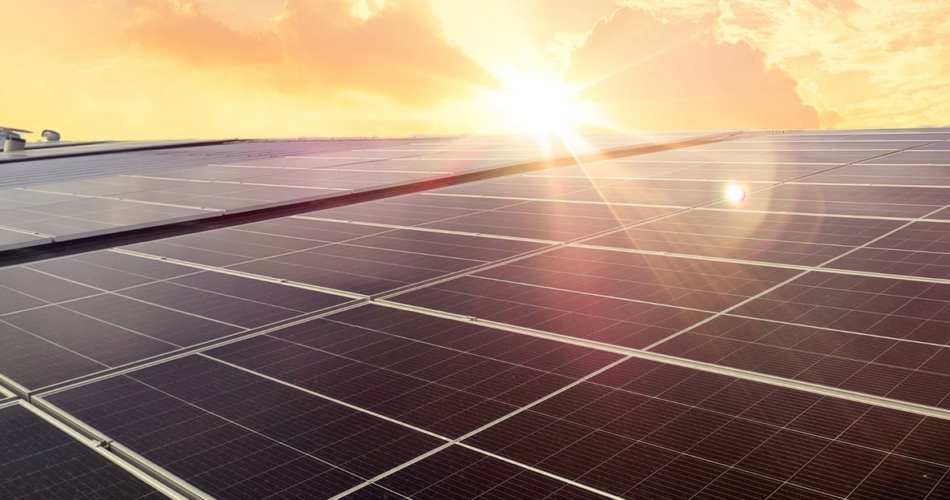
While loadshedding may, for now, be a thing of the past, Eskom's troubled operations fueled South Africa's solar boom – and helped reshape the country's electricity market in the process.
Image supplied.
The result is a market transformation that extends far beyond solar panels and batteries, now including software, data and financing infrastructure.

Power Play: Tshepo Mokoka to lead Central Energy Fund as CEO
chasing the Sun
South Africa's solar boom is fast becoming a software story, not just hardware.
According to Greencap's Energy Services Market Intelligence report, South Africa's installed rooftop solar PV capacity was projected to reach 10GW by 2030.
Current development trends suggest that the milestone may be achieved quite quickly.
By September 2025, Eskom reported that rooftop solar installations across the residential, commercial and industrial sectors had already reached 7.3 GW, representing a 23% increase year-on-year.
The scale of that growth is significant.
South Africa's rooftop solar fleet is now equal to the combined peak electricity demand of Johannesburg, Cape Town and Durban.
In fact, households and businesses have privately financed enough generation capacity to meet the daytime electricity requirements of the country's three largest metropolitan economies.
This momentum is driven by more than just concerns about reliability; Economics is also changing.
Rising electricity rates have changed the economics of energy consumption.
For many homes and businesses, funded solar solutions now offer a lower cost per kilowatt-hour than traditional grid electricity.
This shift is pushing solar energy adoption beyond early adopters and environmentally conscious consumers into the mainstream.
South Africa's power utility Eskom is entering its clean energy era with Green
overcome the crisis
Loadshedding did more than plunge South Africa into darkness. It also fundamentally changed consumer behavior.
For years, solar energy was viewed as a luxury purchase – reserved for affluent households, environmentally conscious consumers or businesses with significant capital to invest.
Most South Africans viewed solar energy as desirable, but unattainable.
Then came the energy crisis.
As outages became more frequent and electricity prices increased, consumers began calculating the cost of doing nothing.
Each blackout disrupted daily life, while each tariff increase further strengthened the case for energy independence.
Solar was no longer just a backup plan. It became a financial decision.
Today, solar energy is increasingly being viewed as a long-term cost-management strategy rather than simply an alternative energy source.
While fixed grid charges mean the economics don't work equally well for every home, declining technology costs and innovative financing models have made solar power more accessible than ever.
Growth has been particularly strong in the commercial sector, where larger installations benefit from economies of scale and can often provide power at a lower cost effective than traditional grid supply.
Standard Bank to finance Africa's renewable energy boom
solar temperament
Walk through almost any suburban or industrial area today, and you'll see evidence of South Africa's solar revolution.
Rooftops that once lay dormant are now generating electricity, and solar panels have become a familiar part of the landscape.
But the industry's growth is no longer driven solely by hardware; The real story is moving towards software and services.
Leading solar providers are increasingly connecting energy infrastructure with digital platforms, financing, innovation and data-driven services that make solar energy easier to access, manage and understand.
As the market matures, the focus is shifting from simply installing solar systems to providing a seamless customer experience – from onboarding and financing to performance monitoring, ongoing support and digital management.
“South Africa’s solar market is evolving from the installation of panels to the delivery of certainty – technology is the bridge that enables this transformation,” says Vincent Maphosa, CEO of Wetility.
“We use technology to simplify access to clean energy, optimize performance, provide real-time information, and create innovative financing solutions that remove traditional barriers to adoption.
“The result is a more seamless, predictable and customer-centric energy experience.
“Looking ahead, the biggest opportunity lies in building integrated utility platforms that connect energy, finance and digital services into a single ecosystem.
“As consumers seek greater control, affordability and reliability, the winners will be those that move beyond selling energy products and instead provide consistent value, flexibility and certainty.”

New deal with Chinese solar giant to boost South Africa's energy market
software spark
While solar panels may be the most visible symbol of South Africa's energy transition, the technology driving the next phase of the industry's growth is largely invisible: software, data and financing.
As solar hardware becomes increasingly commoditized, value is shifting to the software, data and financing infrastructure that sits behind every installation.
The same digital infrastructure that transformed banking, payments and insurance is now helping reshape the energy sector.
“Success in the market depends on more than generating energy. It increasingly depends on software and financing infrastructure that makes solar energy easier to access, adopt and manage.
“Digital onboarding, automated decisions and customer lifecycle management are becoming critical enablers of growth, helping providers move more efficiently while creating a simpler path to clean energy for consumers,” says Michael Boren, co-founder of Finch Technologies.
new energy market
South Africa's solar market has entered a new phase, defined less by installations than by the platforms that support them.
The conversation is no longer just about backup power or resiliency during loadshedding.
It is increasingly about affordability, accessibility, customer experience, digital management and energy production.
As the market matures, the focus is also shifting towards building a stronger local energy ecosystem, with local manufacturing, better energy management and distributed generation becoming key components of a more resilient and sustainable energy future.
Local manufacturing, better energy management and distributed generation are becoming important components of a more resilient and sustainable energy future.
The future of energy will be determined by access and customer experience as well as generation capacity.
“Local manufacturing is one of the most exciting changes in our industry.
“We are already seeing a major cell/panel manufacturer setting up production in South Africa, and there will be more to follow.
“Every inverter and battery manufactured here strengthens our supply chain, creates skilled jobs, and means the value of the energy transition stays in the country rather than leaving it.
“At the same time, each solar rooftop is becoming a mini power station. The next chapter is connecting thousands of them into an intelligent, distributed energy network.
“Combine local manufacturing with that platform, and South Africa is not just adopting the energy transition – we are building it,” says Rein Snoeck Henkemans, co-founder of Alumo Energy.
What began as a response to the crisis has evolved into a blueprint for a more resilient, locally-driven and technology-enabled energy future.