
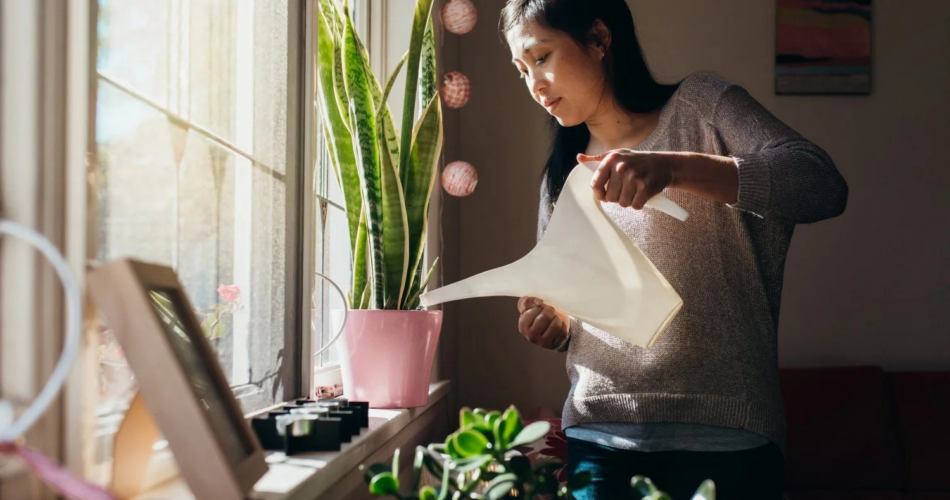
Drive through any major South African city now, and you will feel it. Small apartments. Busy coffee shops. People build fulfilling lives on their own terms.
Being alone is no longer unusual. This is becoming increasingly common.
What started as a slow shift decades ago has now gained serious momentum. Single-person households have increased dramatically over time. Stats SA's 2024 General Household Survey found that 26.9% of households consisted of a single person.
This is not just a statistic. This is a cultural change.
From necessity to lifestyle
For years, living alone in South Africa was often a matter of circumstance. Think about job migration, especially among working-age men moving to cities for work. That pattern still exists, but something else has quietly taken over.
Today, many South Africans are living alone, driven by both choice and necessity.
Young professionals are delaying marriage, focusing on career and education first. There is a growing mentality that life does not need to follow a traditional script. The phrase “home before spouse” has become more than a joke on social media. This reflects a real change in priorities.
Urbanization also plays a big role. Cities like Johannesburg and Cape Town continue to attract people looking for opportunity. With this also comes the need for flexible, independent living arrangements.
The rise of the single homeowner
The most important part of this trend is who is driving it.
women.
Across South Africa, single women are playing an increasingly powerful role in property ownership. They are not just entering the market; They are overtaking men and many traditional purchasing patterns. Many people are buying a first home, seeing property as a way of providing both security and independence.
This is particularly visible among women under 40, who are strongly represented in home loan applications and first to enter the market. This signals deep changes in economic power and social roles, especially in communities where ownership was once out of reach.
At the same time, men are still more likely to live alone during their working years, which is often linked to mobility and employment patterns. However, the trend changes later in life. Older women are more likely to live alone, largely due to longer life expectancies.
The kind of homes people want now
The rise in single living is reshaping the property market in real time.
Developers are responding with smaller, more efficient homes. Sectional title apartments, secure complexes and mixed-use developments are in high demand. Think compact locations with fiber internet, gyms and cafes within walking distance.
It's about convenience. It's about safety. And for many people, it's about a home that can accommodate a fast-paced lifestyle.
There has also been a noticeable shift toward the “lock-up-and-go” life. People want homes that are easy to manage, especially if they travel frequently or work remotely.
price of freedom
Of course, being alone comes at a cost.
Managing rent or bonds, utilities and daily expenses on a single income is not easy, especially in today's economic climate. Rising interest rates and cost of living continue to put pressure on individuals trying to maintain independence.
Housing affordability is becoming a growing concern, especially in high-demand urban areas.
the cool side of being alone
There is also a personal side to this story that is often overlooked.
Being alone can be empowering, but it can also be isolating.
Research shows that people who live alone may be more susceptible to feelings of loneliness or depression. In a country where community and connection have always been central, this change raises important questions.
At the same time, many single residents are redefining what connection looks like. Friend groups, co-working spaces, and social communities are stepping in where traditional family structures once dominated.
a new way of living
Scroll through social media, and you'll clearly see it. Travel solo, dine solo, solo everything. For many South Africans, freedom is no longer a big deal. This is something worth embracing.
This all points to one thing. Being alone no longer depends solely on circumstance. It's about choice.
What does this mean for South Africa
This change isn't going to slow down any time soon.
Single living is reshaping how cities are built, how property is sold and even how people define success. It reflects a country that is changing, where freedom, flexibility and personal development are taking center stage.
For some, it is freedom. For others, it is survival. For most, it's a little of both.
Either way, South Africa in 2026 looks very different than it did a decade ago. And if we look at the current trends, the era of living alone has just begun.
Also read: Why your skin isn't glowing: the skin care mistakes South Africans make
featured image: Calm
Be the first to know – Join our WhatsApp channel for useful content. Click here to join!