
for Africa, United Nations negotiations on a Convention on International Tax CooperationThe case, scheduled to resume in New York on August 3, goes far beyond technical financial concerns. The continent entered this year in a storm bleeding from a deep wound of great power rivalry, war and fragmentation: fifty years of capital flight and illicit outflows.
The war against Iran has kept the Strait of Hormuz – the artery for much of the world's gas, oil and fertilizer – virtually closed since February. Capital flight actually results from this war: uncertainty, rising credit costs, tax evasion and avoidance and deviated enforcement. Conflict also continues in Ukraine, Gaza, Sudan and the Democratic Republic of the Congo. And as the United States became ruthlessly mercantilist, it cut aid, UNCTAD report The decline in daily ship transit through the Strait of Hormuz will reduce global trade growth from 4.7 percent in 2025 to just 1.5 percent this year.
African currencies have fallen 2.9 percent against the dollar since the rise – the biggest decline of any developing region – while yields on African sovereign bonds have surged as much as 8.3 percent. Costly fuel, food and debt are falling on countries that already spend more servicing debt than on health or education, and UNCTAD has warned that if the shutdown continues, the hardship will stretch to 2027.
It is a backdrop of inequality without precedent. World Inequality Report 2026 he finds 56,000 people – a crowd that could fit inside a football stadium – own three times as much wealth as the poorest half of humanityWhile effective tax rates for the richest people fall precipitously. Sub-Saharan Africa faces a double burden: low average income and high internal inequality. The average education expenditure per child in purchasing power terms is €220, compared to €9,020 in North America – a difference of one to forty. And each year about 1 percent of global GDP flows from poor countries to rich countries through the “excessive privilege” of reserve-currency economies.
James K. In our research with Boyce, we estimated that Thirty African countries stand to lose $2.7 trillion due to capital flight between 1970 and 2022 – roughly their combined GDP – and that the continent loses around $97 billion each year through unrecorded outflows. Conflict exacerbates the loss of tax revenues for governments through the same mechanisms that enable criminal networks to profit. These networks use the same offshore channels to shelter untaxed elite wealth.
How we design our tax system This is ultimately a policy choice, and inequality should not be its outcome. on analysts International Center for Tax and Development Concluded that two decades of OECD-designed standards have delivered benefits that have been uneven, slow and costly. The implication is clear: challenges of the coming scale cannot be managed within the clubs of rich countries. They demand definition at the most inclusive forum – the United Nations, where every country has a voice and a vote.
What should African negotiators defend at the UN in August?
First, an ambitious tax conference. Today's rules (designed based on the OECD model) limit the rights of multinationals to tax profits in Africa through bilaterally negotiated tax treaties with rich countries and transfer pricing rules that ensure that less profits are allocated to activities originating in Africa.
The Convention could change this, to ensure a fair allocation of taxing rights that recognizes the right to tax in any jurisdiction that contributes profits, including where user data and participation are generated, where public infrastructure sustains the market, where natural resources are located or where consumption occurs.
Second, a strong protocol on cross-border services, to ensure that the countries where services are delivered and users are located have the right to tax.
Third, truly universal access to information exchange, public country-by-country reporting requiring multinationals to disclose how much tax they pay in each of the countries in which they operate, the possibility of using the exchanged information for a wide range of purposes – not just for tax – and interconnected registries of assets and beneficial owners – which is security policy as well as tax policy for Africa. The African Convention on Mercenaries already criminalizes those who finance and recruit armed groups, but African prosecutors cannot pursue funds without the evidence provided by profit-owned registries.
latest Tax Transparency Report in Africa Shows the importance of binding transparency mechanisms: eleven African countries identified approximately €400 million of additional revenue in 2024 alone through the exchange of tax information – up from €4.2 billion since 2009. Where there is political will, transparency translates directly into revenue.
However, this profit remains only a fraction of the loss. research by International Tax Observatory It turns out that 37 percent of sub-Saharan Africa's offshore assets are invisible to low-income countries outside the common reporting standard, with no automatic information exchange yet, while Africans hold 56 percent of their offshore assets in European financial centers and another 28 percent in Switzerland. The information exists; This should reach African tax authorities.
There is light at the end of the tunnel. The Economist expects African GDP growth to overtake Asia in 2026 as Nigeria and South Africa revive, and more than half of the world's mobile-money users are African. What the continent lacks is not dynamism, but fiscal space: the revenues to bridge the forty-to-one gap in investment in the education of an African child, and to build states strong enough to confront the criminal networks that war creates.
Africa must continue to speak with one, united voice. It was the Africa Group that brought this process to the General Assembly in 2022 and pushed it forward against tremendous resistance from most OECD countries. The wealthiest countries will work to minimize any meaningful change to the status quo, which limits African countries' tax rights. The African Group and the wider G77 must safeguard unity as a negotiating asset, which has built this process, and which can deliver it.
In a world that is being forcefully remade, the August talks offer a chance to reshape a corner of it in accordance with the rule of law. Africa should seize this opportunity, treating potential new tax revenues not as a reward but as a first installment on a more durable political and legal solution.
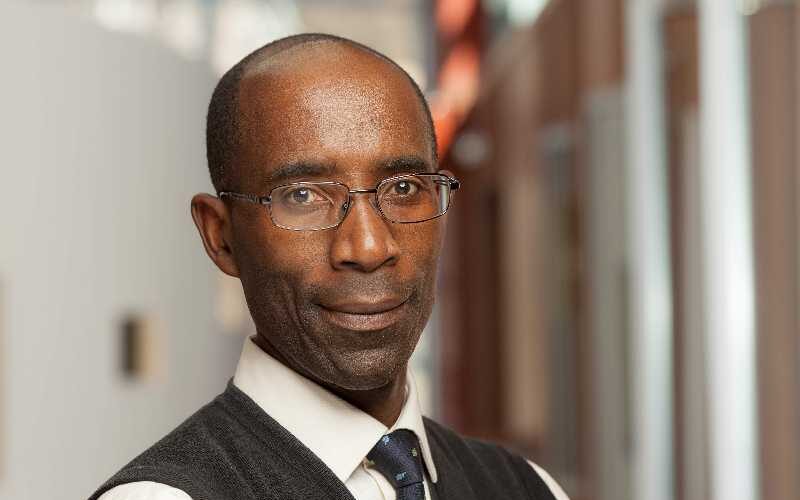
Lyons Ndikumana is Commissioner of the Independent Commission for International Corporate Taxation Reform (ICRICT), Professor of Economics at the University of Massachusetts Amherst, and former Director of Research at the African Development Bank.