
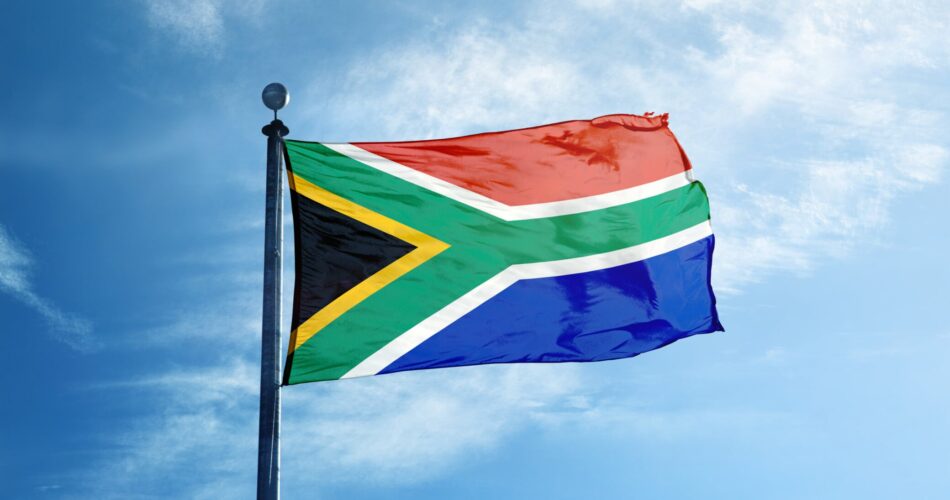
As we celebrate Independence Day, wherever we are, let us commit ourselves to the ideals that shaped our liberation: unity, dignity, equality and mutual respect.
On 27 April, millions of South Africans at home and around the world celebrate Independence Day, a moment of profound historical significance for our country.
The date marks South Africa's decisive transition from an oppressive apartheid system to a free, democratic and constitutional state, following the country's first democratic elections on 27 April 1994.
Independence Day is more than an anniversary; It is a powerful reminder of change despite overwhelming odds.
This year's commemoration, organized under the theme “Solidarity in Resilience to Protect Our Freedom and Democracy”, concludes our year-long celebration of 30 years of freedom and democracy.
It shows how far we have come as a nation and our responsibility to protect these gains in an increasingly uncertain world.
After being a pariah state excluded from global institutions, South Africa has emerged as a country that is widely recognized for its commitment to human dignity, democracy, non-racism, non-sexism and constitutional governance, values the world urgently needs.
South Africa's transformation is proof that dialogue, sacrifice, compromise and principled leadership, exemplified by President Nelson Mandela, can overcome pervasive injustice.
Freedom including meaning at home and abroad
Independence Day invites all friends of South Africa, from all walks of life, to reflect honestly on the lived realities of apartheid and compare them with life in democratic South Africa.
Under apartheid, millions, especially black South Africans, were systematically marginalized, disenfranchised and denied basic human rights: the vote, freedom of movement, economic opportunity and dignity.
Families were torn apart, livelihoods deliberately undermined and social cohesion destroyed.
Yet, from this painful history, a new social order emerged, based on constitutionalism, democracy, and the rule of law.
The adoption of the Constitution of South Africa in 1996, whose 30th anniversary we celebrate this year, gave concrete expression to the ideals of the Freedom Charter, shaped by decades of struggle against colonialism, apartheid and oppression.
Today, the South African Constitution remains the supreme law of the country, guiding efforts to strengthen democracy in the face of persistent inequality and historical injustice.
For South Africans living in Qatar, this reflection holds additional significance, as their presence as professionals, entrepreneurs, teachers and skilled contributors to Qatar's development is itself a direct product of South Africa's democratic transition.
This reflects a restored international reputation and full re-entry into the global community.
justice beyond borders
South Africa's historical experience has also shaped its approach to global justice.
The values enshrined in our Constitution compel us to act consistently on the international stage. It is within this moral and historical framework that South Africa has approached the International Court of Justice to hold Israel responsible for acts of genocide.
This action underscores our commitment to international law, accountability and the protection of civilians, and serves as a warning against the dangers of extreme nationalism and unchecked violence.
Our own past reminds us that silence in the face of injustice is never neutral.
South Africa's post-apartheid identity is inseparable from global solidarity, which emerged from a collective international struggle in which states, civil society and ordinary people around the world collaborated to end apartheid and affirm the universality of human dignity.
Recognizing that its own independence was secured through the moral courage and principled action of the international community, South Africa has consistently framed its foreign policy as a duty of peace, justice and international law.
It is within this moral tradition that South Africa approached the International Court of Justice invoking the Genocide Convention to hold Israel accountable for alleged acts of genocide, not as an act of hostility, but as an affirmation of the same legal and moral principles that once protected South Africans themselves, namely, that grave injustice should never be normalized and that no individual should be denied protection under international law.
measuring progress honestly
As we celebrate Independence Day, we should celebrate progress and be clear on what remains to be done.
In 1994, South Africa inherited a deeply divided, unequal society and an economy isolated from the world. Despite limited resources and a huge backlog, solid progress has been made.
Access to housing, clean water, electricity and basic services has significantly expanded for millions of people. These reforms, although incomplete, have transformed the everyday lives of many South Africans.
In 2024, South Africa enters a new chapter with the establishment of a government of national unity, reflecting a shared commitment to inclusive growth, job creation, poverty reduction and social cohesion.
Encouragingly, key economic indicators have stabilized: inflation has moderated, public investment is rising, power generation has improved, and confidence, both domestic and international, is gradually returning.
At the same time, the South African government has intensified efforts to combat organized crime, illegal mining and gender-based violence, advancing transformative legislation including the National Health Insurance Act, the Expropriation Act and the Basic Education Law Amendment Act to expand access to opportunity consistent with constitutional values.
A deepening South Africa-Qatar partnership
South Africa's relationship with the State of Qatar exemplifies how shared principles can be translated into practical cooperation.
Bilateral relations since 1994 have been dynamic and characterized by consistently high-level engagement. President Cyril Ramaphosa has paid a state visit to Qatar, and His Highness Sheikh Tamim bin Hamad Al Thani was a special invitee to the G20 Leaders' Summit.
South Africa and Qatar firmly believe that peace is the indispensable foundation for sustainable socio-economic development.
Both countries strongly believe that dialogue, diplomacy and inclusive mediation are the most effective means of resolving conflicts, especially at a time of increased and prolonged hostilities in the Middle East.
In this context, South Africa unequivocally condemns all attacks targeting civilians and civilian infrastructure, including critical energy facilities, as such acts are not only illegal in the context of international law and human morality, but also cause immense human suffering and threaten regional and global stability.
Upholding international law, protecting civilian life, and promoting peaceful association are at the heart of efforts aimed at achieving sustainable security and prosperity.
Energy cooperation remains a strategic pillar of bilateral relations, exemplified by Sasol's gas-to-liquids investment in Qatar and PetroSA's involvement in the chemical sector.
These partnerships support South Africa's industrial sustainability while diversifying Qatar's international energy cooperation.
Multilaterally, South Africa's role in BRICS and Global South platforms complements Qatar's diplomatic outreach.
In times of geopolitical fragmentation, middle powers must build resilience through cooperation rather than rigid alignment.
Shared challenges in an unstable world
Current global disruptions—from energy supply shocks to disruptions in the Red Sea and Suez trade routes—underscore the interconnectedness of energy security, civil infrastructure, and economic stability.
These challenges contribute to inflationary pressures around the world, impact Africa's trade and food security, and demand closer cooperation between responsible global actors.
Today, Qatar is South Africa's fifth largest trading partner in the Middle East and the Gulf, with bilateral trade totaling R7.9 billion in 2023, including manufacturing, agriculture, energy and chemicals.
Significant untapped potential remains – particularly in attracting more Qatari investment into South Africa's priority, job-creating sectors.
A message to South Africans in Qatar
In light of regional uncertainty, the South African Government, through its Mission in Doha, remains fully attentive to the safety and well-being of South Africans in Qatar.
We remain closely engaged with the Qatari authorities, who have consistently demonstrated their commitment to stability and the safety of all residents.
Qatar remains a safe and welcoming host country.
As South Africans abroad, you are ambassadors of our nation, a symbol of resilience, excellence and solidarity. Your contribution strengthens South Africa's reputation and deepens the bonds of friendship between our two countries.
renewing the promise of freedom
As we celebrate Independence Day, wherever we are, let us commit ourselves to the ideals that shaped our liberation: unity, dignity, equality and mutual respect.
Let us defend our democracy, deepen our partnerships, and work collectively to build a South Africa that truly belongs to all who live in it.
After all, freedom is not just something we commemorate – it is something we must continue to defend and pursue together.
Ghulam Hussein Asmal is the Ambassador of South Africa to Qatar. This article is an opinion and does not necessarily reflect the views of Doha News, its editorial board or staff.