
India's rail infrastructure expertise and modern transport technologies are emerging as a potential catalyst for South Africa's railway revival, increasing scope for cooperation between the two countries in equipment supply, consultancy and high-speed rail solutions.
Indian High Commissioner Prabhat Kumar said India's experience in developing and managing large-scale railway systems could support South Africa's efforts to rebuild and modernize its struggling rail network, which has suffered operational decline and infrastructure damage over the years.
Speaking to industry leaders at the CII India Business Forum Interaction, Prabhat Kumar said Indian companies are increasingly exploring business opportunities in South Africa's rail sector, particularly in the manufacturing and supply of rolling stock and related systems.
He explained that Texmaco Rail & Engineering is evaluating opportunities to supply railway wagons to South Africa and is also engaging with local partners to explore collaborative production models reflecting early-stage industrial collaboration.
The High Commissioner said RITES, a leading Indian transport consultancy company, is in discussions regarding the supply of locomotives, indicating keen institutional interest in expanding India's rail footprint in the African market.
Prabhat Kumar emphasized that infrastructure development remains a shared priority for both countries, with India continuing to allocate significant resources to railways, airports and ports as part of its national development strategy.
He highlighted that India is commissioning several airports every year, which shows the scale and pace of expansion of its infrastructure in transport sectors.
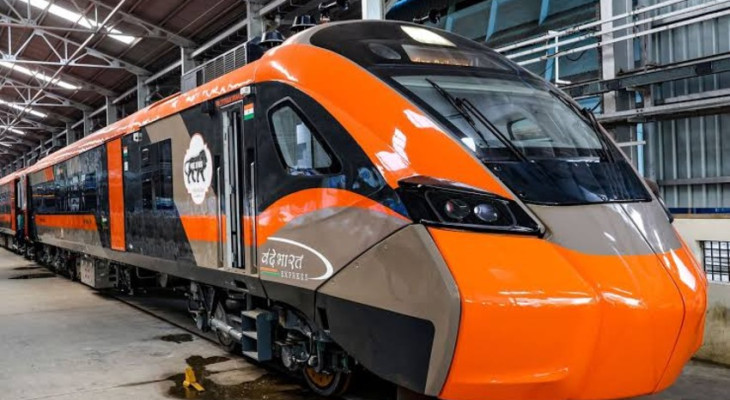
Referring to technical cooperation, Prabhat Kumar said India's Vande Bharat semi-high-speed train could be a practical solution for South Africa, as it runs at speeds of up to 200 km per hour on existing tracks without the need for entirely new infrastructure.
He suggested that such cost-efficient upgrades could help South Africa avoid the financial burden of building entirely new high-speed corridors, as well as accelerate rail recovery.
Noting that India's first bullet train project is expected to be operational around 2027, Prabhat Kumar said such projects are capital-intensive and may not be suitable for all countries, making semi-high-speed systems a more adaptable option.