
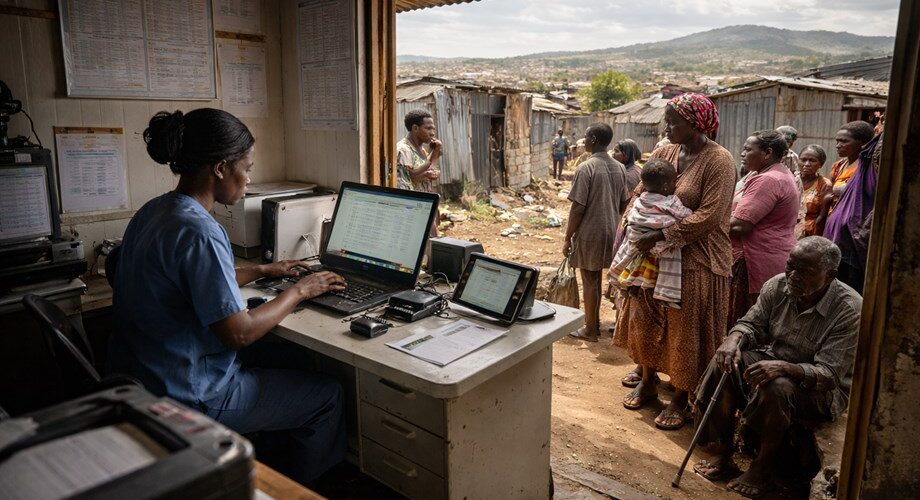
South Africa's digital health transformation is being undermined by deep inequities in access and system integration, a new study shows.
study, title “Bridging the digital health gap in South Africa: a qualitative study of the digital divide, interoperability and health equity,” published in digital healthFinds that the combined effects of limited digital access and poor interoperability across health care systems are reinforcing rather than reducing existing inequalities in health service delivery.
The research highlights how these systemic gaps impact rural populations, low-income families, and patients who rely on under-resourced public health facilities.
Structural inequities prevent entry into digital health systems
The study identifies the “digital divide” as the first and most significant barrier to equitable health care, which serves as a gateway that determines who can access digital health services and who cannot. This divide extends far beyond internet connectivity, to include disparities in infrastructure, affordability, digital literacy and institutional capacity.
In South Africa, these disparities are clearly visible between the private and public healthcare sectors. Well-funded private hospitals have been able to adopt advanced digital tools, while public facilities, which serve the majority of the population, struggle with outdated hardware, unreliable Internet access, and chronic staff shortages.
Research shows that these structural barriers are not isolated technical issues but are deeply embedded in broader socio-economic and governance conditions. Limited budgets, aging equipment and inconsistent power supply, including frequent interruptions due to load shedding, have made it difficult for many public facilities to implement even basic digital systems.
Provincial autonomy has further intensified fragmentation. Health systems in different regions operate under different standards and procurement processes, creating a patchwork of incompatible technologies. This decentralization has made it difficult to develop a unified national digital health infrastructure, limiting coordination and data sharing across provinces.
The study also highlights the gap between policy and implementation. Although national strategies for digital health exist, they are often not implemented effectively due to bureaucratic delays, weak enforcement, and lack of sustained leadership. As a result, the promise of digital transformation remains largely unfulfilled in many parts of the country.
These findings emphasize that access to digital health is determined not only by the availability of technology but also by institutional readiness. Without reliable infrastructure, trained personnel and coordinated governance, digital tools cannot function effectively, leaving large sections of the population deprived of their potential benefits.
Fragmented systems undermine care even when access is achieved
For those who do gain access to digital health systems, the study shows that a second major barrier emerges: a lack of interoperability between health care technologies. This fragmentation prevents systems from communicating with each other, disrupting the flow of information and undermining continuity of care.
Within individual hospitals, digital systems are often locked into departments. Clinicians must navigate multiple platforms to access patient information, including laboratory results, imaging data, and clinical records. This lack of integration increases administrative burden and reduces efficiency, especially in under-resourced facilities where staff are already overstretched.
At a broader level, the absence of shared standards and patient identifiers across provinces creates significant challenges for patients who move between regions. Individuals seeking care outside their home province often face repeated registrations, duplicate testing, and delays in diagnosis because their medical records cannot be accessed or transferred.
The study shows that these interoperability gaps impact vulnerable populations, including migrant workers, rural residents and patients dependent on public health systems. These groups are more likely to rely on multiple facilities and are therefore more vulnerable to inefficiencies created by fragmented systems.
Even in the private sector, where resources are more abundant, competition among providers has resulted in separate data systems that limit information sharing. This creates additional barriers for patients transitioning between private and public care, making treatment pathways more complex.
Operational reliability also remains a major concern. Poor connectivity, aging infrastructure and power outages often disrupt digital systems, even in relatively advanced areas. These disruptions reduce trust in digital tools and force healthcare workers to return to manual processes, reducing potential efficiency gains.
As the study emphasizes, interoperability is not just a technical issue, but a key determinant of whether digital health systems provide real benefits. Without seamless data exchange and systems integration, digital tools may create additional burden rather than improve care.
National coordination and infrastructure are seen as key to closing health gaps
The research identifies a set of institutional and policy interventions that can help address these challenges and move South Africa towards a more equitable digital health system.
- Development of an integrated national digital infrastructure that enables seamless data exchange between healthcare providers. Such infrastructure would include shared health information systems, standardized data formats, and unique patient identifiers. These elements are essential to ensure that patient information can be consistently accessed and used across different facilities and regions.
- Strong central governance is vital to support this infrastructure. A coordinated national framework can align policies, standards, and implementation efforts, reducing fragmentation and enabling more effective collaboration between the public and private sectors.
- Lessons learned from the COVID-19 pandemic have been cited as evidence that rapid progress is possible when stakeholders work together under centralized coordination. During the pandemic, collaborative efforts enabled the rapid development and deployment of digital health solutions, demonstrating the potential for system-wide integration when governance structures are aligned.
- Investment in infrastructure: Reliable internet connectivity, modern hardware and stable power supplies are essential to support digital health systems, especially in rural and low-resource areas. Without these foundational elements, digital transformation efforts risk exacerbating existing inequalities.
- Institutional capacity: To ensure that digital systems are used effectively, it is necessary to train health care workers, redesign workflows, and implement effective change management strategies. Poorly implemented systems can increase workload and reduce adoption, highlighting the importance of aligning technology with clinical practice.
The research also calls for incorporating equity at every stage of digital health design and implementation. This includes prioritizing the needs of marginalized populations, addressing cultural and linguistic barriers, and ensuring that digital tools are accessible to users with different levels of digital literacy.
Monitoring and evaluation are identified as key components of this approach. By tracking indicators such as access, usability, and continuity of care, policymakers can identify gaps and adjust strategies to ensure that digital health initiatives deliver equitable outcomes.
Digital health risks reinforcing inequality without systemic reforms
Equity in digital health cannot be achieved through technology alone. Instead, it emerges from the interaction between access conditions and system functionality. When the two are aligned, digital health can enhance continuity of care, reduce administrative burdens and improve outcomes. When they are not, the result is fragmentation, inefficiencies and exclusion.
In South Africa, the current trajectory shows that benefits are concentrated in well-resourced private facilities, while public systems bear the burden of inefficiencies and gaps. This imbalance reflects broader structural inequities and underscores the need for coordinated, system-level interventions.
The research provides a clear message for policymakers and stakeholders: digital health must be viewed as a holistic transformation that integrates infrastructure, governance and equity considerations. Incremental improvements in technology will not be enough to address the deep-rooted challenges identified in the study.