
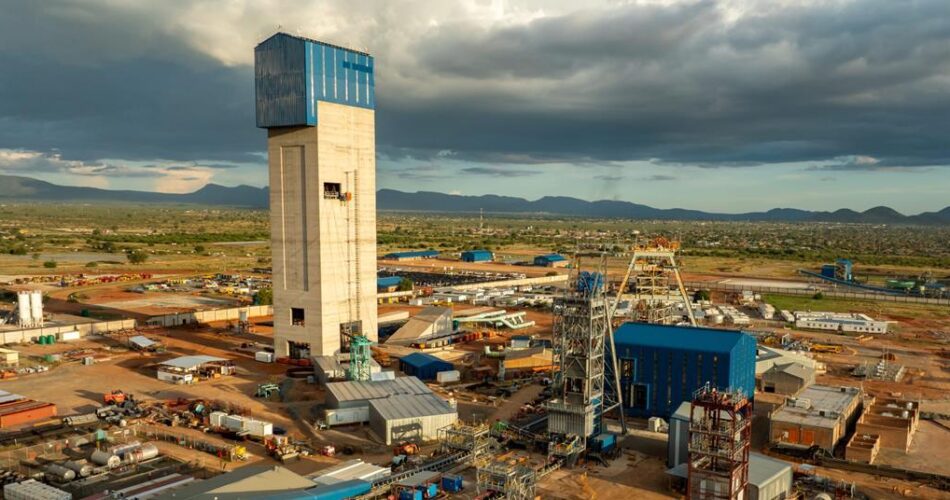
South Africa's mines face many challenges. Extraction is becoming more technically complex, while environmental regulations are being tightened, increasing the costs of compliance.
Implementing more advanced and environmentally friendly technologies in various aspects of extraction and processing can help address many of these challenges simultaneously. 'Green water metallurgy aims to reduce environmental disasters – as well as increase the productivity of mines,' explains Daniel Verwey, business development manager. BME Metallurgy. BME provides advanced mining chemicals and metallurgical processing solutions with a focus on sustainable mineral recovery.
South Africa's mining industry has an illustrious past. It supplied almost half of the total gold ever mined in human history. But as the most accessible minerals become exhausted, miners are increasingly locating precious metal deposits at greater geological depths. For example, the Mponeng gold mine near Johannesburg is more than 2.5 miles deep, with rock temperatures reaching more than 60 degrees Celsius, making extraction uneconomical without complex technology and high commodity prices.
This has increased the problems further 14,000-30,000 Illegal small-scale miners who operate without regard for the environment extract minerals from gold to coal and chromium to platinum. This is accelerating already difficult tasks such as suppressing sulfur dioxide emissions, or ensuring that tailings pool dams do not spill tailings contaminated with arsenic, mercury, cyanide or lead into farmland, rivers or settlements. Officials, sensitive to mining's pollution footprint, are working to strengthen National Greenhouse Gas Emissions Reporting Law in 2026. Corporations that do not comply with pollution limits will be subject to prison sentences, heavy fines and taxes.
The most prominent sustainable strategies that miners in South Africa are adopting include efficient wastewater treatment and reuse; replacing hazardous materials with green alternatives; testing safe surfactants to capture or suppress acid aerosols released during processing; and nanofiltration to recover and recycle reagents such as sulfuric acid, hydrochloric acid and caustic soda, explains Verwey.
South Africa is among them 30 most water stressed countries On earth. Therefore, most miners are 'looking at ways to reduce and/or recycle water,' says Kevin Harding of the School of Chemical and Metallurgical Engineering at the University of the Witwatersrand in Johannesburg, who has consulted on waste minimization projects for the oil and gas industries.
A prime example of this is Ivanhoe's Platreef mine in the drought-stricken Limpopo province of northern South Africa, which is using Treated waste water from local municipality To run its operations. About three-quarters of the water used by mining giant Gold Fields is reused or recycled, and the company has reduced the amount. freshwater extraction 14.5 million m. From3 Between 8.5 and 11.1 million meters in 20183 In 2022-2024. The company aims to use more than 80% recycled water and divert less than 8 million m3 of freshwater per year by 2030.
Verwey explains that the main advantage of nanofiltration technology is to reduce the demand for acid and alkali reagents – both for processing and chemical neutralization of the residue. Some hazardous reagents can even be replaced entirely. 'For example, we introduced hydrogen peroxide-based emulsions to replace nitrate-based emulsions for blasting. “This has reduced nitrogen oxide emissions by 90%,” he said.
Similar technologies are being implemented in mines elsewhere around the world, such as Brazil and Australia, in response to similar pressures of increased regulation and increasing complexity of extracting minerals due to changes in the geology of sources.
'Most changes are usually cost-based (even to avoid fines),' says Harding. However, 'there may be elements of promoting better environmental practices, and/or because it is absolutely the right thing to do – although we can't really determine which,' he adds.
But while larger companies can afford the costs of adopting alternative technologies, smaller miners in South Africa prefer to Ndalmo Resources The public is expressing frustration that the costs of complying with the proposed greenhouse gas emissions rules are rising and could become an 'existential crisis' for them. 'Green chemistry practices can influence financial decisions,' says Harding, acknowledging that changes that could save companies money in the long run may require significant initial investment.