
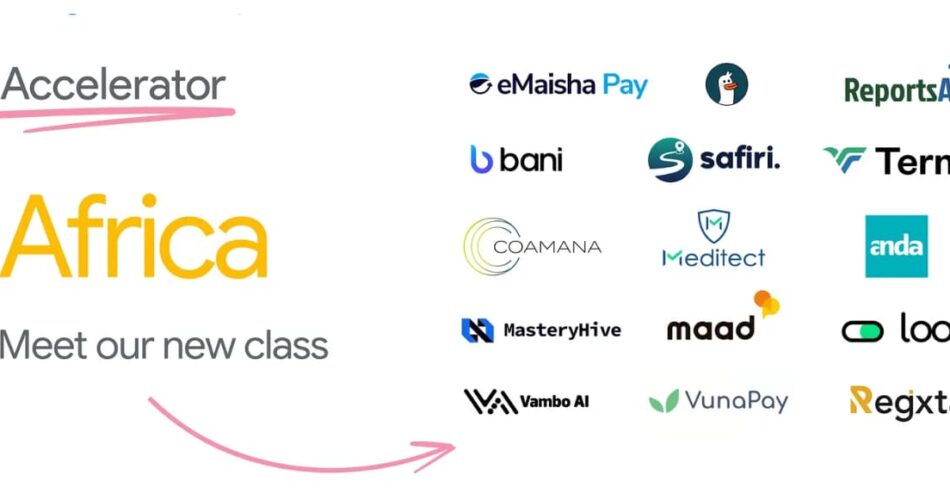
Google has unveiled the 15 startups selected for Class 10 of Startup Accelerator Africa, its most competitive group yet, selected from nearly 2,600 applications across the continent.
The three-month hybrid program runs from April 13 to June 19, 2026, providing founders with technical workshops focused on AI and cloud technologies, as well as mentorship from industry experts. The program is designed to help startups scale their operations and prepare themselves for follow-on funding.
Nigeria leads the Google for Startups Accelerator Africa Class 10 cohort with four startups, cementing the country's growing reputation as Africa's leading technology hub. Kenya ranked second with four startups, while South Africa, Uganda, Senegal, Angola, Tanzania and Ivory Coast each have representation in the category.
Selected startups include fintech, agritech, health tech, mobility and SaaS sectors artificial intelligence As a common thread across all 15 companies.
15 Google Accelerator Africa Class for Startups Meet 10 Startups
Anda Africa (Angola) A mobility and fintech platform formalizing, financing and electrifying Angola's informal moto-taxi workforce through proprietary AI-powered credit scoring.
Bani (Nigeria) A cross-border payments infrastructure platform eliminating settlement delays for African businesses trading globally.
Komana (Kenya) Builds technology that helps governments and market associations digitalize informal food markets across Africa.
Duck (Kenya) A real-time data intelligence platform that provides consumer brands with instant shop floor visibility to prevent stockouts.
Emaisha Pe (Uganda) Enables agri-merchants to manage produce, collect multi-currency payments and access embedded trade financing.
Loop (South Africa) Digitizes mobility and payments in Africa, helping people, businesses and communities access simpler and more connected transportation and payment solutions.
Maad (Senegal) A full-stack omnichannel marketplace platform that helps consumer brands drive sales across Africa through AI-powered market intelligence.
Masterhive AI (Nigeria) An AI-native platform automating transaction reconciliation, fraud detection and AML monitoring for financial institutions.
Meditect (Ivory Coast) Digitalizes African pharmacies with cloud software and real-time data to improve medicine access and optimize inventory management.
Regxta (Nigeria) Combines alternative data-driven credit scoring with a hybrid digital-agent delivery model to deliver financial products to unbanked micro businesses.
ReportsAI (Kenya) The AI-first platform helps impact organizations transform raw data into institutional knowledge and compliance-ready reporting.
Safiri (Tanzania) Building digital infrastructure that powers the reliable transportation of people and goods across Africa.
Termi (Nigeria) An AI-native communications infrastructure platform ensuring trusted financial messaging for banks and fintechs across the continent.
Vambo AI (South Africa) Builds a multilingual AI infrastructure powering translation, speech, and generative AI in African languages.
Vunape (Kenya) Builds fintech and data infrastructure for cooperatives, enabling instant payments and financial services for smallholder farmers.
Google for Africa Startup Accelerator: A Growing Ecosystem
Since launching the Google for Startups Accelerator Africa program in 2018, Google has supported 106 startups from 17 African countries. Alumni have collectively raised more than $263 million and created more than 2,800 jobs across the continent.
Class 10 reflects a broader shift in African tech, where domestic founders are increasingly using AI to solve deep-rooted challenges in health care, agriculture, finance and transportation. With approximately 2,600 applications received for just 15 spots, competition for a spot in the accelerator has never been more fierce.
For African startups focused on AI and emerging technology, the Google for Startups Accelerator Africa remains one of the most valuable launchpads on the continent.

Digital Marketing Professional/Social Media Expert/Content Writer