
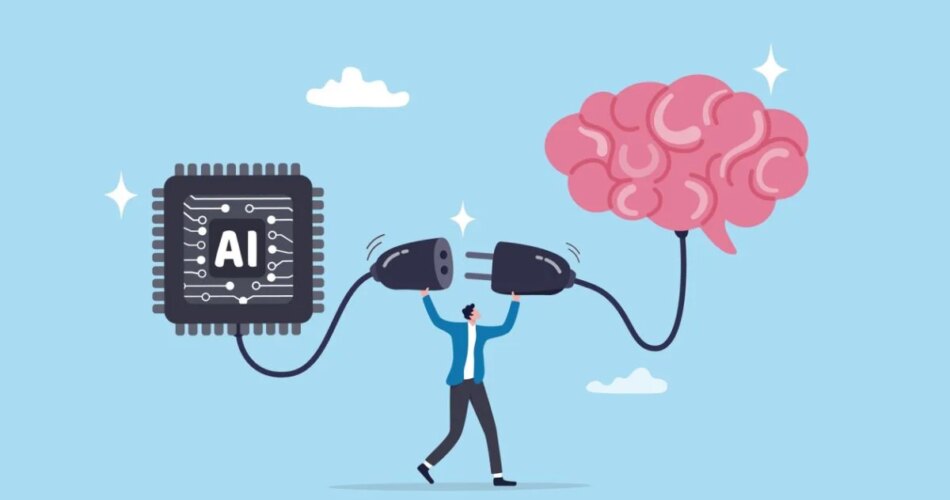
The era of AI is an era in which there is no time to look back. Rather than regress, the world is poised for a period of continued progress, ultimately culminating in “superintelligence.”
AI superintelligence is once again in the headlines as OpenAI CEO Sam Altman predicted the arrival of superintelligence by 2028 at the AI Impact Summit.
“On the current trajectory, we believe we may be only a few years away from the earliest versions of true superintelligence,” Altman said.
“If we are right, by the end of 2028 more of the world's electronic capacity could reside inside data centers rather than outside them,” he said.
When we talk about Artificial Superintelligence (ASI), the AI landscape has divided into two competing visions for the next era of development.
One is “personal superintelligence” supported by Meta and the other is “humanitarian superintelligence” supported by Microsoft.
While both tech giants aim for systems that exceed human intelligence and capabilities, their strategies for how that power is deployed and controlled are fundamentally different.
Meta's 'personal superintelligence'
Last year, Meta CEO Mark Zuckerberg unveiled his AI-powered vision and strategy in which he aimed to advance “personal superintelligence.”
According to Zuckerberg, he sees AI as a tool for personal empowerment over automation and efficiency.
Alexander Wang, Meta's AI chief officer, echoed the same sentiment while addressing delegates at the AI Impact Summit in New Delhi on Thursday.
Our vision is personal superintelligence, an AI that knows your goals, your habits, interests, and your blind spots. Whoever you are and wherever you are, it serves you…it just won't be your administrator. It will be an extension of you so you can be even more,” Wang said.
In short, Meta aims to put a supercomputer-level personal assistant in the hands of every person that empowers them in every task.
The tech company plans to realize this vision by leaning toward open-source to make this intelligence accessible to everyone instead of gatekeeping.
In addition, in line with the consumer-centric strategy, Meta is also doing hardware integration through Meta Ray-Ban smart glasses and other wearable technology, allowing AI to “see” what you see and help you in real time.
The company is also investing about $115-$135 billion in 2026 to build out its “superintelligence unit” and “metacompute” infrastructure.
Microsoft's 'humanitarian superintendency'
On the other hand, Microsoft CEO Mustafa Suleiman last year set the goal of Microsoft AI as “humanistic superintelligence.”
This strategy is basically a response to unlimited Artificial General Intelligence (AGI). It gives priority to prevention, safety and social problem solving over raw power.
The proposed framework is based on the view that the pursuit of artificial superintelligence should be grounded, controllable, and beneficial to humanity.
According to Microsoft, “We think of it as systems that are problem-oriented and tend to be domain specific. Not a limitless and unlimited entity with a high level of autonomy – but rather AI that is carefully calibrated, contextualized within boundaries.”
Therefore, the ultimate goal of humanitarian superintelligence is to accelerate human progress in areas such as medicine and energy.
The vision also includes three core missions, including AI companions for support, medical superintelligence, and AI for clean energy/fusion research.
According to Microsoft, in this type of superintelligence, humans would be at the top of the “food chain”, reining in the AI and using it to their advantage.
The tech company is pursuing its mission in various ways, such as working on an enterprise-first model by integrating AI into its cloud platform Azure. Microsoft's AI spending strategy and partnership with OpenAI is also helping the tech giant.
Whose vision will prevail?
Now the question comes to mind that who will win and who will win?
In a highly competitive technology landscape, it is difficult to predict concrete results given the rapidly evolving nature of technology.
Both tech companies have their own strategic advantages that will help them reach this point of growth.
For example, Meta's strength lies in its vast user data, broad access to AI, and ambitious long-term bets that could yield big profits as new AI products take off.
On the other hand, Microsoft is also excelling in this race by leveraging ongoing AI revenues, enterprise and developer ecosystem, and ambitions for sustainable AI commercialization.
Therefore, the “winner” cannot be a single mega-dominant company; Instead, AI leadership can be shared across different domains, including enterprise, consumer, cloud, and specialized AI research.