
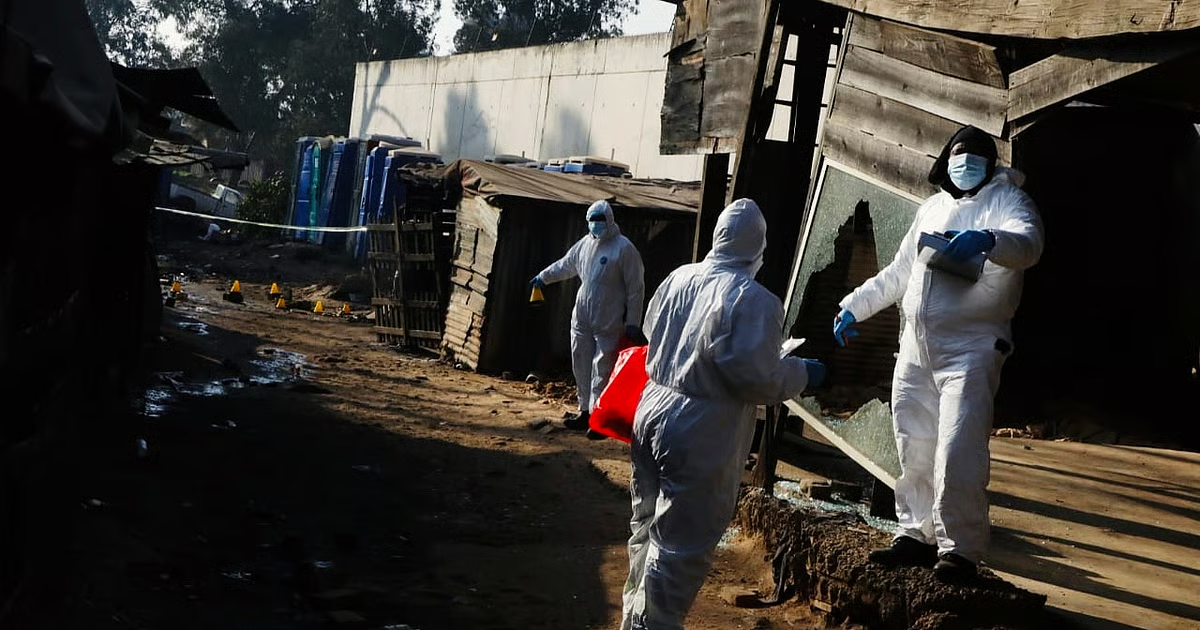
The shooting took place in an informal settlement, one of the densely populated and often poor communities on the outskirts of many South African cities. Such settlements often contain temporary housing and in some areas become bases for illegal mining operations.
There were scenes of grief and shock as emergency workers pulled bodies out of the settlement on Wednesday morning, while residents gathered in small groups, struggling to cope with the violence.
South Africa has seen several high-profile mass shootings in recent years, many of which are linked to organized crime and gang rivalries. In December alone, more than 20 people lost their lives in two separate mass shootings.
Johannesburg's long association with gold mining has fostered a parallel underground economy centered on abandoned mines. Criminal syndicates often send illegal miners into disused mines to recover remaining gold reserves, while rival gangs battle for control over lucrative areas and smuggling routes.
Local councilor Newren Peterson said that Cleveland had long been affected by illegal mining activity, but cautioned against using it as the sole reason for the attack.
“There are a lot of moving parts here, so it's hard to tell what's really causing the problem,” he told local broadcaster eNCA, citing a land dispute and broader community tensions as additional factors.
Acting National Police Commissioner Puleng Dimpen said specialist forensic teams and tactical response units had been deployed to assist in the investigation. He said locating the white minibus used in the attack was a major priority.
The killings underline South Africa's continuing struggle against violent crime. Official figures show that the country recorded more than 23,000 murders in the last financial year, an average of more than 60 murders a day.
Growing concern over violence linked to illegal mining prompted the South African government in March to deploy troops to several high-risk areas as part of a year-long operation targeting organized crime networks, a move widely seen as an acknowledgment of the scale of the challenge facing law enforcement agencies.
With AP/PTI input