
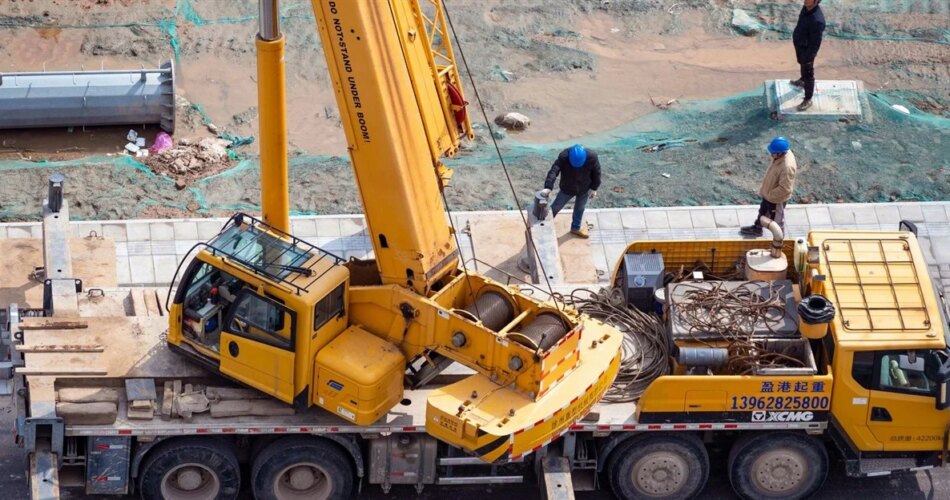
Winning a construction tender may signal the start of a project, but it also marks the point where operational, financial and safety risks begin to intensify.
Source: Pexels.
As contractors move from planning to implementation, the pressures associated with logistics, compliance, equipment safety and project delivery increasingly come to the fore.
In South Africa's increasingly complex construction environment, industry experts have warned that risk management, insurance and operational planning can no longer be treated as separate processes if projects are to remain viable and resilient.
Recent construction failures have brought these risks into sharper focus, but the underlying issue is not what happens when things go wrong. This is what has already been in motion long before that point.
In the South African context, rewards are often a signal that risk appetite is beginning to build. For example, financial commitments must be locked in, operational demands on the business begin to increase, and much of the project begins to fall outside the direct control of the company. The work on paper has just begun. In practice, the pressure has already started.
an interconnected environment
This affects the entire delivery chain. Devices move between sites. Materials travel long distances before reaching their destination. Subcontractors come and go. Labor is managed under duress. Each of these presents its own set of risks, and they do not work in isolation. This is where the difference often appears. Insurance is treated as a requirement to be satisfied before work can begin, rather than as a reflection of whether the project has been fully understood.
Spend time near active sites, and patterns will become apparent. Materials do not arrive at expected time. Equipment either arrives late or is stolen. Delivery is always disrupted. Sites are forced to stop, not because work cannot continue, but because something in the chain is broken. The costs are not always immediately visible, but they quietly accumulate in the background.
Transportation risks alone become more complex. With the movement of goods, especially over long distances, contractors and manufacturers face increasing levels of disruption. Incidents of truck hijacking on major routes remain a matter of concern, affecting not only delivery timelines but also the availability of critical materials. When a delivery doesn't arrive, it's not just a logistics issue. This affects scheduling, labor allocation and ultimately project feasibility.

Why are workplace safety failures now affecting building performance in South Africa?
At the site level, security risks are equally present. Equipment and materials are valuable, often unsafe, and frequently targeted. In some cases, projects are disrupted by organized groups seeking access, influence or payment. These realities are part of the operating environment in the South African construction sector.
Add a layer of administrative risks on top of that. Contract disputes, delays, and compliance requirements all accompany the physical construction. When deadlines change or costs increase, those pressures come to the fore very quickly. For contractors operating on thin margins, there is little room to absorb unexpected events.
More than just ticking boxes
This is why insurance cannot be viewed as a checklist exercise. It's not just about keeping a cover. It is about whether the true risks have been identified in advance, and whether the project is structured to absorb disruption.
Cover for plant and machinery, goods in transit, liability and business interruption should not be taken later. They are indicators of how well the scope of the project has been understood and understood. If those conversations begin only after the tender has been awarded, the process is already reactive.
What is changing in the market is not just the level of risk, but also who is taking it. The construction sector is seeing an increase in participation from new contractors entering the tender environment. This is a positive change in terms of competition and opportunity. Yet, this also means that more projects are being delivered by teams that have not yet experienced the full spectrum of operational risk.
pressure management
Additionally, pricing pressure also continues. Margins are tight. There are more demanding deadlines. Tolerance for disruption also decreases as the probability of disruption increases. This combination creates a delicate operating environment where small issues can escalate rapidly.
From a broader industry perspective, risk is becoming more fragmented. It no longer sits in an obvious place. This moves between logistics, site operations, compliance and external factors such as security and reliability of infrastructure. Managing this requires a more integrated approach, not just to insurance, but to how projects are planned from the beginning.
The contractors who pull this off successfully have one thing in common. They do not separate the delivery from risk. They treat insurance, logistics, and operational planning as parts of the same conversation, not as separate steps in a process.
In construction, results are rarely decided solely on site. Decisions regarding planning, coverage and preparedness are shaped long before the work begins. Winning a tender may seem like a milestone that matters. In practice, this is the moment when the risk becomes apparent.