
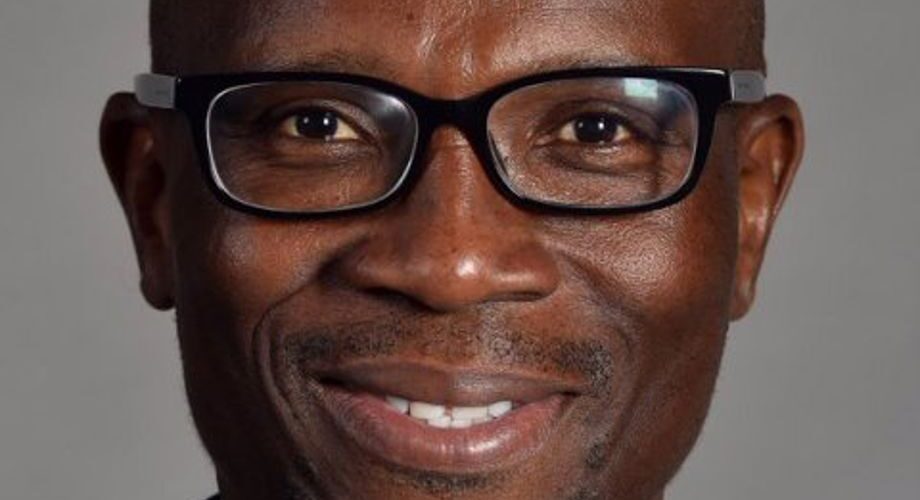
South Africa is stepping up efforts to attract massive private investment in infrastructure development as the government faces an estimated R13 trillion infrastructure financing gap, Deputy Finance Minister David Masondo said on Wednesday.
Speaking at the Infrastructure Investment Summit organized by global asset management giant BlackRock in Cape Town, Masondo warned that public resources alone will not be enough to meet the country's huge infrastructure needs and called for significantly increased private sector participation.
His comments come following the release of a joint study by the Development Bank of Southern Africa (DBSA) and the World Bank, titled beyond the gapwhich estimates that South Africa has a shortfall in infrastructure financing of approximately R13 trillion.
Government plans R1.07 trillion infrastructure spending
Masondo revealed that the government plans to spend approximately R1.07 trillion on infrastructure over the next three years, with the majority of the investment expected to be implemented through state-owned companies and public entities.
However, he stressed that public financing capacity remains limited.
“This means that public resources alone will not suffice. Private capital must play a much larger role in financing the next phase of South Africa's infrastructure development,” Masondo said.
Economists say South Africa's infrastructure bottlenecks – particularly in energy, logistics, water and municipal services – have become major obstacles to economic growth, industrial expansion and investment confidence.
Energy infrastructure has emerged as a major investment opportunity
One of the most significant opportunities identified by the Government is the expansion of South Africa's electricity transmission infrastructure.
Masondo said South Africa planned to build about 14,000 kilometers of transmission lines at an estimated cost of R450 billion.
“This is one of the largest infrastructure opportunities currently available in emerging markets,” the deputy minister said.
Transmission expansion is considered important for integrating new renewable energy projects into the national grid and improving long-term energy security.
Industry experts say insufficient transmission capacity has become one of the biggest obstacles slowing South Africa's energy transition and power generation expansion.
New credit guarantee instrument to reduce investors' risk
To help unlock private investment in transmission infrastructure, the government has developed a new Credit Guarantee Vehicle (CGV) that aims to reduce investors' risk and improve project bankability.
The initiative is expected to mobilize substantial private and development funding for infrastructure expansion.
Key Features of Credit Guarantee Vehicle:
-
Initial target to raise R10 billion
-
Financing assistance from development finance partners
-
National Treasury will provide 20% first-loss capital support
-
Initial fiscal commitment of US$100 million
-
Expected to commence operations by July 2026
“In line with the first phase of transmission expansion projects, the credit guarantee vehicle is expected to be operational by July 2026,” Masondo said.
Officials indicated that the vehicle could later be expanded beyond energy transmission:
Infrastructure finance experts say blended finance and risk-sharing mechanisms are becoming increasingly important to attract institutional investors into large infrastructure programs in emerging markets.
Infrastructure must support industrialization
Masondo stressed that investment in infrastructure should not be done in isolation, but as part of a broader industrial and economic development strategy.
He warned against the global pattern of infrastructure being developed in line with productive economic activity.
“Too often in the developing world, we have seen roads being built without industrial corridors, ports expanding without manufacturing zones and energy infrastructure being developed in line with industrial demand,” he said.
“The result is that infrastructure is underutilized, economically inefficient, and unable to generate the growth needed to sustain long-term returns.”
The Deputy Minister argued that infrastructure achieves maximum economic impact when directly linked to:
-
Production
-
mining
-
Agriculture
-
Business
-
industrial production
-
export growth
“If we start there, infrastructure becomes more targeted, more bankable, more growth-enhancing and ultimately more investable,” Masondo said.
Government highlights improvement in economic stability
Masondo also tried to reassure investors by highlighting South Africa's macroeconomic situation and improvements in fiscal management.
According to the Deputy Minister, South Africa has recently made a number of important achievements, including:
-
Primary budget surplus for three consecutive years
-
Removal from the gray list of the Financial Action Task Force (FATF)
-
Upward revision of GDP growth projections during the 2026/27 budget
“These developments matter for investors as capital prices remain risky,” Masondo said.
He said investors assess countries based on the following:
-
Stability
-
forecast
-
fiscal stability
-
development prospects
-
institutional flexibility
“When risks are lower, the cost of capital falls. Low inflation, stronger public finances and better growth prospects reduce financing costs not only for the government, but for the entire economy,” he said.
Municipal infrastructure crisis is in the headlines
Masondo also highlighted the severe financial pressures facing South African municipalities, particularly in relation to infrastructure maintenance.
The government estimates that the country faces an annual R36 billion municipal infrastructure maintenance gap.
Many municipalities struggle with:
-
aging infrastructure
-
water system failure
-
Power Distribution Challenges
-
Weaknesses of revenue collection
-
operational inefficiencies
Improvements in Metro Trading Services to Unlock Investments
To address municipal infrastructure challenges, the government has introduced the Metro Trading Services Reform, which aims to improve financial sustainability and operational accountability within metropolitan municipalities.
The objective of the reform is to limit the revenue generated from:
-
water services
-
electrical services
-
waste management
The aim is to ensure that the revenue generated from these services is directly reinvested in the maintenance and operation of the infrastructure rather than being transferred elsewhere.
“The reforms are designed to improve financial transparency, strengthen operational accountability and create clearer revenue visibility for investors and lenders,” Masondo said.
R100 billion municipal investment pipeline
The government has already mobilized approximately R54 billion in performance-linked incentives to support the metro reform programme.
Officials estimate that the initiative could unlock more than Rs 100 billion of infrastructure investment opportunities in metropolitan municipalities.
Analysts say reforming municipal financial governance could be key to restoring investor confidence in local infrastructure projects and public-private partnerships.
Infrastructure seen as key to economic recovery
South Africa's infrastructure expansion agenda is seen as central to the country's broader economic recovery strategy.
Infrastructure investment is expected to support:
However, experts say achieving these goals will require:
-
strong project preparation
-
regulatory certainty
-
institutional reform
-
Effective Public-Private Collaboration
-
sustainable financing mechanism
Private capital expected to play an increasing role
Masondo's comments reflect a broader shift in government policy towards greater reliance on the private sector and institutional capital to finance strategic infrastructure development.
As global infrastructure investment competition intensifies, South Africa seeks to establish itself as an attractive destination for long-term infrastructure investors.
The combination of transmission expansion, mixed finance vehicles, municipal reforms and improvements in macroeconomic indicators are expected to become a central part of the country's investment attraction strategy in the coming years.
As the government seeks to close the country's huge infrastructure financing gap, officials believe successful mobilization of private capital will be essential to unlock growth, improve competitiveness and support long-term economic transformation.