
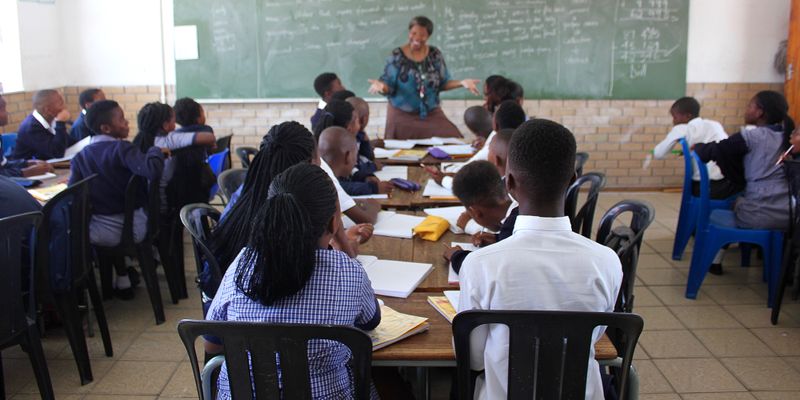
Young teachers enter the profession armed with a strong desire to change lives, educational principles and a deep passion for young people. But the reality of the modern South African classroom soon becomes a constant litmus test.
According to parliamentary figures published by Basic Education Minister Siviwe Gwarube South Africa has lost more than 32,000 teachers over the past five years, following a query by Build One South Africa (Bosa). That means, on an average, more than 6,000 teachers are leaving the classroom every year. Of these departures, a staggering 30,992 resignations were due to workload pressure, career change and migration, while 1,245 teachers were dismissed under the Teachers' Employment Act.
Bossa highlighted that more than 50% of South Africa's primary school students are now taught in overcrowded classrooms of more than 40 children. Yet, the department's own national recruitment database has at least 12,700 qualified, unemployed teachers actively looking for work, while classrooms remain understaffed.
This data reflects Teacher Preferences and Job Satisfaction in South Africa Report by the Research on Socio-Economic Policy Unit (RESEP) at Stellenbosch UniversityWhich found that nearly half of all serving teachers in the public system are thinking about leaving within the next decade.
The primary factors driving this potential mass exodus include being overworked, underpaid, being crushed by administrative paperwork, experiencing high stress, emotional burnout, and lack of support.
New teachers feel woefully underprepared for real-world classroom dynamics, especially when they try to support learners who are years behind the curriculum. Theoretical teaching strategies quickly unravel in overcrowded classrooms, eliminating any hope of one-on-one remedial support, doubling the marking load and making discipline almost impossible.
Left to overcome these enormous obstacles alone, it's no wonder so many young teachers consider walking away. To combat this silent exodus, the Jacques Gervel Fellowship (JGF) has emerged as a vital lifeline, fighting to reverse the tide by replacing the reality of “sink or swim” with structured, holistic support.
Building a safety net for SA teachers
/file/attachments/orphans/JGFImages3_998448.jpg "The Jacques Gerwel Fellowship empowers expert teachers, educational leaders and social entrepreneurs to solve pressing educational challenges. (Photo: Jacques Gervel Fellowship)")
JGF is a non-profit organization dedicated to the professional development and retention of early-career teachers across South Africa.
Recognizing that the transition from university theory to the high-pressure realities of the classroom is often overwhelming, JGF steps in to bridge the gap with a strong, holistic support system. The Fellowship focuses on empowering newly qualified teachers, equipping them with the practical tools, confidence and professional support they need to maintain their impact and avoid the stress that drives many young teachers out of the system.
JGF focuses its efforts on strengthening teachers through a multi-tiered support model that includes individualized, classroom-based coaching, structured counseling, and access to psychological counseling through wellness partners.
The organization also facilitates professional learning communities that connect novice teachers with peers facing similar challenges.
“Teacher stress is a global issue, but many countries have implemented structured support systems to help teachers cope, but in South Africa this safety net is virtually non-existent, leaving teachers to sink or swim on their own. The result? Dangerous levels of exhaustion, frustration and burnout,” said Banele Lukhele, CEO of JGF.
newbie reality
Bayanda Jawara has only been in the classroom for four months, but he already understands the enormous importance of the profession.
/file/attachments/orphans/BayandaJwara_954804.jpg "Novice teacher Bayanda Jawara manages about 200 students a week and says the jump in responsibility from university to the classroom is huge. (Photo: Jacques Gervel Fellowship)")
Jwara teaches seven classes in two subjects, English and Life Orientation, which means he handles around 200 students a week.
“There is a lot of beauty in pressure because you really learn about the people around you and build stronger relationships with your learners inside and outside the classroom,” she said.
Jawara is well aware of the dilemma that often plagues early-career teachers.
He attributes this not to lack of passion, but to a severe lack of systemic support. Novice teachers are often given heavy responsibilities with the expectation that they will cope with them easily.
“It's mostly fatigue and lack of support from senior management,” Jawara says. He said, “You're dealing with 35 different personalities an hour, and eight hours a day you're dealing with so many different people. It's an incredibly highly stimulating place.”
He also refutes the statement that it is easier for teachers because of school holidays.
“Even when we get leave, your brain doesn't stop. We don't have the space or time for mental health checkups,” he said.
Stigma of exhaustion in the staffroom
For Ronel Mohlala, the decision to enter the classroom was deeply personal. She was inspired by a grandmother who financed tuition fees for community members because she believed in the transformative power of education. Despite her passion, the reality of the classroom has been an intense litmus test.
/file/attachments/2991/RonnellMohlala_634046_891219.jpg "Ronelle Mohlala credits the Jacques Gerwel Fellowship for providing the vital support system she needed to survive in the classroom. (Photo: Jacques Gervel Fellowship)")
Mohalla returned to teach at her alma mater, an affluent, tech-savvy private school. He explained that an abundance of resources can actually hide a silent crisis in the staffroom.
“When people talk about challenges in the classroom, they mostly think of physical challenges, large class sizes, poor infrastructure and lack of resources in government schools. Because of this, the challenges in well-resourced schools are often ignored.
“We're making sure everyone is trained and it's bringing in new technology very quickly. But at the core of it all are tired teachers. We're adding all this technology, but no one is looking at why teachers are so tired,” Mohlala said.
Mohlala found the transition from university to full-time teaching difficult. While the internship eased them into teaching, their transition to becoming a fully qualified staff member lacked structural support.
“There were no proper new teachers involved, and it was a shock to my system. I was basically thrown in the deep end. They expect you to know how it works because you've been part of the system, but it's a whole different ball game figuring out how many assessments to schedule or how to officially record marks,” she recalled.
When looking at why almost half of South African teachers are considering leaving the profession, Mohlala points to an unsustainable workload, a lack of systemic protections regarding learner discipline and a non-existent space for mental health.
“There's definitely a culture of 'just get on with it,'” she admits. “There's no time to really unload stuff. As soon as you talk about how you're feeling or say you're tired, it's interpreted as a complaint, and you worry it will reflect poorly on your work ethic. We have a school counselor for the kids, but it would be very beneficial for the staff to have someone to talk to. We're dealing with a lot,” she said.
Securing the human foundation of our schools
What keeps Jwara going is the strong support system she has received in the school she teaches at and through JGF. He describes his school as a highly forgiving and supportive environment, which is an important safety net for a first-year teacher who is bound to make mistakes.
Moreover, the continuous coaching he has received from JGF has been a game-changer.
“They don't just train you to be a teacher; they train you to be a human being. They help you balance profession with real adulthood. It's easy to say, 'We teach because we love it.' Yes, we love it. But I wouldn't love it so much if I didn't have the support I do now. This is exactly what teachers need, but often don't get,'' he said.
Mohlala plans to remain in this profession for the foreseeable future. She attributes this entirely to the mentorship and professional network she has had access to.
“If I didn't have this support system, I wouldn't still be in the classroom. It's so important to be seen by an organization and have someone with experience to ask how to deal with these challenges. They connect you with a network of teachers, so you know you're not alone,” she said.
Lukhele explained that the quality of South Africa's education system depends on the well-being, support and preparedness of its teachers.
“If we want our teachers to thrive and our learners to succeed, we need to make structural changes. Now is the time to treat teacher burnout for what it is: an urgent threat to our future and a call to action that we can no longer ignore,” Lukhele said. DM