
South Africa has announced a bold package of structural reforms R1 trillion public infrastructure investment programTo prepare the country for a new phase of economic expansion, energy security and investor confidence.
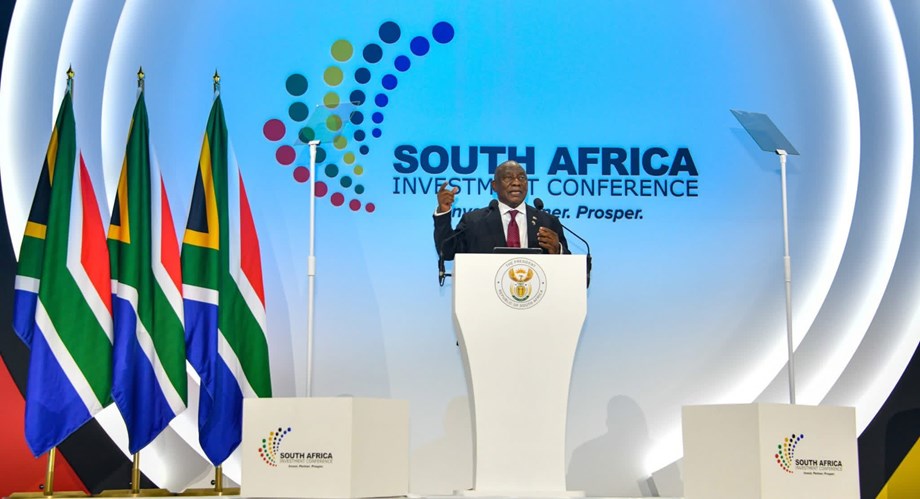
Speaking at the sixth South Africa Investment Conference (SAIC 2026) in Sandton, President Cyril Ramaphosa outlined a comprehensive reform agenda targeting key sectors. Electricity, Transport and Logistics, Water System, and Visa Rules-All aimed at unlocking growth and reducing barriers to investment.
with more than 1,000 delegates from over 50 countries In appearance, this announcement signals South Africa's intention to become one of the most competitive investment destinations in emerging markets.
Energy reforms deliver sustainability and unlock broader green investment pipeline
At the center of the reform program is a transformed energy sector, long seen as an obstacle to economic growth.
The government has:
-
Reorganized Eskom and established a National Transmission Company As an independent grid operator
-
gave an introduction Transparent, rule-based system for grid accessEnabling private sector participation
-
executed energy action planwhich has been effectively Load shedding endsRestoring power supply reliability
These reforms have opened up an unprecedented pipeline of renewable energy investments:
-
220 GW renewable energy projects currently in development
-
36 GW already in grid connection process
-
SAIC announces R29 billion confirmed renewable energy investment in 2026
The government is also opening the transmission network to private investors. Independent Transmission ProjectsWhich marks a significant shift towards a more competitive and decentralized energy market.
Ramaphosa emphasized that new industries will be promoted, including decarbonization Green hydrogen, battery storage, and electric vehicle manufacturingTo position South Africa as a leader in Africa's green transition.
Logistics overhaul: ending monopolies and opening up rail and ports
In the transport sector, South Africa is eliminating inefficiencies and introducing competition through landmark policy reforms:
-
implementation of National Railway Policy (2022) And FREIGHT LOGISTICS ROADMAP (2023)
-
A 25 year concession for Durban Container Terminal Pier 2attract R11 billion in private investment
-
allocation of 41 freight rail slots to private operatorsWith the first operation expected by April 2027
These measures are designed Reduce logistics costs, improve efficiency and boost export competitivenessEspecially for industries like mining, manufacturing and agriculture.
Water sector transformation and the R50 billion investment pipeline
Recognizing water security as a critical economic enabler, the Government is undertaking wide-ranging reforms:
-
establishment of Commercially Managed Water Utilities in all eight metropolitan areas
-
Introduction A strong regulatory framework To improve accountability and performance
-
launch a large-scale infrastructure construction programIncluding dams, desalination and waste water treatment
more than this R50 billion in water-related projects already in developmentSupported by newly created Water Partnership Office Facilitating private sector participation.
A major initiative, Lesotho Highlands Water Project Phase 2is scheduled to be completed between 2028 and 2030Significant increase in long-term water supply.
R1 trillion infrastructure push: the biggest in South Africa's history
Government is committed R1 trillion in public infrastructure spending over the medium termThis marks the largest investment cycle in the history of the country.
Details of allotment:
-
R577.4 billion By state-owned enterprises and public entities
-
R217.8 billion by provincial governments
-
R205.7 billion by municipalities
Transport and logistics will have the largest share, reflecting their central role in economic productivity.
Highlighting its impact, Ramaphosa said, “Infrastructure is the wheel of growth.” Job creation, business expansion and cost reduction for businesses.
Innovative financing to crowdsource private investment
To accelerate project delivery and reduce risks, the government is deploying new financing mechanisms:
-
infrastructure fundwhich has already been approved R38 billion in blended finance projects
-
update Public-Private Partnership (PPP) Rules to attract private capital
-
A credit guarantee vehicle Designed to de-risk large-scale infrastructure investments
These instruments aim to bridge funding shortfalls and fast-track critical projects in sectors such as energy, transportation, healthcare and housing.
Visa reforms to attract skills and boost tourism
Recognizing the importance of human capital, the Government is reforming its visa regime:
-
Streamline processes for skilled workers and investors
-
Easy movement facility for multinational companies
-
Support the development of the tourism sector
“Investors don’t just invest capital – they also need to establish a physical presence without bureaucratic delays,” Ramaphosa said.
Inclusive growth and change at the core
Beyond infrastructure and investment, the reform agenda emphasizes inclusive economic transformation.
The government is reviewing and strengthening it Broad-Based Black Economic Empowerment (B-BBEE) Framework to ensure this:
-
Promotes equal participation in the economy
-
supports sustainable development
-
Attracts global investors
A major system, Equity Equivalent Investment Program (EEIP)Allows multinational companies to contribute to socio-economic development, skills training and enterprise support without transferring equity.
Since its launch, the program has attracted leading global companies to invest Youth, Women and Black Owned EnterprisesStrengthening South Africa's commitment to inclusive growth.
A strategic pivot towards long-term growth
The reforms collectively signal a strategic pivot towards a more competitive, investment-friendly and resilient economy.
By removing structural barriers and mobilizing large-scale infrastructure investment, South Africa aims to:
-
reduce cost of doing business
-
Increase Productivity and Business
-
create jobs on a large scale
-
Position yourself as a gateway to African markets
“Our structural reform agenda has laid the foundation – now we are harnessing its momentum,” Ramaphosa said.
Outlook: Recovery momentum meets investment opportunity
As global investors seek stable and reform-oriented markets, South Africa's broader policy changes and infrastructure drive could significantly enhance its attractiveness.
However, the success of this strategy will depend on Implementation, policy sustainability, and sustained private sector involvement.
With a clear roadmap and significant capital commitments, South Africa is signaling that it is not only open for business – but actively reshaping its economic future.