
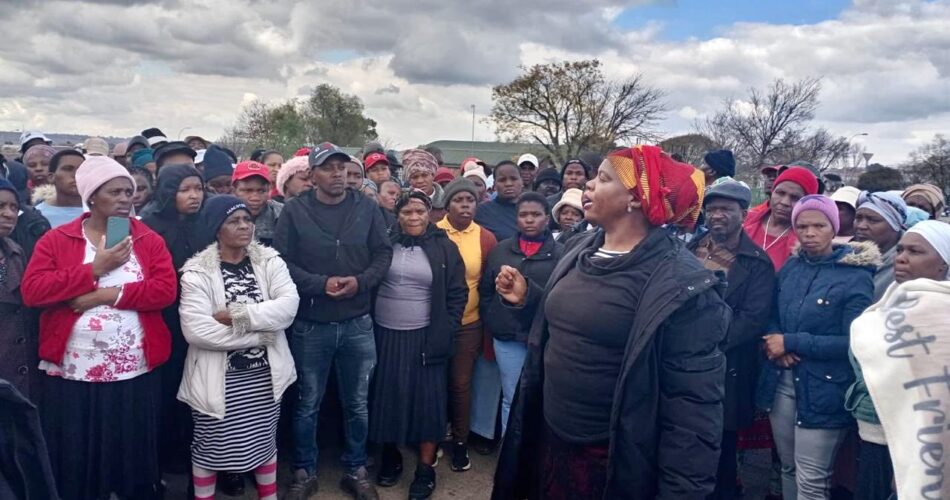
Proposed Prevention of Illegal Eviction by Unlawful Occupancy of Land (PIE) In South Africa the amendment bill has sparked widespread outrage among grassroots movements, housing activists, trade unions and progressive organisations. The resistance is being led by Abahlali Besmzondolo, the country's largest social movement of the urban poor. described the bill As a “declaration of war against the poor”.
Abahlali Basemzondolo and allied organizations say the bill is not just a legal amendment. It represents a broader political effort to criminalize poverty, suppress grassroots organizations, and deepen oppression in a society already marked by rampant inequality, unemployment, and landlessness.
South Africa's deepening housing crisis
Thirty-two years after the end of apartheid, millions of south africans Continue to live without secure housing, land or respect. Informal settlements are increasing as unemployment, inequality and high costs of living push more people into precarious situations.
According to organizations opposing the bill, more than 3.7 million families live without housing, with the shortage increasing by about 178,000 homes every year. For many poor and working-class communities, land tenure has become a necessity rather than a choice. In the absence of affordable housing and meaningful land reform, business is often the only means through which people can secure shelter and survive.
Abahlali Basemzondolo argues that these occupations should not be understood as criminal acts, but rather as “grassroots urban planning” carried out by communities abandoned by the state. The movement emphasizes that the social value of land should be prioritized over private profit and speculative interests and that where there are genuine challenges around land use, they should be resolved through dialogue, not state violence.
What is PIE Amendment Bill?
The original PIE Act was introduced after apartheid to prevent arbitrary and violent evictions. This gave effect to section 26(3) of the South African Constitution, which states that no one may be evicted from their home without a court order after considering all the relevant circumstances.
The law required courts to examine whether eviction would leave people homeless and whether alternative housing existed. It also recognized the vulnerabilities of children, female-headed families, the elderly and persons with disabilities.
However, the proposed PIE Amendment BillGazetted by the GNU Cabinet on April 16, 2026, seeks to significantly change these protections.
ABM and other organizations say the amendments would make evictions easier while weakening constitutional safeguards for poor communities. Courts can also order eviction where no alternative accommodation exists. The duration of temporary housing may also be limited, potentially rendering evicted families homeless.
More controversially, the bill provides for criminal penalties for people accused of organizing or supporting land grabs. Individuals who “instigate, organize, organize or permit” businesses to commit crimes may face stiff penalties, including prison sentences, fines of up to R2 million and asset confiscation.
For social movements, this provision is particularly dangerous because it directly targets organizers, activists, community leaders, and organizations of the poor.
ABM argues that the bill attempts to reverse democratic gains made after apartheid by reintroducing a punitive approach to land occupation, reminiscent of apartheid-era legislation such as the Illegal Squatting Prevention Act.
Abahlali Basemzondolo further warned that the law seeks to criminalize the everyday survival strategies of poor communities. Under the proposed law membership fees, community contributions and funds used to build infrastructure in occupied settlements could be interpreted as criminal activity.
The movement also argues that the bill specifically penalizes collective organisation. Courts will be instructed to consider the “speed, scale and frequency” of occupations when deciding eviction cases, effectively treating organized resistance as an aggravating factor.
A broad coalition against the bill
The struggle against the PIE Amendment Bill is not being led by Abahlali Basemzondolo alone. A broad coalition of organizations has united against the proposed legislation, including:
Ndifuna Ukwazi (NU), Reclaim the City (RTC), General Industries Workers Union of South Africa (GIWUSA), South African Federation of Trade Unions (SAFTU), and Socio-Economic Rights Institute (SERI).
They also argue that the bill weakens constitutional protections and moves South Africa back towards an authoritarian approach to land and housing.
Their joint statement warned that criminalizing possession ignores the structural causes of landlessness and homelessness, including unemployment, inadequate housing policy and the slow pace of land reform.
The coalition emphasizes that the solution to the housing crisis lies not in repression, but in meaningful urban land reform, expanded affordable housing, and democratic planning rooted in the needs of poor and working-class communities.
Trade unions including GIWUSA and SAFTU have also issued statements opposing the bill.
ground resistance
Opposition to the bill is already taking shape across South Africa through protests and community mobilization.
The Hlanganani branch of the ABM in Salt Rock within the KwaDukuza Municipality organized a protest rejecting the bill. Branches from Bambanani, Esitaneni, Enkanini and Vusumuzi Marched on the streets of Thembisa To raise awareness of what he described as a direct attack on the poor.
Community leaders also held political discussions and public pickets on Andrew Mapheto Drive in Thembisa, where organizers educated residents about the implications of the proposed law and prepared for widespread resistance.
Abahlali Basemzondolo has clearly stated that the bill will face resistance “in the public consultation process, on the streets and in the courts”.
Courtesy: People's Dispatch