
news
South Africa is considering tax cuts to revive its struggling industrial centres, in line with a World Bank recommendation to help reverse a long-term manufacturing slowdown and unlock billions in idle corporate cash.
The key policy emphasis is on raising the corporate tax rate to 15% – about half the standard rate – across the board special economic zone Officials in Africa's largest economy are taking the latest measures to reclaim its position as the continent's manufacturing powerhouse.
The move is being driven by the Department of Trade and Industry, which needs cooperation from the Finance Ministry as any tax change has an impact on state revenues. If implemented, South Africa – which lost its top ranking in the African Development Bank's industrialization index to Morocco in May – would put foreign investors such as mining major Rio Tinto and Irish glass maker Ardagh Group inside the tax incentive bracket.
“There's a case for Extension and modification The current SEZ incentive regime so that it is globally competitive,” wrote Maoto Molefane, a senior official at the Department of Trade and Industry, in an op-ed in South Africa's Business Day newspaper. His comments follow a World Bank assessment calling on Pretoria to eliminate ministerial approval requirements that have reduced the competitiveness of industrial parks within South Africa's SEZs. Currently, the tax benefits of SEZs require the signature of the Finance Ministry, and seven of the 13 zones have to do so. No access to lower rates.
Trade and Industry Minister Parks Tau said his department “Need to analyze in depth and consider implementation“The study's recommendations include a five-year turnaround plan for poorly performing areas, dedicated infrastructure funding and a shift towards privately managed sites.
know more
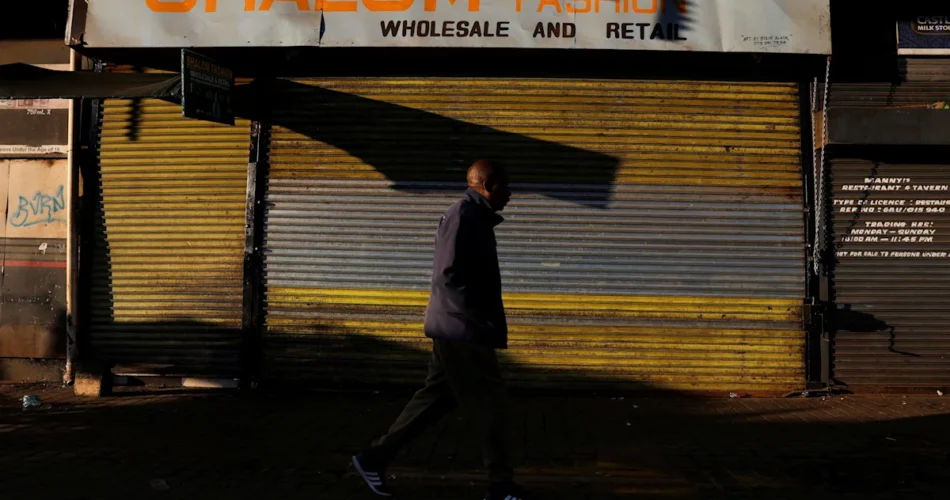
The manufacturing share in GDP has fallen from a quarter in the 1980s to about 12%, reducing South Africa's position as Africa's most industrialized economy.
The Department of Trade and Industry said a standardized 15% rate could unlock investment: There is about 1.8 trillion rand ($109 billion) of cash on corporate balance sheets that companies are holding onto amid policy uncertainty.
“The idea is to de-risk industrial projects in the early stages of development, thus paving the way for meaningful private sector investment,” Molefane said. He said the intense strategic play was aimed at adding value to South Africa's $40 trillion mineral reserves.
The potential tax changes come weeks after Pretoria approved an estimate $2.3 billion concessional electricity tariff package to its largest ferrochrome producers, including the Glencore joint venture. In exchange for 50% cheaper electricity, Glencore will bring idle smelters back online and preserve jobs.
Famous
-
Morocco eliminates South Africa 15 year reign As Africa's most industrialized economy this yearA growth driven by two decades of industrial policy that included zero-rated VAT, duty-free equipment imports and subsidized land utilities.