
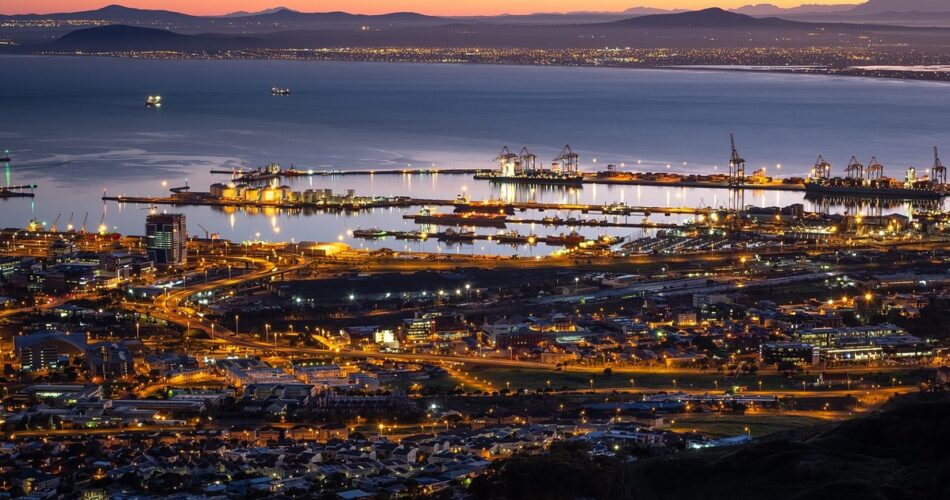
With no resolution to tensions in the Strait of Hormuz in sight, more and more ships are circling the Cape of Good Hope. But is South Africa able to take advantage of the traffic?
Timothy Walker, senior researcher on maritime security at the Institute for Security Studies, spoke to 702 and CapeTalk presenter Motheo Khoerippe.
Walker said the situation in the Strait of Hormuz has made the shipping industry in general very concerned about the sensitivity of certain choke points and the control that coastal states or coastal authorities have over them.
“The Bab al-Mandeb between Djibouti and Yemen on the other side of the Arabian Peninsula has long been a place of insecurity. And now with other choke points on the other side of the Arabian Peninsula becoming problematic, it has been reaffirmed in the minds of many shipping companies, container shipping companies like Maersk, that the entire region is not one where they can have reasonable expectations of security.
“So rather than taking a risk where you might have to increase your war risk coverage, which is usually calculated based on the value of the ship, what they have done is divert their high-value shipping around the Cape.
So you're looking at large shipping containers that would typically go through the Suez Canal…
“It's taking extra time… and that increases the cost of those ships' voyages. But they are on a relatively busy schedule, which is why you don't often see them calling for South African port services.”
Walker said that one might expect that this boom in shipping around the Cape might result in more revenue from services such as berthing fees or cargo handling, especially bunkering, but in reality this has not been the case.
“So we have seen increased shipping over about three years and not necessarily a lot of benefits to South African ports compared to what they were doing in the past.”
However, he said the long-term vision is to capture a different layer of value.
“What we're trying to do as a country is to reconcile multiple agendas. They don't always fit together very well.
“We want to become an international maritime hub to serve the global maritime economy.
But we also want to do activities that have a kind of developmental mandate, particularly around employment generation. The unemployment rate here is the highest in the world.
“We're looking at new types of fuel production, a projected shipping industry of the future that is not going to disappear. We're not going to invent a way to move large amounts of goods around the world by air or land, it's always going to be by sea.
“So the ships that are going to be built over the next 10 to 15 years will have requirements for new types of engines and fuels, particularly hydrogen and ammonia. And that's where the South African government, supported by organizations like the World Bank and the European Union, is investing a lot in terms of the commercialization of green hydrogen.
“The DTIC (Department of Trade, Industry and Competition) produced a strategy to 2024 which estimated it could add £180 billion to GDP and about 400,000 jobs,” Walker said.
To hear the full discussion on 702 and CapeTalk, click on the media player below: