
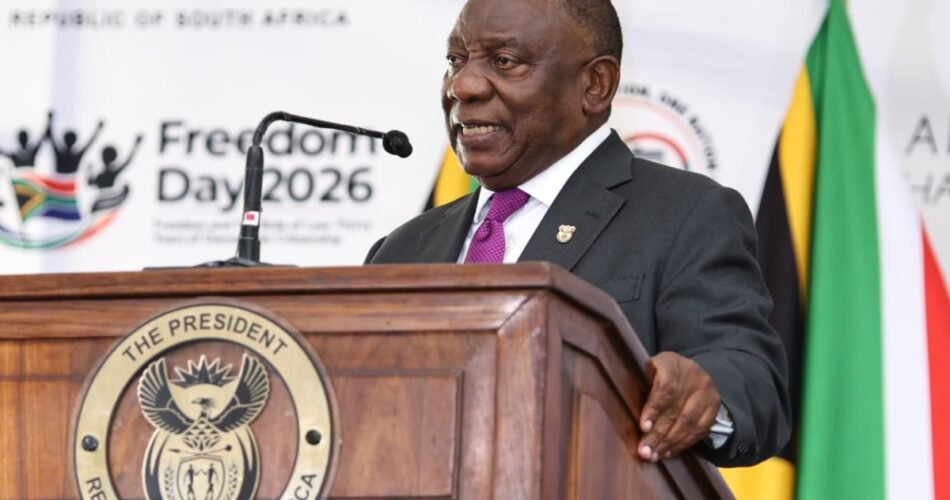
Nairobi – South African President Cyril Ramaphosa has rejected claims of xenophobia, instead calling migration pressure a continental challenge that requires African-led solutions, deeper economic integration and shared prosperity across the continent.
Speaking during President William Ruto's state visit to Pretoria on Thursday, Ramaphosa said migration featured prominently in bilateral talks as both leaders addressed growing concerns over anti-foreign sentiment and tensions linked to undocumented migration into South Africa.
Ramaphosa said, “I explained that South Africans are not xenophobic. South Africans are Africans. They want to live in peace with other Africans.”
What should I follow WhatsApp | Linkedin for latest headlines
The South African leader acknowledged that migration is placing pressure on communities and public services, but stressed that the challenge is not unique to South Africa and requires collective action on the part of African governments.
“Our people are calling on us as leaders to address the many challenges posed by migration,” he said, adding that Pretoria is taking steps to address the issue.
His comments come amid increased scrutiny of South Africa's treatment of foreign nationals following recent protests demanding tougher action against undocumented immigrants.
Several African countries, including Kenya, Malawi, Lesotho and Zimbabwe, have urged their citizens to remain vigilant amid rising tensions.
However, Ramaphosa tried to shift attention away from accusations of xenophobia towards the underlying economic factors driving migration.
President Ruto echoed this sentiment, arguing that migration pressure is largely a result of uneven economic development across the continent.
“I think part of the challenge that South Africa faces is that it is a more developed country and so it is easier for people to come here looking for services and opportunities,” Ruto said.
“The answer is to ensure that services and opportunities are available everywhere on our continent.”
Ruto linked the migration debate to ongoing African Union reforms, arguing that a stronger and more effective continental body would help African countries create jobs, attract investment and, on rare occasions, reduce competition.
“It is important and imperative for us to create opportunities everywhere on our continent so that African people can move forward together with prosperity and not create conflict unnecessarily,” he said.
Both leaders used the occasion to advocate the principle of African solutions to African problems, and presented deeper continental integration as a long-term response to migration, trade barriers and security challenges.
Beyond migration, the discussion focused on increasing economic cooperation between the two major economies of Eastern and Southern Africa.
The leaders highlighted progress in addressing trade imbalances, strengthening regional value chains, and advancing the implementation of the African Continental Free Trade Area (AfCFTA).
Ramaphosa welcomed growing Kenyan exports to South Africa and pointed to the successful launch of the first AfCFTA trade consignment between the two countries as evidence that continental trade integration is beginning to yield concrete results.
He also praised the visa-free travel regime introduced in 2022, saying it has boosted tourism, business travel and cultural exchanges.
“Reducing barriers can bring Africans closer together and advance Agenda 2063’s vision of building the Africa we want,” Ramaphosa said.
Both countries are committed to strengthening cooperation in green energy, digital trade, transport, maritime affairs, agriculture and skills development, while supporting plans to establish a South Africa-Kenya Joint Business Council to deepen private sector participation in trade and investment.
On regional security, Ruto commended South Africa's role in peace efforts across the continent, including mediation initiatives in Sudan and South Sudan, and reaffirmed Kenya's commitment to working closely with Pretoria on peace and security matters through the African Union.
The visit also underlined a joint effort for reforms of global governance institutions, including the UN Security Council and the International Financial Institutions, with both leaders arguing that Africa deserves greater representation in global decision-making.
“Working together, South Africa and Kenya can help shape a peaceful, unified and thriving African continent,” Ramaphosa said.