
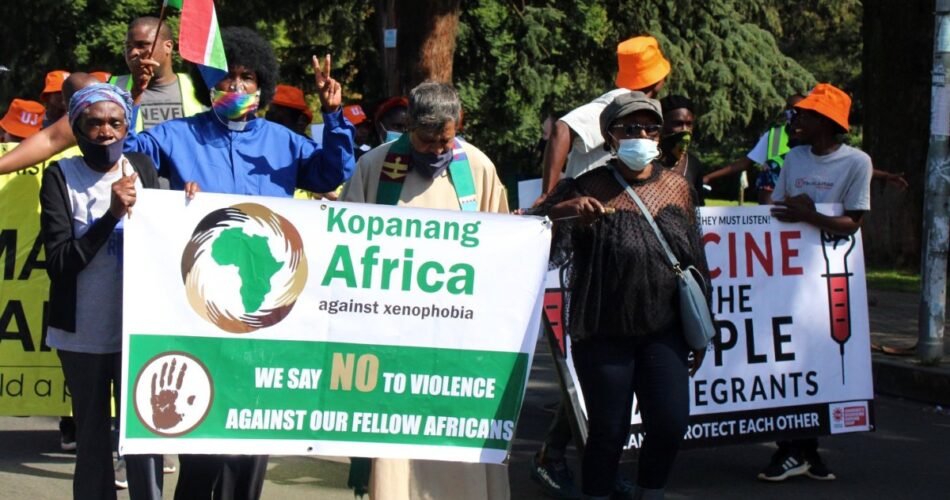
South Africa has pushed back against accusations of xenophobia after a wave of anti-migrant protests that have destabilized communities across the country and drawn criticism from elsewhere on the African continent.
In recent weeks, protests targeting foreign nationals have erupted in several major South African cities, at times turning violent.
The unrest has caused concern in countries including Nigeria, Ghana and Mozambique, while UN Secretary-General Antonio Guterres has said also sounded the alarm.
Speaking at a press briefing this week, presidential spokesman Vincent Magwenya insisted that South Africa should not be labeled xenophobic, arguing that the protests reflected broader tensions around migration, crime and economic pressures rather than hostility towards foreigners overall.
Keep up with the latest headlines WhatsApp | Linkedin
“South Africa is not xenophobic. South Africans are not xenophobic,” Magwenya said. “What's happening is that we have many areas of opposition, which is allowed Under our Constitution. We must also take into account the fact that the issue of immigration is a source of tension.”
South Africa remains the continent's most industrialized economy and a major destination for migrants seeking work and stability. according to National Statistical InstituteThe country is home to more than 3 million immigrants.
South African President Ramaphosa condemns anti-immigrant protests
call for continental dialogue
The South African government has acknowledged the growing unease in other African countries over the situation. Nigeria in particular has reacted sharply following reports of attacks against its citizens and businesses.
Magwenya said criticism of African governments should open the door to broader discussion migration pressure Throughout the continent.
“The criticism we have received from different countries on the continent should not be limited to mere condemnation, but also a willingness to engage in constructive dialogue on the problems and factors that drive people to leave their countries,” he said.
The comments reflect Pretoria's effort to reframe the crisis as part of a broader African challenge involving unemployment, insecurity and uneven economic development, rather than simply a domestic issue.
However, recent demonstrations have highlighted long-standing frustrations inside South Africa, where high unemployment, rising living costs and crime are often on the rise. resentment towards immigrants. Similar incidents of anti-immigrant violence have occurred several times over the past two decades.
To display this content from X (Twitter), you must enable ad tracking and audience measurement.
accept manage my likes Nigeria deports first group of citizens fleeing South Africa
Nigerians request repatriation
There have been several violent incidents involving Nigerian citizens in South Africa in recent weeks.
Abuja summoned South Africa's acting ambassador on 4 May to report what it described as “abuse of Nigerian citizens and attacks on their businesses”.
Nigerian Foreign Minister Bianca Odumegwu-Ojukwu said the two Nigerians recently Died in separate incidents South African security personnel are involved. According to the minister, on 25 April a man was reportedly “beaten by soldiers” in Port Elizabeth, while another man was found dead in Pretoria after an “alleged interaction with members of the Metropolitan Police”.
“These crimes are absolutely reprehensible and unacceptable,” Odumegwu-Ojukwu said in a statement. status report Published on X (formerly Twitter).
Buhari's reaction to Ramaphosa's apology for xenophobic attacks under consideration
The minister also warned Nigerians living in South Africa to remain vigilant as more protests are expected this week.
According to the Nigerian government, at least 130 Nigerians have now requested voluntary repatriation. Abuja has organized clearance work During previous waves of anti-immigration violence in South Africa.
Despite the tensions, Nigerian officials have sought to underline the importance of maintaining diplomatic ties between Africa's two largest economies.
Odumegwu-Ojukwu praised South African political leaders for publicly condemning the attacks, while South Africa's Foreign Minister Has held talks with his Nigerian counterpart to reaffirm relations between the two countries.
This article is adapted from original version In French by Josephine Kloeckner, RFI correspondent in Johannesburg.