
South Africa's financial system remains resilient despite a more volatile global backdrop, according to the South African Reserve Bank's June 2026 Financial Stability Review, with policymakers warning that geopolitical tensions, rapid advances in artificial intelligence and rising domestic tensions are creating new vulnerabilities that require closer scrutiny.
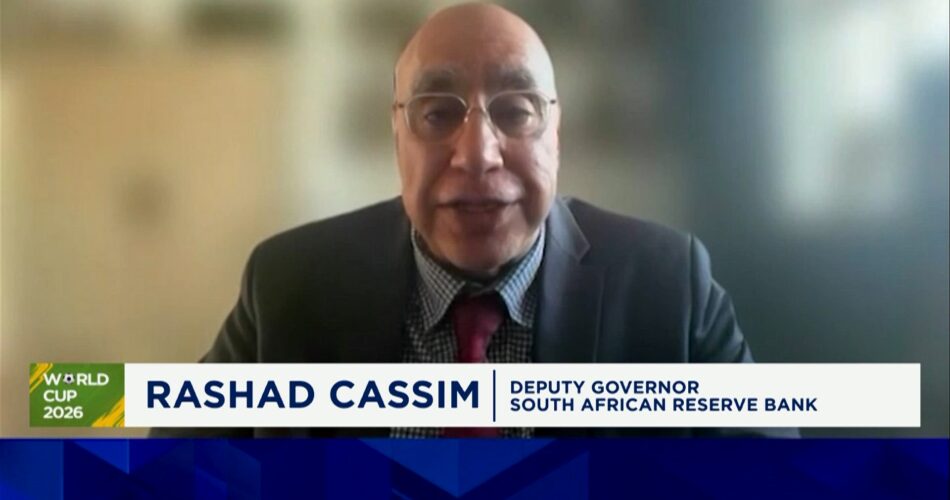
Speaking in an interview after the release of the report, SARB Deputy Governor Dr Rashad Kassim said the country's core assessment of financial stability has not changed dramatically since the central bank's last review in November 2025. What has changed, he said, is the global environment in which South Africa's financial system operates.
“I don't think financial stability has changed dramatically, but I think what has changed is the global environment,” Qasim said, pointing specifically to the war in the Middle East and the emergence of more powerful AI models as key developments since the last review.
The June report emphasizes how these external shocks can affect domestic financial conditions in more complex ways than standard monetary policy analysis allows. From the SARB's perspective, geopolitical risk is not just about major volatility in oil prices or markets. It also matters because prolonged inflation pressures and the prospect of policy tightening could put additional pressure on households and businesses, potentially increasing the risk of loan defaults and broader financial stress.
Qasim drew a clear link between the central bank's price stability mandate and its financial stability role. While the rise in oil prices may initially be viewed through the lens of inflation and interest rates, the question of financial stability is what will happen if pressures continue and the policy response should remain restrictive in the longer term.
In that scenario, households could become more stressed, companies could feel more stressed, and the economy could have a weaker balance sheet. This makes geopolitics a rapidly growing structural risk factor rather than a temporary disturbance.
A key area of concern for the SARB is the cumulative pressures faced by consumers, particularly low-income households with limited financial buffers. The central bank highlighted not only the familiar pressures of inflation and borrowing costs, but also more subtle risks arising from the way financial products and services are marketed and used.
Qasim said the review points to “pressure points” affecting homes, including online gambling, fraud, misleading advertising and offers such as buy now, pay later. These products may appear to provide relief during periods of stress, but may ultimately deepen financial vulnerability.
He suggested that this dynamic is especially important in the current environment. As families search for ways to manage tight budgets, some offerings may present themselves as beneficial tools, while the potential for over-indebtedness, loss, and repayment difficulties increases. The SARB's role is to explain how these different risks interact and what they mean for household resilience, he said.
Another central theme in June's review is artificial intelligence. While AI is often promoted as a driver of productivity and long-term growth, the SARB focuses on its potential to increase threats to the financial system, particularly cyber security.
Qasim said the central bank is looking at AI specifically from the perspective of financial system risk rather than broader economic questions like education or the labor market. In that context, the concern is that AI provides cyber criminals with more effective tools to attack financial institutions and exploit vulnerabilities in systems.
According to Qasim, authorities and financial companies are already devoting substantial resources to cyber defense. But AI, he said, adds another layer of urgency by increasing the complexity of threats and potentially creating vulnerabilities or pressure points that did not exist before.
He indicated that AI will remain a “ubiquitous topic” in future financial stability assessments, indicating that the central bank expects the issue to become more important rather than less important over time.
In contrast, Kassim suggested that crypto assets and stablecoins remain of more limited concern to the South African financial system at this stage. Although the SARB views these technologies as providing some scope for financial innovation, it does not currently view them as a major systemic risk.
Their footprint in the broader financial system is small and relatively marginal, he said. Still, regulators are keeping an eye on the integrity of the monetary system, the potential for regulatory arbitrage, and the risks associated with the use of digital assets as channels for illicit activity.
The difference the SARB is showing is remarkable: crypto and stablecoins are on the rise, but AI is seen as a far more pervasive and powerful force with implications across the entire financial sector.
Despite these rising risks, the Reserve Bank said that confidence in South Africa's financial system is based on strong regulation and institutional flexibility. Qasim first pointed to the banking sector, which he described as well-capitalized and supported by regulatory reforms implemented after the 2008-09 global financial crisis.
He said South Africa's banks were already resilient before the crisis and the country was one of the few that escaped a banking meltdown. Since then, authorities have further strengthened the system by implementing global Basel standards to ensure banks maintain adequate capital and liquidity buffers.
The same supervisory approach extends beyond banks to insurers and pension funds, which are also subject to minimum capital requirements and closer oversight. Overall, Qasim said, this has helped create a deep, liquid and flexible financial market.
Nevertheless, he stressed that resilience does not justify complacency. Internally, the SARB's Financial Stability Committee is tasked with continuously examining threats in both traditional and less visible parts of the market. Qasim described it informally as a “committee of concern” – a sign of the central bank's determination to continue investigating potential vulnerabilities.
That work includes monitoring money market funds, hedge funds, interbank linkages and other interconnected parts of the financial system that could transmit stress. The publication of the Financial Stability Review itself is part of that effort, offering an in-depth look at what Kassim calls the “dark corners” of finance.
The SARB has also taken practical steps to strengthen crisis preparedness. One of the biggest recent changes is the introduction of deposit insurance. Cassim said that, for the first time in South Africa, people depositing up to 100,000 rand in a bank will be protected if that bank fails.
Additionally, with the aim of minimizing disruption and protecting consumers' funds, authorities have developed more orderly resolution processes to close down distressed banks or insurers in a more orderly manner.
The message from the June 2026 review is that South Africa's financial system remains in solid shape, but the nature of risks is evolving. Geopolitical conflicts, digitally enabled financial pressures on households, and AI-driven cyber threats are reshaping the landscape. For the SARB, the challenge now is not just to respond to crises as they emerge, but also to identify the next source of instability before they spread through the system.