
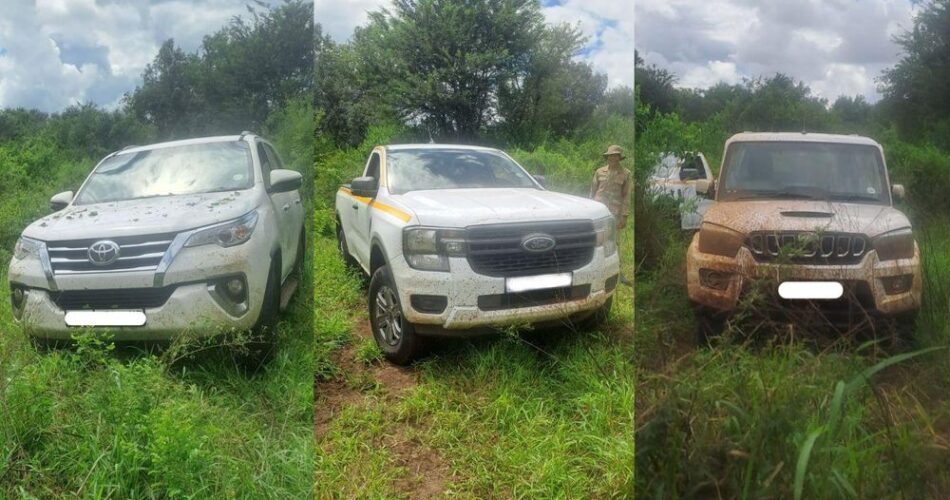
organized crime syndicate smuggling High-profile stolen vehicles According to a recent parliamentary reply, crossing South Africa's borders remains a significant challenge, with the majority of vehicles recovered being popular 4x4s and bakkies.
Acting Police Minister Firoz Kachaliya revealed that 36 stolen vehicles were recovered through a joint Interpol operation in neighboring countries.
“The organized crime investigation returned a total of 36 vehicles that were recovered during the last six months,” Cachalia said.
He said the following types of vehicles were recovered:
- toyota fortuner (8)
- Toyota Hilux (7)
- Ford Ranger (6)
- Nissan Navara (2)
- Toyota Cross (2)
- Mercedes-Benz Vito (2)
- Isuzu D-Max (2)
- Toyota Prado (1)
- Toyota Rav 4 (1)
- Mercedes-Benz (1)
- FAW Truck (1)
- Haval H6 (1)
- Range Rover (1)
- Volvo Trucks (1)
Willem Els, security expert at the Institute for Security Studies (ISS), explained that ISS has studied organized and transnational organized crime extensively in recent years, particularly through the ENACT programme.
Vehicle theft is a serious problem in the Southern African Development Community (SADC), and has been analyzed.
“It's estimated that 30% of vehicles stolen in South Africa are for the international market. That's for your regional market. Ultimately they get smuggled out of South Africa,” Els said.
He said that in recent months the border management authority, police and army have had several successes in seizing vehicles and arresting drivers taking them across the border.
“Our main routes they use are zimbabwe and mozambiqueElse said.
“These syndicates are highly organized and often place specific orders for vehicles. The syndicates say, 'We have a shortage. We need Range Rovers, this year and so on.'
“If you look at the more attractive vehicles for that market, the ones that have been there for a long time, we see that the Toyota brands, both the Fortuner and the double cab bakkies, the GD-6 and later models, are extremely popular for going out. Your Ford Ranger is very popular for going out.”
Else said that even luxury cars like Mercedes-Benz are being smuggled across the border.
He said Nissan Navara and Isuzu vehicles have maintained their popularity within and outside the country in the last one to two years.
Else said there are different markets: external and internal.
He said the internal market is attractive, mainly for stolen spare parts. cut shops. Popular targets include the Nissan NP200, due to a growing parts shortage due to fewer parts being manufactured.
He also said that the Nissan Almera is a popular target for vehicle cloning due to its reliability. Criminals take the legitimate Almera and make a duplicate using the same registration and engine number. They use syndicates within the system to create two sets of papers for the same vehicle. As a result, an identical clone of the vehicle you legally own and register may be driven elsewhere. These cloned vehicles are then sold in the market.
“Stolen vehicles are mainly exported, used for spare parts, or cloned for resale in South Africa.”
Else said disrupting these organized crime operations starts with intelligence, the backbone of any police operation.
Leveraging vehicle technology and city and tollgate cameras to consolidate data will significantly enhance intelligence capabilities, he said.
Instead of arresting drivers or shop breakers, we should target the kingpins to dismantle the syndicate, he said.
According to Ales, the primary objective is to dismantle criminal syndicates by targeting their leaders, or “kingpins”, effectively “cutting off the head of the snake”.
This objective depends on intelligence gathering, which is critical to locating the leaders of these operations. The process involves treating raw information as intelligence, processing it and then, through careful investigation, converting that intelligence into admissible evidence for court proceedings against the culprits.
(email protected)