
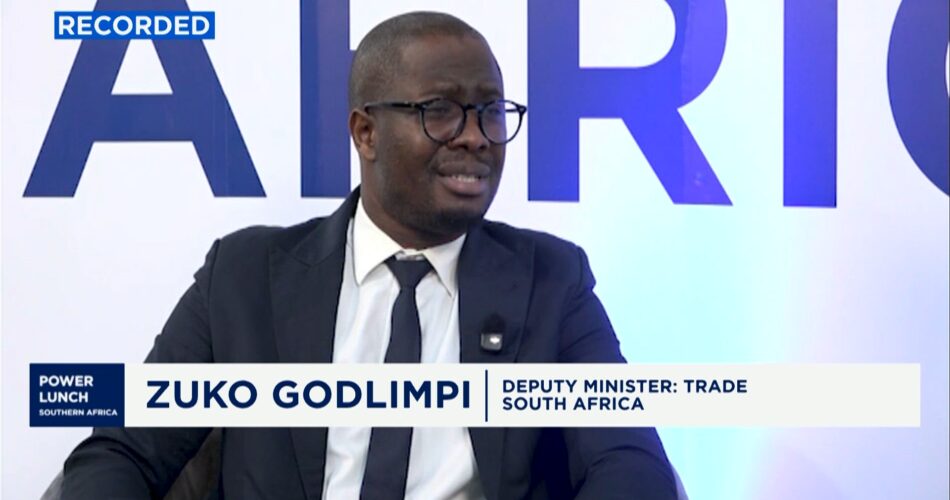
South Africa is entering a more favorable investment phase, supported by improved energy reliability, declining inflation and improvements in freight logistics, according to Deputy Minister of Trade, Industry and Competition Zuko Godlimpi, who said the country is now seeing strong evidence that investment commitments are moving towards implementation.
Speaking on the sidelines of the sixth South Africa Investment Summit, Godlimpi said the most important takeaway from this year's gathering was not just the size of the pledges, but the quality and maturity of the commitments being made by investors.
He said three factors came to the fore. Firstly, both international and domestic investors have continued to show confidence in the South African economy, which they described as having clear growth potential and attractive return prospects. Second, many of the investment pledges announced at the conference have already received board-level approval, suggesting that these are no longer exploratory statements of intent but capital allocation decisions that can more quickly translate into projects. Third, some companies that participated in the first investment conference have returned to demonstrate how their earlier commitments have led to business expansion and job creation.
Overall, these developments point to a narrowing gap between pledges and execution, a long-standing criticism of investment conferences in South Africa. Investors and the public alike have often questioned whether key commitments will ultimately result in factories, infrastructure, production and jobs on the ground. Godlimpi acknowledged that concern, saying the real test is whether the projects eventually become operational and begin to contribute meaningfully to employment and growth.
Nevertheless, he argued that the investment backdrop is stronger now than in previous cycles. He said, a major improvement has taken place in the energy situation of the country. South Africa has gone more than a year without a blackout or load shedding, marking a major change from the power shortages that had hit industrial activity and investor sentiment for years. He pointed to increased investment in the energy sector and ongoing work to strengthen transmission infrastructure, saying these developments will help support electricity grid stability in the coming years.
Logistics is another area where the government is seeing momentum. Godlimpi said Transnet's recovery had been “impressive”, with both operational performance and financial position showing improvement. For investors, this matters because reliable freight transportation is essential to ensuring that goods can be transported from production sites to domestic and export markets.
On the macroeconomic front, the Deputy Minister said inflation has come down to around 3%, bringing it within the country's target range. Low inflation is helping push down bond yields and benchmark borrowing costs, he said, thereby lowering the cost of capital for investors. Combined with improved power supply and improved freight transportation systems, they have created a much more positive investment climate.
While he cautioned that short-term external shocks remain a risk, particularly from the Middle East and resulting pressure on oil prices, Godlimpi said South Africa's economic fundamentals are stronger than before. The government is now focusing on maintaining price stability so that imported inflation does not reverse the gains already made in restoring macroeconomic confidence.
The Deputy Minister said that investor interest remains evident in many strategic sectors and special economic zones. He pointed to expansion activity in the Richards Bay Special Economic Zone, growing interest from pharmaceutical firms in the Koega Industrial Development Zone and continued investment flows into the Rosslyn Special Economic Zone in Tshwane.
These developments show that the country's industrial base is attracting renewed attention, especially as investors look for production platforms that can serve both local and regional markets. But Godlimpi stressed that the investment story should ultimately be judged by implementation rather than announcements.
“The taste of the pudding is in the eating,” he said, borrowing a phrase attributed to Mineral Resources and Energy Minister Gwede Mantashe, adding that the real measure of success will be the opening of factories and the creation of jobs.
Godlimpi also gave examples of the potential and growing investor interest from major international companies. He said he had met with Brazilian aircraft maker Embraer, which is looking to deepen its presence in South Africa amid new demand linked to the revival of South African Airways. He suggested that the company should consider partnering with local aerospace players, including Denel and private sector companies already operating in the country, to help build a strong domestic aircraft component manufacturing industry.
He cited Coca-Cola as one of the multinationals considering further expansion in South Africa, while also saying that Chinese automotive manufacturers are exploring the possibility of setting up local production facilities rather than relying solely on imported finished vehicles. If such steps are implemented, industrial production, supply chain development and employment could get a significant boost.
Beyond private capital, Godlimpi said South African development finance institutions have shown a willingness to co-invest and help projects de-risk their early stages. That support, together with domestic capital markets, state-owned enterprises and public sector institutions, is intended to support high levels of gross fixed capital formation.
He said the government has committed more than 1 trillion rand to infrastructure projects, a spending pipeline designed to crowd in private sector investment and create opportunities for bankable partnerships.
For South Africa, the message from this year's investment conference appears to be one of cautious optimism. The country has already demonstrated the ability to attract pledges above the target level. Officials acknowledge that the next step is more demanding: converting those promises into working industrial capacity, jobs and broader economic benefits.
In Godlimpi's view, this process is becoming more reliable now that major hurdles are beginning to come down. If energy reforms continue, logistics improvements continue and inflation remains under control, South Africa may be better placed to shift investor interest to real-economy growth.