
The Johannesburg Stock Exchange has welcomed a deal described as Africa's first nature-linked performance-based bond, which aims to link mainstream capital markets to environmental restoration while offering investors returns linked to measurable ecological outcomes.
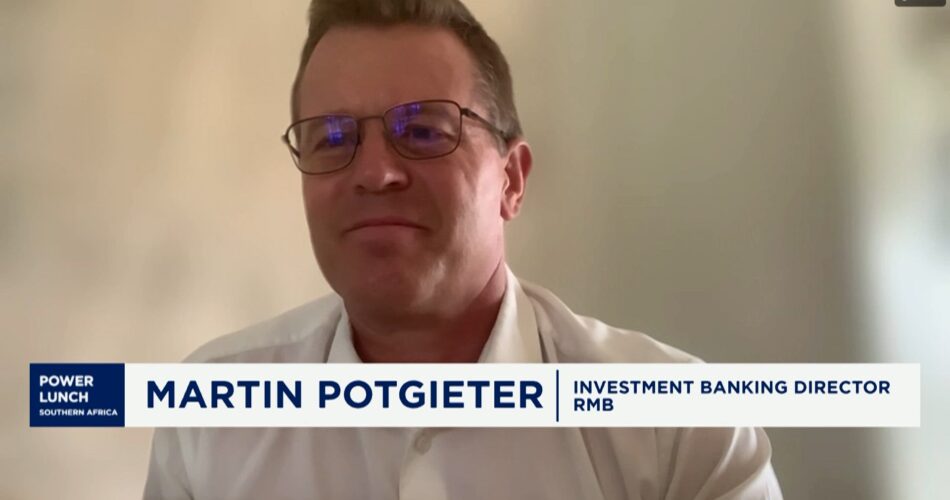
Speaking to CNBC Africa, RMB Investment Banking Director Martin Potgieter said the bond is the first of its kind on the JSE and, to the bank's knowledge, it is the first globally in which bond returns are directly linked to independently verified ecological outcomes.
Unlike traditional corporate or sovereign bonds listed on an exchange, the new instrument does not follow the traditional “use of proceeds” model typically seen in green, blue or sustainability-linked debt. Instead, the structure rewards investors based on the success of a defined environmental intervention.
In this case, the bond is designed to support the cleanup of invasive vegetation in catchments around Cape Town, with the goal of improving streamflow into the water systems that feed the city's dams. Investors earn higher returns if ecological goals are met and verified by an independent party.
“That's why it's said to be the first of its kind,” Potgieter said. “As far as we know, this is the first case in the world where bond returns will depend on verified ecological outcomes.”
The listing comes at a time when South Africa, like many other economies, is grappling with water security risks and looking for ways to raise larger pools of capital for climate and nature-related projects. Potgieter said the main motivation behind the transaction was to attract capital markets to sectors such as water and nature, where participation has historically been limited.
“Capital markets are not currently participating much in the world of nature and water,” he said, adding that his intention was to “kickstart that market” and create a replicable model for future issuance.
Investor interest in the initial issue appears to be encouraging. Potgieter said that with the support of a group of development finance institutions as well as South African investors, the RMB was able to secure the investors it needed.
He highlighted support from the International Finance Corporation and FSD Africa, both of which played a catalytic role in accelerating the transaction. According to Potgieter, IFC's support was vital from the beginning of the process which took approximately two years to develop.
“IFC was supportive from the beginning,” he said. “When you have someone saying they will support the bond and underwrite it, you actually keep momentum on the bond.”
In line with its role in promoting innovative financing models for development across the continent, FSD Africa also helped support the structure. Potgieter emphasized that although the bond serves a public-good purpose, it is not based on concessional finance.
“This is not concessional funding,” he said. “No investor in this bond is expecting a concessional return.”
This difference could prove significant for the broader sustainable finance market. By structuring the deal on a commercial basis, RMB and its partners are testing whether ecological restoration can be financed on a large scale using market-rate instruments, rather than relying solely on grants or soft funding.
Still, Potgieter acknowledged that the long-term payoff profile of the product could make it difficult for some traditional asset managers to participate. He said initial discussions generated enthusiasm, but some investors became more cautious as details of the structure emerged.
He said that in the first five years, investors face some underperformance compared to more traditional instruments, while still maintaining the potential for long-term gains. This created a challenge for institutions measured on short-term performance cycles, often every six months.
In contrast, investors with a long-term view were more willing to participate, suggesting that nature-linked instruments may initially find support less constrained by short-term benchmarks among growth-focused institutions, patient capital providers and asset owners.
Potgieter said the transaction also opens up broader conversations with asset advisors and performance evaluators about how to adjust long-term investment horizons for products designed to deliver both financial and environmental value.
In addition to this maiden issuance, RMB is already considering a pipeline of similar transactions. Potgieter said the first bond was always intended to be the start of a broader platform rather than a one-off exercise.
“We have set a good platform now and then we should be able to repeat it soon,” he said.
The next wave is likely to again focus on water, reflecting the urgency of South Africa's water challenges and the strong relevance of watershed restoration for urban resilience. However, Potgieter said the platform could eventually be expanded to other categories, including landscape bonds, conservation bonds and even species-linked instruments.
For the JSE, the listing adds another layer to the exchange's growing sustainable finance ecosystem, which has already seen a number of green, social and sustainability-related products come to market. For South Africa's financial sector, the transaction may also represent an early test of whether biodiversity and ecosystem restoration can be translated into investable, performance-based capital markets products.
If successful, the model could provide a blueprint not only for South Africa but for other emerging markets wishing to address environmental degradation and water scarcity through commercially viable financial innovation.
At the very least, this deal signals that investors, issuers and development institutions are willing to experiment with structures that go beyond broad ESG labels and link capital more directly to measurable real-world outcomes.