
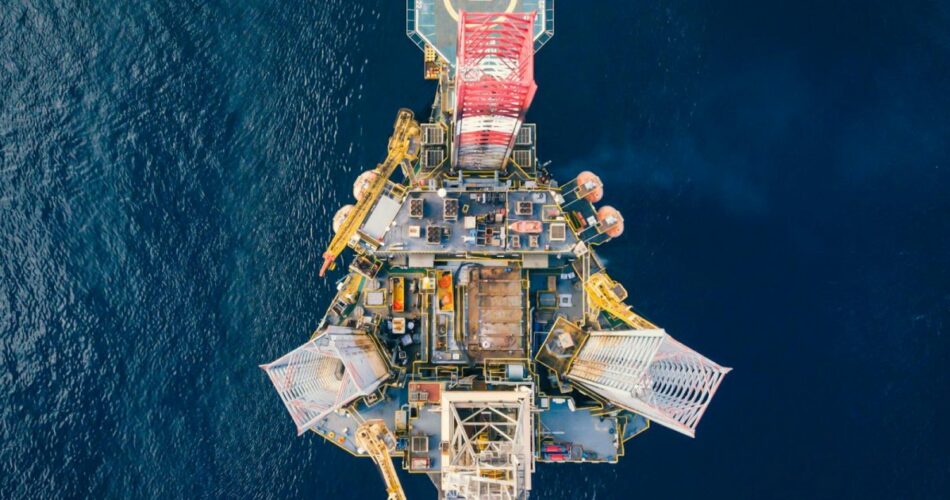
- Gwede Mantashe promotes offshore drilling amid surging oil prices.
- Shell and TotalEnergies projects have been delayed by four years due to legal challenges.
- Analysts warn that new drilling cannot meet near-term energy needs.
- Renewable expansion and court rulings have changed South Africa's energy strategy.
South Africa's efforts to climb out of the energy crisis are hitting a wall of expert skepticism, legal delays and a domestic energy landscape that has quietly crumbled from under the government's feet.
South Africa's Mineral and Petroleum Resources Minister Gwede Mantashe has called for an acceleration of offshore oil and gas development as global tensions have pushed crude oil prices above $100 a barrel. The Iran conflict, which Carbon Brief analysts have described as the largest oil supply disruption in modern market history, has given Mantashe new urgency. He warned motorists to prepare for steep increases in fuel prices if the conflict in the Middle East continues.
The logic is straightforward: South Africa imports almost all its liquid fuel, making the economy more vulnerable to any global supply shocks. Mantashe argues that the country has significant untapped offshore reserves that could mitigate that risk. His department has pointed to projects led by Shell and TotalEnergies, the French energy multinational, as proof that the region can deliver them.
Four years of courts, zero barrels
The delivery timeline tells a different story. The same Shell and TotalEnergies offshore exploration projects have spent four years in South African courts, with seismic surveys and drilling permits repeatedly delayed due to legal challenges from environmental and coastal community groups. Not a single exploratory barrel has been produced from the disputed blocks.
Even if drilling starts tomorrow, energy analysts say the production horizon for new offshore fields runs a decade or more. South Africa faces a more immediate deadline. According to Daily Maverick, state-owned petrochemical giant Sasol, which supplies gas to industrial customers across the country, is expected to close those external supply contracts by 2028 as its legacy Mozambique gas fields become exhausted. The so-called “gas cliff” will hit South African industry before any new domestic fields come online.
As the Big News Network reports, African economies widely lack the infrastructure needed to protect themselves from external energy supply shocks, a structural vulnerability that short-term drilling programs are unlikely to address within any politically meaningful time frame.
Against that backdrop, South Africa's renewable buildout is progressing faster than most observers anticipated. The country recorded 300 consecutive days without load shedding by March 2026, a milestone that was dismissed as wishful thinking two years ago.
The newly commissioned Bolobedu solar farm in Limpopo province has added further capacity to the grid quietly diversifying away from coal and diesel. Mining companies Anglo American and EDF jointly commissioned 380 MW of renewable energy projects for South African mines, with a reported target of between 3 and 5 gigawatts by 2030.
German development agency GIZ (Deutsche Gesellschaft für Internationale Zusammenarbeit) is recruiting a senior technical advisor specifically for South Africa's green hydrogen economy under a contract running until April 2028, a sign that international partners see the hydrogen pathway as a near-term industrial priority rather than a distant aspiration.
South Africa's Supreme Court added a different layer of institutional pressure in April 2026, ordering state power utility Eskom to disclose coal and diesel purchase contracts worth R70 billion in a transparency ruling that energy governance advocates called a milestone. The ruling puts current fossil fuel spending under formal judicial scrutiny at the same time Mantashe is seeking to expand it.
The Atlantic Council notes that the Iran-driven global energy crisis is creating new investment momentum for Western Hemisphere producers, potentially drawing capital and political attention away from frontier markets such as South Africa's offshore blocks.
Mantashe's office had not responded to requests for comment on the expert criticism at the time of publication.
Disclaimer: This article was generated with the help of artificial intelligence tools but was checked by a human editor.