
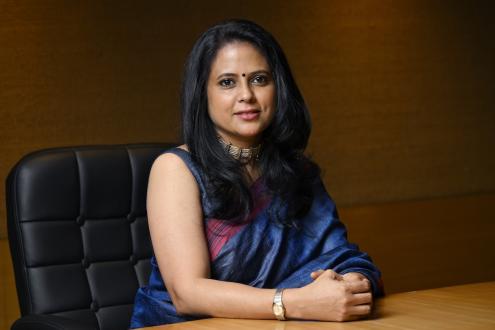
India's private wealth management industry is entering a phase of accelerated structural growth, driven not only by capital market performance but also by intergenerational wealth transfer and rising financial status. As investable assets rapidly expand and client needs become more complex, companies are reevaluating traditional models of advice, talent strategy and platform design. For Arpita Vinay, Senior Managing Director and CEO, Spark Capital MWM, the opportunity is not just to participate in industry expansion, but to create differentiated propositions in line with the evolving realities of Indian wealth.
key takeaways
- India's organized money industry is expanding on a structural scale. Growth is being fueled by sustained wealth creation, financial stability and inter-generational transfers rather than just cyclical market performance.
- The marketplace can support multiple scaled platforms. The competitive dynamic remains fragmented, with global banks, consumer banks and independent wealth organizations each operating under different structural constraints and opportunities.
- Execution and localization determine success. International models cannot be easily transplanted to India; Proposals must be consistent with regulatory realities and enterprise-driven customer behavior.
- Integrated counseling is becoming necessary. The mix of investment banking, wealth management, governance and succession planning reflects the realities of founder-led wealth in India.
- A long-term culture and talent strategy underpins sustainable growth. Build-versus-buy hiring, incentive alignment, and patience in relationship development are rapidly emerging as key differentiators in the competitive landscape.
Arpita highlighted the sheer scale of growth based on the trajectory of the industry. “Recent research shows that the organized wealth management industry in India is effectively adding equivalent to its current size every year,” she says, pointing to a combination of market performance, wealth creation and ongoing inter-generational transfers. He believes that rather than a winner-takes-all environment, this expansion will support platforms with multiple scales. “This is not a monopoly industry,” she says. “You can afford to have six or seven meaningful players operate successfully.”
Industry structure creates uneven competitive dynamics
Arpita divides the industry into three primary segments: global private banks, consumer banks and independent wealth managers – each facing different structural challenges.
He believes that global private banks see India as an attractive opportunity but have struggled with implementation. “India will test your patience,” she says, noting that many international players have attempted entry but have dropped out before gaining scale. In his view, the problem often lies in implanting global offerings that do not align with local market realities, especially given regulatory constraints and customer expectations. “A standard offshore proposition does not apply here at all,” she explains. However, she expects renewed interest from international institutions, potentially through partnerships or investments in existing local platforms rather than starting operations from scratch.
Meanwhile, consumer banks benefit from powerful distribution capabilities but face structural limitations. “If capital markets are not part of your DNA, money management becomes an acquired ability,” she says. Restrictions on participation in certain asset classes, particularly equities, may limit their ability to support clients as their wealth grows. As a result, Arpita argues that these institutions often become “a funnel” – developing both clients and talent who are then transferred to more specialized funding platforms.
Within independent funding organizations, discrimination becomes more subtle. Some companies are closely tied to asset management businesses, which may strengthen investment expertise but run the risk of diluting platform identity. “Asset management expertise is valuable, but if it defines the entire proposition, the wealth platform risks becoming just a distribution channel,” she says.
Talent strategy as a structural differentiator
One of the most significant challenges facing the industry is talent mobility. According to Arpita, rising compensation expectations and increasing tendency to leave jobs have increased competition for experienced relationship managers. Rather than relying solely on hiring established bankers, Spark Capital MWM is adopting a deliberate build-versus-buy strategy.
“The trend in wealth management has often been to aggressively acquire talent,” she says, but she argues that long-term success depends on developing internal capability. The firm's approach blends experienced professionals with emerging advisors, including individuals new to the industry. “If you take a longer view, building talent pays off far more than buying it,” she explains, adding that rapid turnover among highly compensated hires can undermine culture and continuity.
Integrating Investment Banking and Wealth Advisors
Another defining feature of Spark Capital MWM's strategy is the integration of investment banking capabilities within the wealth platform. Arpita believes this reflects the realities of India's venture-driven wealth segment, where personal and corporate financial decisions are deeply interconnected.
“Entrepreneurs move seamlessly between discussions about their business and their personal assets,” she says. Traditional siled models – where investment banking and personal assets operate separately – often fail to reflect how clients think.
While combining transaction-driven investment banking with relationship-based wealth advisory presents operational challenges, Arpita argues that the integration allows advisors to connect more meaningfully with founders during key moments such as capital raising, exits or strategic partnerships. Increasingly, private bankers are leading conversations that extend beyond portfolio construction to broader corporate and strategic planning.
Governance and succession come to the fore
As wealth creation matures, Arpita believes that family governance and succession planning are becoming the center of the advisory conversation. “Improving investment returns matters,” she says, “but what really resonates with founders is making sure the family remains united when wealth transitions between generations.”
Spark Capital MWM has formalized a multi-family office offering designed to address cross-border structuring, governance framework and succession planning. These services reflect the growing demand for holistic advice that encompasses personal wealth, business succession and family dynamics rather than just focusing on investment performance.
Client segmentation also plays an important role in shaping the platform's approach. For example, single-family offices often behave like institutional investors and require highly curated opportunities rather than aggregated products. Meanwhile, ultra-high-net-worth and high-net-worth individuals require a balance between customized solutions and scalable advisory frameworks.
Incentives, culture and long-term vision
Arpita emphasizes that organizational design – particularly incentive structures – significantly influences advisor behavior and client outcomes. To avoid a product-driven culture, the firm has adopted a compensation structure that prioritizes relationship building over short-term revenue goals.
“The message we want to send is: Take the time needed to build real relationships,” she explains. Lower initial exposure thresholds allow advisors to focus on trust-building rather than transactional selling. “If you max out for the near term, you risk compromising the long-term franchise.”
This philosophy reflects the widespread belief that money management in India requires patience. “This industry can't work if you want to make money in three years,” she says. “But if you take the long view and do the right thing with clients, the rewards can be significant.”
Globalization and the next phase of development
Looking ahead, Arpita expects the internationalization of Indian wealth to continue, driven by a younger generation with global education and outlook. Cross-border investment and offshore expansion are therefore becoming strategic priorities, with jurisdictions such as Dubai emerging as key entry points.
“There is much less home bias in the next generation,” she says, adding that global markets and international exposure will increasingly become part of core portfolio construction.
Despite challenges related to talent, execution and competitive position, Arpita is confident about the long-term trajectory of the industry. “The depth of the market is such that it can support multiple large platforms,” she says. For companies able to combine patience, integrated advisory capabilities and strong organizational design, India’s private wealth expansion represents not only a growth opportunity but also a structural transformation of the advisory landscape.