
SA's economy grew in the first quarter, which has not yet fully reflected the impact of the Middle East conflict, which began with the US-Israeli attack on Iran on February 28.
South Africa's economy grew 0.5% in the first three months of 2026 compared to the previous quarter.
It was stronger than expected. Economists polled by Reuters had forecast GDP growth of 0.3% quarter-on-quarter. The growth rate also increased to 0.4% in the fourth quarter of 2025.
SA's GDP in the first quarter was 1.9% higher than a year earlier, Statistics SA reports.
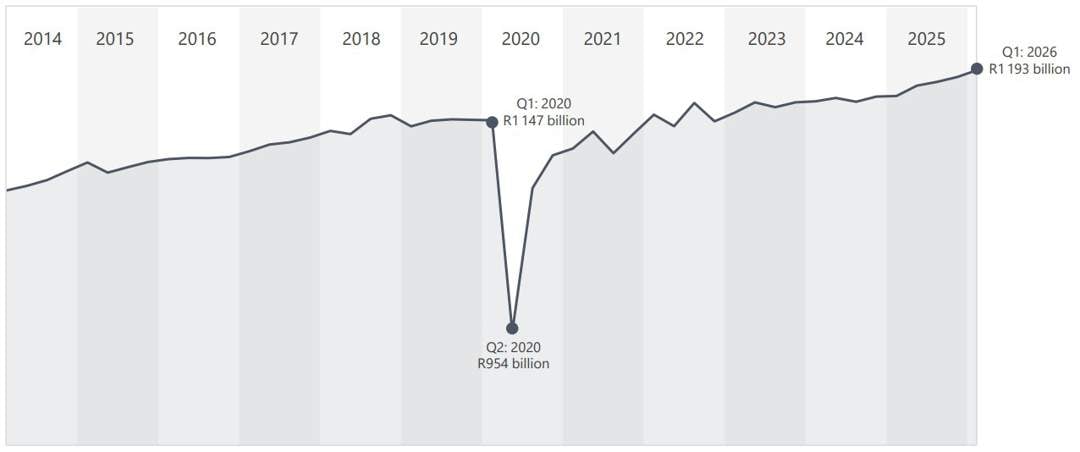
Quarterly gross domestic product at constant prices for 2015, seasonally adjusted.
The strong growth came despite a 1.1% decline in gross fixed capital formation (GFCF) during the quarter driven by a 0.8% decline in the manufacturing industry as well as a sharp decline in spending on machinery and other equipment and residential buildings. The GFCF represents money spent on buying and building physical assets such as equipment and infrastructure that are needed for the economy to produce more in the future.
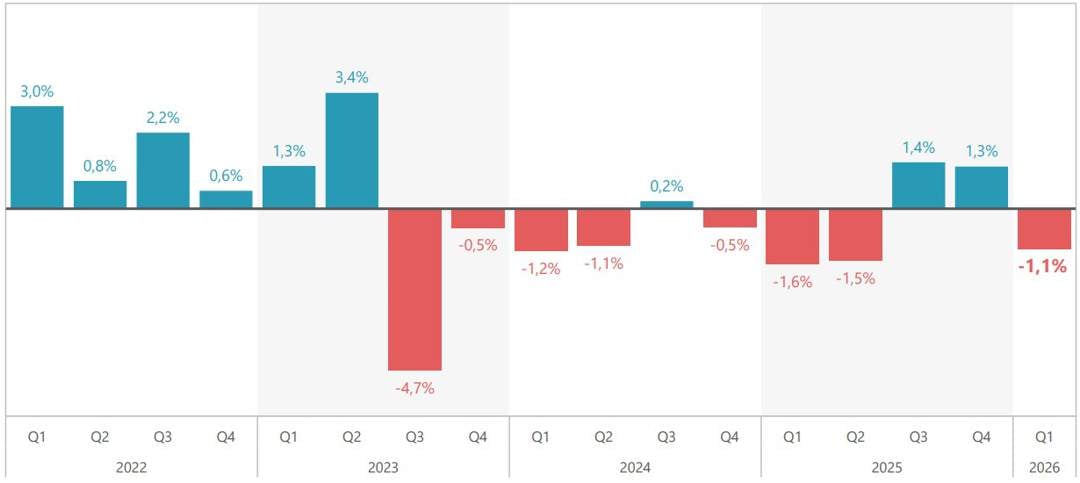
Quarterly capital formation growth. Quarter-on-quarter percentage change, constant 2015 prices, seasonally adjusted
Economic growth in the first quarter was partly boosted by the finance, real estate and business services industry, which expanded 0.9%, as well as the trade, catering and accommodation industry (0.7%). The mining sector (+0.7%) was supported by strong activity in platinum group metals and gold amid a strong price rally at the time. GDP growth was also boosted by strong exports, partly attributable to higher mining export values.
The fastest growth was in the agriculture sector, which grew 3.9% in the first quarter.
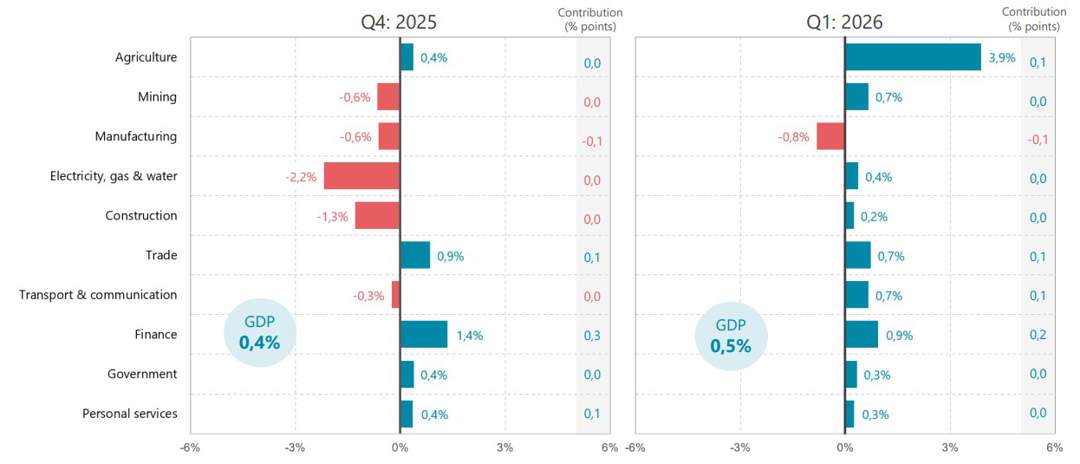
Quarterly GDP comparison. Quarter-on-quarter percentage change, constant 2015 prices, seasonally adjusted
Statistics SA says this was due to increased activity in field crops and horticultural products. Official GDP data for the region has been extremely unstable and heavily disputed in recent years.
In 2024, a study conducted by Agri SA and the Agribusiness Chamber of South Africa found inaccurate estimates in the data, which is provided to Statistics SA by the Department of Agriculture, Land Reform and Rural Development. Some data has since been restored.
Earlier this year, the Bureau of Food and Agricultural Policy (BFAP), which again studied Concerns raised about latest dataIn particular Statistics SA's deflation methods (which must remove price increases to reveal real output changes).
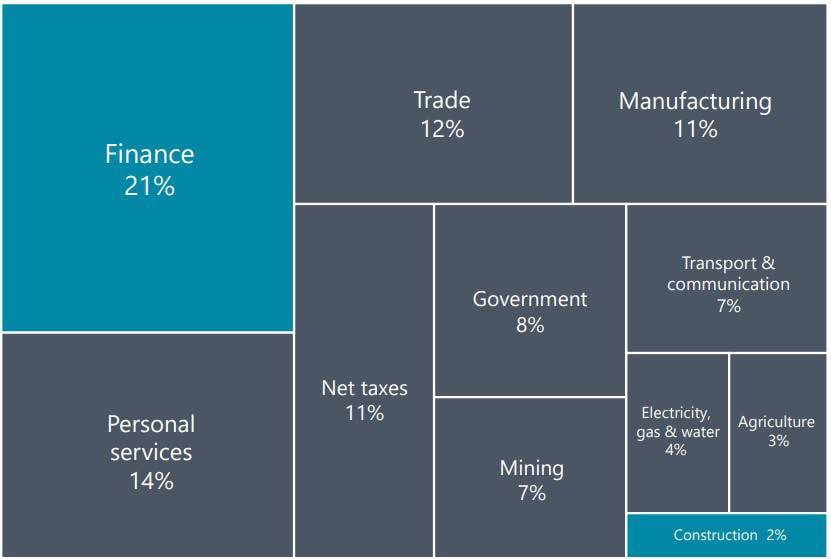
Contribution to GDP, first quarter 2026. At current prices.
The latest GDP numbers will boost optimism that South Africa can deliver stronger growth in 2026 than the 1.1% seen last year, which is still the fastest pace since 2022. Over the past decade, average South African growth has failed to reach 1% due largely to load shedding and crises in rail and other infrastructure.
Amid progress in these sectors and expectations of an interest rate cut this year, growth was expected to accelerate in 2026. But that was before the Iran war, which caused a shock in fuel prices. Wholesale diesel prices in Gauteng rose from below R18 per liter before the conflict began, to above R31 in May, before reaching around R27.92 in June.
Expensive fuel is stoking inflation fears, which saw the South African Reserve Bank raise rates earlier this month. The bank cut its expected GDP growth rate for the year to 1.2% from 1.4% previously due to the impact of the Iran war, while also noting recent severe flooding in the Eastern and Western Cape.
The first quarter GDP numbers only include the first month of the war, which has been raging since late February.