
Hundreds of Ghanaians living in South Africa are preparing to return home under a voluntary repatriation exercise, with many citing insecurity, economic hardship and growing uncertainty over the treatment of foreign nationals as reasons for their decision.
The first group of Ghanaian citizens is expected to depart South Africa this week after about 800 citizens expressed their desire to return home.
The development comes against the backdrop of South Africa's ongoing debate over undocumented migration, stringent immigration enforcement and concerns over xenophobic tensions affecting foreign nationals.
Among those preparing to leave is a Ghanaian migrant, identified only as Frederick, who said his dream of finding greener pastures in South Africa has faded after years of hardship and fear.
In an interview with eNCA he said, “There's no place like home. We came to this country with the intention of finding greener pastures. But then, we realized there was nothing for us here. With the rampant and constant xenophobic attacks and other things that come with living here, I felt it was better for me to go home.”
Although he said he did not personally experience xenophobic violence, Frederick described daily life in Johannesburg as increasingly unsafe and unpredictable.
“Even if you're not in danger from xenophobic attacks or riots, there are still a lot of things. People can come into your house, point guns at you and rob you. Even on the streets, you're not safe,” he explained.
He argued that frustrations towards immigrants reflect broader systemic failures rather than just xenophobia.
He said, “I don't think it's xenophobia; I think the system has failed. They're angry because the system has failed.”
When asked if he would consider returning to South Africa in the future, Frederick replied emphatically: “Never. I can never come back to South Africa.”
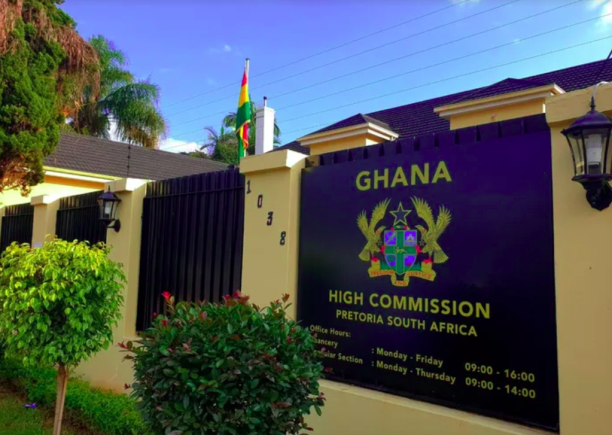
Ghana's High Commissioner to South Africa, Benjamin Quashie, meanwhile, has called for a more balanced and nuanced approach to discussions related to migrants and documentation in the country.
According to him, while undocumented migration remains a legitimate concern, many Ghanaians living in South Africa have been residing and working legally for years but face bureaucratic delays in renewing permits and residence documentation.
“Well, the number of people who are here illegally is quite high, and the number of people who are here illegally is also quite high. It's our job to set the terms when we say illegal. What do you mean? It's a term we need to discuss and define,” he said.
Mr Kweshi said some Ghanaian citizens had submitted renewal applications to South African authorities, but they remained stuck in long administrative backlogs.
“Because you have Ghanaians who have been in this country with a work permit for four years, another five years. They go to renew it with the Ministry of Home Affairs. I know a lot of them,” he said.
“Out of the list, we have around 30 to 40 of them, we have found that they have indeed submitted their documents for renewal, but the home department is still working on the process.”
He said many Ghanaians in the diaspora contribute to local economic activities through small businesses and employment partnerships with South Africans.
“These are people who have small businesses, salon businesses, mechanic businesses and others,” he said.
“So it's a close mix of people who are here, really trying to make a living. And for your information, these are people who also work with South Africans. So we see that there has to be a balance when it comes to these things.”
The repatriation exercise has reignited the conversation about migration pressures within Africa, economic opportunities on the continent, and the growing challenges facing migrant communities in host countries amid rising unemployment and social tensions.
Watch the video below;
One of the 800 Ghanaian citizens expected to be deported back to their home country on Wednesday says he can never return to South Africa because he is not safe. He came to South Africa in search of a better life. #ENCA'S @mankobamchunu The High Commission of Ghana in Pretoria.… pic.twitter.com/utDpPqrPNE
– eNCA (@eNCA) 24 May 2026
Ghanaians in South Africa who need assistance and want assistance to return to Ghana pic.twitter.com/Q2LJXvXOFs
– DailyGraphic GraphicOnline (@Graphicgh) 24 May 2026