
On 25 February 2026, the Finance Minister stood before Parliament and delivered a budget speech steeped in the language of reforms. For the first time in 17 years, debt is becoming stable. A credit rating upgrade. A decreasing deficit. The message was clear: South Africa has turned a corner.
Education statistics were generous enough to make headlines. Education, training and related works remain the largest component of consolidated expenditure in the medium term with 23.7%, with R344.7 billion allocated for basic education.
The sector receives R22.7 billion as carry-through costs, the majority of which is for early childhood development, which receives an additional R12.8 billion over three years to expand services to more than 300,000 children.
The National School Nutrition Program is linked to food inflation; R9.9 billion supports employee compensation push; R342-million goes towards progressively equalizing Grade R teacher salaries.
These are real numbers. But those are national numbers. And the deepest crisis in South African education has never been one of major allocations. It is a provincial implementation disaster, where money approved in Parliament evaporates in the space between the treasury and the classroom.
Here's what the budget speech didn't say. It does not say that in KwaZulu-Natal, fee-free students are only funded 54.45% of national limitAchieving R955 per student against the target of R1,672.
It did not mention that the shortfall had triggered a work-to-rule campaign during the June 2025 exams, that the Prime Minister had to pledge R900 million from other departments to stabilize the education system, or that 76 special schools forced to close in October 2025 On unpaid subsidy.
It did not mention that the Eastern Cape had withheld almost R5 billion from schools since 2020, reducing the allocation to less than 50% of the mandated amount, and that a A case challenging this is active in the Makhanda High Court.
This did not take into account that in the Northern Cape, Schools had received only 20% of the 2025 allocations by November and it did not acknowledge what the Federation of Governing Bodies of South African Schools had confirmed in late 2025: that six of the nine provinces failed to adhere to the payment schedule set for school allocations.
This is how the funding chain works: The National Treasury allocates revenues to the provinces through the provincial equitable share formula. The education component of this formula carries the largest weighting of 48%, which is calculated on school-age population and actual enrolment.
The Department of Basic Education then sets per-pupil funding targets through national norms and standards for school funding, which are adjusted annually for inflation. provinces are expected To accomplish these goals. Gauteng and the Western Cape continue to do so.
KwaZulu-Natal has not met its obligations since 2015. Mpumalanga has fallen short since 2016, funding no-fee students at 82.7% of the limit. Northern Cape allocation now at around 48%. There are more than 4.25 million students in these three provinces alone Funded at less than estimated R2.5 billion.
It also needs to be stated clearly: even provinces that meet the national funding threshold are not funding education adequately: R1,672 per pupil per year, which is equivalent to R8.77 per school day, cannot cover the full operating costs of running a quality school.
I have argued elsewhere also South Africa needs to fundamentally rethink how it finances education. The current norms were designed as a floor, but they have become a ceiling, and a low one at that.
This chronic underfunding creates the perfect conditions for private providers and well-intentioned public-private partnerships to position themselves as saviors.
When the state cannot distribute textbooks, maintain buildings or pay utility bills, the door opens for outside actors to “intervene.” Some of these interventions are real. There aren't many.
And regardless of intent, they paid a price that is rarely acknowledged: They let the provinces off the hook. Every service outsourced to a private provider is a constitutional obligation that the state will no longer have to directly account for. The crisis becomes self-reinforcing. Provincial underfunding creates dependency, dependency attracts private capital, and private capital displaces the political pressure needed to fix public order.
May 2025 parliamentary oversight hearing Exposed it. The Financial and Fiscal Commission presented evidence that the quintile-based funding system relies on outdated poverty data and broader community indicators that misclassify schools.
In this backdrop, Budget 2026 presents a glaring paradox. The Minister spoke at length about fiscal discipline and growth-enhancing infrastructure. The Budget Facility for Infrastructure (BFI) has approved Rs 21.9 billion for five major projects.
Public sector infrastructure spending will exceed R1-trillion in the medium term. The BFI proposals published on Budget Day clearly mention upgrading of courts, correctional facilities, police stations, tertiary institutions and hospitals. There is no mention of even a single primary or secondary school.
Meanwhile, school infrastructure faces a fundamental cut of around R1.2 billion over the next three years. In real terms, the expenditure on school infrastructure will be 8% decrease. The Basic Education Employment Initiative has been slashed from R6.5 billion in 2023 to R319 million this year.
Funza Lushaka scholarship allocation has been cut. The Education Minister himself acknowledged an infrastructure shortfall of R120 billion and warned that the additional allocation “does not fully close the funding gap that has developed over many years”. These are not signs of any system being fine. They are signs of a system headed toward deep dysfunction.
The fundamental problem is constitutional design meeting fiscal reality. Education is a concurrent task. determines national policy; Provinces apply. But when provinces fail to implement, national enforcement powers are limited.
Of the revenues raised at the national level, 41.7% flows to the provinces. What happens after that transfer is largely a provincial decision. At each decision point between the provincial treasury and the school gate, allocations may be reduced, delayed, or disappear altogether.
Section 100 of the Constitution allows the national government to intervene when a province cannot or does not meet an executive obligation, and portfolio committee members have already asked why it has not been applied to provinces that have spent a decade failing to meet non-fee funding thresholds.
What makes it particularly corrosive is the impact it has on the people closest to the classrooms. The same pattern is repeated across the country. Circuit managers are instructed by the districts. Districts are bound by what the provincial head office issues. Teachers work without material.
In KwaZulu-Natal, a Principal in Uthukela connects his school to neighbour's electricity Because the department could not pay the Municipal Corporation bill. In the Eastern Cape, principals describe a culture of fear Growing concerns about underfunding threaten professional isolation. The Budget speech talks about accountability, but accountability flows upwards from schools to the state, never downwards from the state to schools.
The budget allocated R2.7 billion for defence, R990 million for border management and R1 billion each to the police and the South African National Defense Force through the Criminal Assets Recovery Account.
These are political choices, which become visible through budgetary allocations. They reveal what the government considers urgent. When there is no plan to address provincial non-compliance with funding criteria in the education section of that same speech, that absence is itself a political choice.
There are tools available. The Financial and Fiscal Commission has Recommended a cost criteria approachWhere funding is based on what the actual cost of an adequate education is, not on what provinces can afford after paying salaries.
It has proposed individual learner-based poverty indicators to replace the crude quintile system, which classifies schools by community rather than the circumstances of the children attending them. None of these structural reforms appeared in the budget speech.
Budget 2026 will be remembered for stabilizing the debt and restoring fiscal credibility. These are real achievements. But fiscal credibility means nothing for a child sitting without textbooks in a school that has not received allocation for six months.
The question is not whether South Africa can afford adequate funding for education. At around 6% of GDP, we already spend the highest proportion globally. The question is whether we have the political will to ensure that the money reaches the classrooms where it is needed.
Constitutional instruments exist. Section 100 was written for precisely this kind of provincial failure, where an executive obligation remains unfulfilled year after year while millions of children bear the cost.
Members of the Portfolio Committee have already asked why it was not implemented. The evidence is on parliamentary record. The lack of funding has been documented. Provinces with chronic non-compliance have been named. At some point, refusing to act becomes its own form of complicity.
If the national government will not use the powers granted by the Constitution to protect the right to basic education, then every rand added to the education budget is mere accounting, celebrated in Parliament and rendered invisible in the classrooms where it was supposed to reach. DM
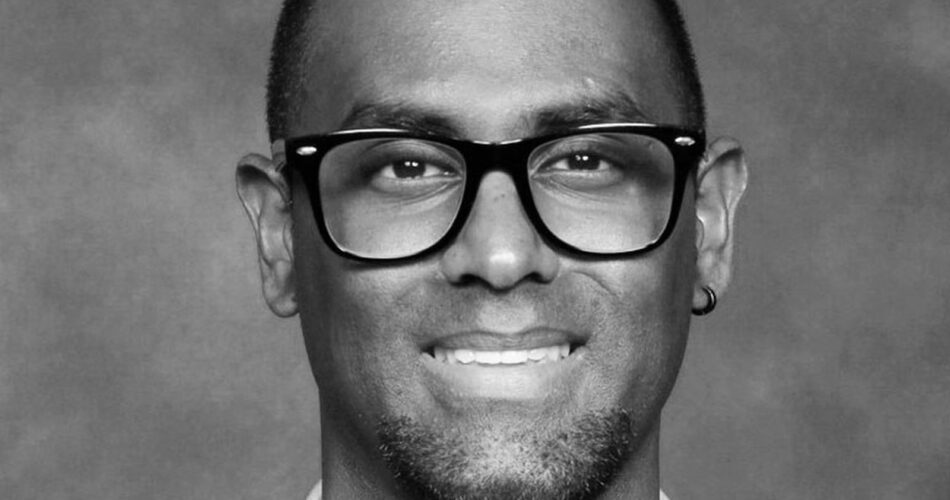
Pagiel Joshua Chetty is a PhD candidate at the University of Cape Town, focusing on educational activism, institutional change and transformation in post-apartheid South Africa. He writes in his personal capacity.