
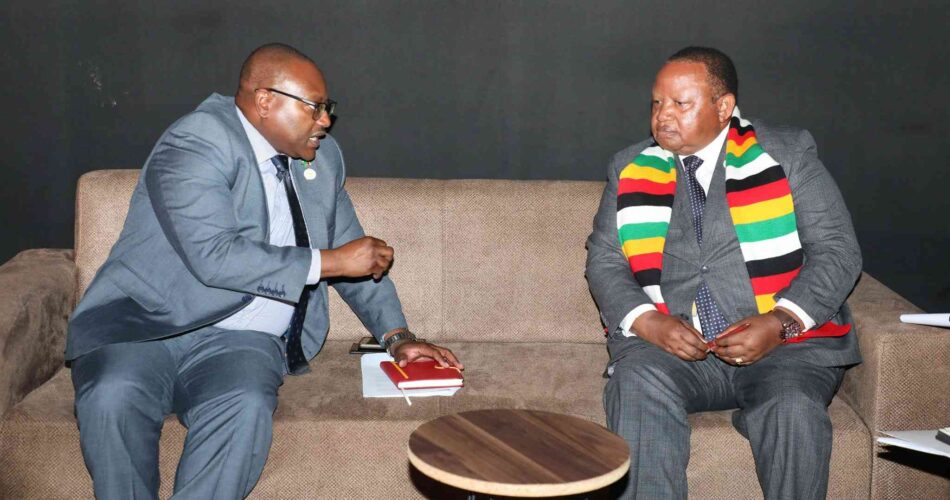
ACCRA, Ghana, June 4 (Newsday Live) – Zimbabwe on Wednesday proposed a five-point continental action plan aimed at reducing Africa's dependence on foreign digital learning platforms and building sovereign education technology infrastructure across the continent.
Addressing the 18th e-Learning Africa Ministerial Roundtable in Accra, Frederick Shawwa, Minister of Higher and Tertiary Education, Innovation, Science and Technology Development, urged African governments to take collective ownership of digital learning systems, data infrastructure and artificial intelligence development.
The invitation-only ministerial forum is being organized alongside the annual e-Learning Africa conference under the theme “Championing sovereign, innovative and joint learning systems: empowering Africa on its own terms”. More than 1,000 delegates from more than 80 countries are attending the June 3-5 gathering at the Labadie Beach Hotel.
Shava presented Zimbabwe's approach as a model for the continent, citing investments in high-performance computing facilities, a national data center and cyber-infrastructure networks linking educational institutions. He said Zimbabwe is also developing AI tools in indigenous languages to be hosted on GPU clusters locally rather than on foreign cloud platforms.
“Our development of artificial intelligence-powered e-learning platforms, models and content is executed on our own containerized cloud infrastructure,” Shava said, describing the strategy as “digital industrialization in action” and the country's educational intellectual output as “sovereign national property.”
Shawa outlined five proposals aimed at accelerating Africa's digital education sovereignty. He called for a continental cyber-infrastructure sharing protocol based on the Southern African Development Community framework, which already allows researchers in Zimbabwe and South Africa to access each other's high-performance computing facilities.
He also urged coordinated investment in data centers and reliable power infrastructure to strengthen artificial intelligence and digital learning systems.
The Minister further proposed the creation of a pan-African open educational resources framework with common standards and cross-border recognition of digital qualifications, arguing that credentials earned in one African country should be accepted across the continent.
He also advocated for an African regulatory sandbox to co-fund locally developed virtual laboratories and AI platforms while ensuring intellectual property remains in Africa.
Shawa called for a continental AI readiness compact committing member states to deploy locally hosted AI tools in education and share training datasets while protecting national curriculum priorities.
The proposals come amid growing concern among African policymakers over the continent's dependence on technology platforms developed and controlled outside Africa.
In unusually candid comments, Shawa admitted to being troubled by concerns raised during earlier discussions.
“I'm really horrified by what the speaker before me said about the dominance of other systems outside Africa over our system,” he told delegates.
The 2026 Ministerial Roundtable brings together ministers responsible for education, ICT, labour, youth and finance to discuss strategies to strengthen Africa's digital learning ecosystem and workforce preparation.
The conference is organized in partnership with the African Union Development Agency (AUDA-NEPAD), the African Union and UNESCO. The Vice President of Ghana officially launched the event, underscoring the growing importance of digital education and skills development across the continent.