
South African food retailer Spar is under intense investor scrutiny as the group tries to stabilize after several years of disruption due to leadership changes, governance concerns, strategic layoffs in Europe and the long-term consequences of a failed SAP implementation.
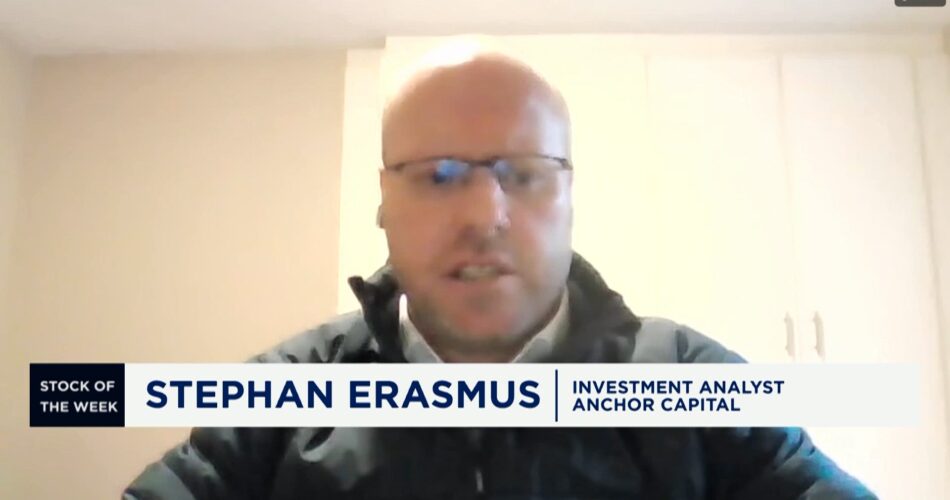
Speaking in a television interview as part of the “Stock of the Week” segment, Anchor Capital investment analyst Stephen Erasmus said Spar's recent history made it hard for investors to gain confidence in the sustainability of the company's strategy, especially after repeated changes at the top.
“It's difficult when you're looking at change at the top of a company,” said Erasmus, noting that investors typically begin to question whether management can maintain strategic continuity when CEO appointments change frequently.
This concern has become central to the investment case around Spar. In most listed companies, leadership stability is often seen as a prerequisite for operational stability and long-term performance. However, in the case of Spar, the group has had to defend its strategy while rebuilding trust with both shareholders and its network of independent retailers.
The company's geographic footprint has become one of the clearest markers of that strategic reset. According to Erasmus, Spar's new management team is clear about where it wants to focus: South Africa and Ireland. The group is in the process of finalizing the sale of its UK operations, while it has already exited or walked away from other troubled European markets, including Poland and Switzerland.
This leaves Ireland as a notable outlier in Spar's international portfolio. Although some investors may have expected the company to reconsider its commitment there as well, management remains committed to retaining the business. Erasmus suggested that the Irish operation remains a comparatively solid asset and should continue to perform reasonably well, making it an important part of the group's structure going forward.
Yet, the international simplification story is only part of the challenge. One of the most damaging events in Spar's recent history is the failed SAP system rollout in 2021, which Erasmus described as a lingering crisis for investors.
Failed implementation had real operational consequences. Most notably, it disrupted Spar's relationships with parts of its independent retailer base, with some franchisees turning to alternative wholesalers rather than sourcing through Spar's own channels. In franchise and wholesale-based retail models, loss of retailer loyalty is particularly significant as it weakens volumes, market position and the broader value proposition of the network.
Erasmus said that for Spar to restore that loyalty, any future technology execution would need to be far more effective than in the past. The comment emphasizes how the SAP failure is no longer just an IT issue; It has become a strategic issue directly linked to sales realization and confidence in management execution.
The environment is also not helping from an operational point of view. Erasmus described the retail landscape more broadly as difficult, with Spar facing the same macro pressures as other players in the sector. Rising fuel prices have not yet been fully factored into earnings, consumers are under pressure, and competition in the South African grocery retail sector is intense.
That combination has created an unfavorable backdrop for a company already in turnaround mode. In such an environment, even one or two operational missteps could put pressure on margins, Erasmus said. This is where Spar currently finds itself.
The market has become increasingly cautious about management's promises to manage margin recovery in South Africa, he said, particularly as prior guidance has not fully materialized. Therefore, investors are adopting a wait and see approach rather than giving the company the benefit of the doubt.
This skepticism is visible in the market's reactions to Spar's recent announcements, including its February trading statement, which came after the company revealed another CEO change. The company also later announced a new severance schedule, giving the sense that Spar is still in the midst of a broader restructuring process rather than near the end of one.
Comparisons with Pick n Pay are inevitable, given that both retailers are engaged in turnaround efforts and have lost ground in the highly competitive local market. But Erasmus said the two companies present different stories, even if their results are somewhat similar.
He argued that both balance sheets now appear healthier than before, having moved from a more highly geared position to a more manageable level. However, the underlying challenges are different. In Spar's case, the key issue is the South African recovery story, as well as a cleaner balance sheet and a more streamlined geographic focus. What Spar and Pick n Pay have in common, Erasmus said, is that both have ceded market share to competitors.
That pressure has inevitably focused attention on Shoprite, which dominates the South African grocery landscape. The central question for Spar now is whether meaningful growth can still be achieved in South Africa in a market where Shoprite's scale, execution and pricing power remains formidable.
For Erasmus, the answer depends less on core strategy and more on restoring relationships at the grassroots level. He pointed to the need to rebuild retailer loyalty, particularly in KwaZulu-Natal, and said Spar still had a customer base to work with if it could re-establish confidence among independent store owners.
This makes Spar's transformation unusually dependent on trust. Not only do investors need reassurance after years of disruption, but franchisees must also choose whether to deepen their alignment with the group or continue sourcing elsewhere.
For now, it appears Spar has drawn up a clear map of where it wants to operate and what properties it wants to own. But clarity of direction alone cannot be enough. Until the company proves that leadership is stable, execution is improving and retailer loyalty is on the mend, investors are likely to remain cautious on the stock.
In a region that already lacks easy wins, Spar's recovery may ultimately depend on whether management can translate strategic simplification into operational reliability.