
Across Africa, governments have enacted laws to regulate the financing of political parties, but they continue to ignore one of the most important channels through which corruption enters politics: the direct flow of money to individual candidates. This regulatory gap creates significant risks of state capture, favoritism, procurement fraud, conflicts of interest and undue influence on public decision making. While political parties are increasingly required in many countries to disclose their finances, the individuals who ultimately contest elections, receive campaign donations and exercise public power are often left out of meaningful transparency and accountability frameworks.
Elections across Africa are being funded directly through individual candidates rather than through centralized party accounts, pushing campaign costs to unprecedented levels. Empirical data highlight this growing financial barrier: the estimated cost of contesting a legislative seat in Uganda is US136,084 (Kitamirike and Kisake, 2020); US182,000 for a parliamentary seat and US350,000 for a Senate seat in Kenya (WFD, SCA&NiMD,2021); USD 192,266.3 for a parliamentary seat in Zambia (Nachibinga et al., 2024) and up to US693,000 in Ghana (Nyarko, 2022). Presidential campaigns call for even more investment, with estimates in Ghana reaching US$100 million (CDD-Ghana, 2022).
Taking advantage of these rising costs, wealthy individuals, government contractors, corporate interests and political patrons often bypass party structures to provide cash, vehicles, media access and logistics directly to office seekers. Because many African countries lack statutory candidate disclosure laws, an accountability vacuum is created, turning public office into a transactional market where donations function as capital investments. Once elected, candidates face systemic pressure to deliver returns on these investments through preferential access to state resources, targeted tax breaks, regulatory concessions, strategic public appointments, or direct influence on policy architecture.
A 2022 study by the Ghana Center for Democratic Development (CDD-Ghana) confirmed that campaign financiers clearly view political donations as investments to secure post-election access to state resources and decision makers. As one key informant in the study put it bluntly: “I finance candidates for President and Parliament on both the NDC and NPP tickets to ensure that I get new contracts and protect the contracts I got from the previous government when there is a change of government. So far, things have been good for me and my business.” (p. 45). This unregulated symbiosis between private property and public office ultimately reduces state capture to a standard business strategy.
A legal framework already exists to address the problem of non-reporting of donations and non-filing of returns by candidates. Article 7(3) of the United Nations Convention Against Corruption (UNCAC) – ratified or acceded to by 53 of Africa's 54 countries – encourages states to adopt legislative and administrative measures to enhance funding transparency for those seeking elected public office. Similarly, 43 African countries have ratified the African Union Convention on Preventing and Combating Corruption (AUCPCC), where Article 10 requires state parties to incorporate the principle of transparency in electoral campaign financing.
Despite these commitments, many domestic legal frameworks remain primarily focused on political parties while completely ignoring individual candidates. In Ghana, political parties registered under the Political Parties Act, 2000 (Act 574) are required to submit audited accounts, yet there is no requirement to disclose direct donations to presidential and parliamentary candidates or file comprehensive campaign finance returns. Zambia presents a similar challenge: while its constitution and yet-to-be-enacted Political Parties Bill regulate party finances, they do not impose comprehensive disclosure requirements on individual candidates. Regulating political parties while ignoring the candidates is like auditing the headquarters of a bank and ignoring the transactions taking place in its branches; Much of the money influencing elections bypasses party structures entirely, leaving regulators, journalists and citizens unable to follow the money.
Many established democracies believe that voters have a right to know who funds those seeking public office. In the United States, United Kingdom, France, and Canada, candidates are legally required to disclose campaign contributions and expenditures, backed by robust audits, public databases, and severe sanctions for noncompliance. France's National Campaign Accounting and Political Financing Commission (CNCCFP) can reject filings and the Constitutional Council or election courts can disqualify candidates, and US federal prosecutors actively pursue criminal cases for serious campaign finance violations.
Contrary to the argument that candidate disclosure is impractical in Africa, many countries have already established basic legal frameworks. South Africa has begun to extend transparency obligations to independent representatives and candidates through reforms to its political finance framework, the Political Party Funding Act (Act 6 of 2018), although implementation continues to evolve. Mauritius takes a post-poll approach, legally requiring candidates to submit comprehensive election expenditure returns after the elections are over, with non-compliance automatically triggering legal proceedings. Meanwhile, Kenya's Campaign Financing Act (2013) mandates full disclosure of contributions and expenditures and even contemplates severe sanctions such as candidate disqualification, although persistent political resistance has repeatedly postponed its full implementation. Together, these regional examples demonstrate that legal mechanisms for candidate-level transparency are not only possible but are already active across the continent.
Public disclosure is one of the most effective tools to prevent corruption because it allows voters to detect and assess potential conflicts of interest before an election, rather than having them seize public resources beforehand. If political contributions are publicly known, a contractor may be less likely to demand preferential treatment, and candidates may be less willing to accept questionable donations if they know those contributions will face public scrutiny.
However, transparency without enforcement risks becoming little more than political theatre. Election management bodies, independent registrars of political parties, anti-corruption agencies and financial intelligence units must have the necessary legal authority, technical capacity and financial resources to verify candidate disclosures and investigate irregularities. This challenge is particularly important in the African political environment where campaign financing often occurs through cash transactions and informal, support such as food supplies, vehicles, fuel, accommodation and direct payments to local organisers. Effective monitoring systems to capture these non-monetary contributions must go beyond bank records, campaign finance data must be published in searchable online databases, and non-compliance must be subject to meaningful administrative penalties, including substantial fines, disqualification from office, or criminal prosecution.
To build on these foundations, Africa's next generation of political finance reforms must adopt a comprehensive, five-pillar strategy driven by seamless transparency and strict enforcement. First, the new framework should mandate full disclosure of all monetary and in-kind contributions received by candidates, ensuring that support received through third parties or intermediaries is fully accounted for. Second, this transparency cannot be a one-time event; Reporting obligations should be ongoing, requiring disclosures before, during and after election campaigns. Third, electoral management bodies and independent registrars of political parties and candidates should be legally and financially empowered to verify these submissions and conduct independent audits to check for discrepancies. Fourth, to democratize surveillance, all campaign finance data should be published online in searchable formats, allowing direct scrutiny by journalists, researchers, and citizens. Finally, these rules must be backed by credible, serious sanctions – ranging from administrative fines and candidate disqualification to asset confiscation and criminal prosecution – to ensure that transparency is never limited to mere political theater.
The fight against corruption cannot begin only after public officials assume office; It should start from the very point where money enters politics. Every anonymous campaign contribution has the potential to create liabilities that voters can't see and institutions can't monitor. It is imperative for citizens and civil society to advocate for these reforms. Opaque campaign funding creates fertile ground for corruption, patronage and procurement rigging, relying on public resources to pay private financiers and ultimately diverting scarce funds away from national development priorities. If African countries and non-state actors are serious about preventing state capture and strengthening democratic accountability, candidate campaign finance disclosure should become the next frontier of anti-corruption reform across the continent.
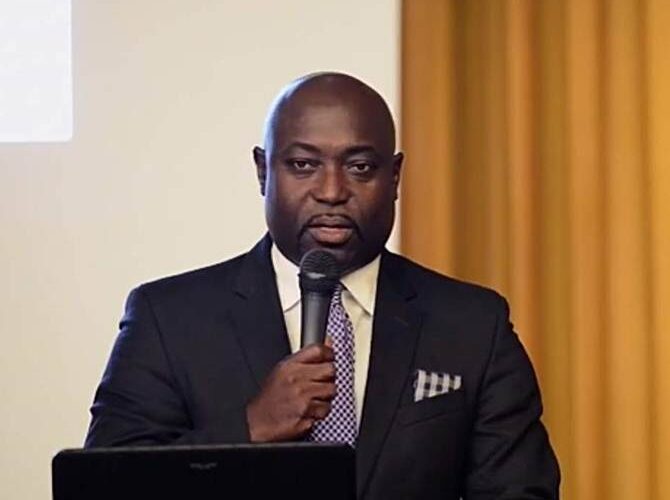
The author, William Nyarko, is Executive Director of the Africa Center for International Law and Accountability (ACILA)