
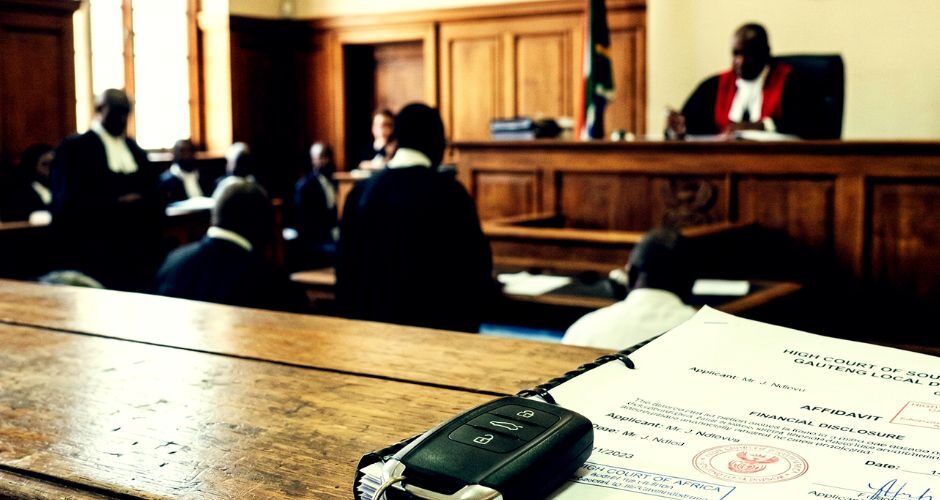
South African courts are increasingly shaping the rules of engagement between consumers and vehicle finance providers, with recent decisions painting a clear picture of how disputes over repayments, repayments and defective vehicles are being handled.
In a series of cases involving major lenders and high-value vehicles, there is a consistent pattern: courts are largely upholding credit agreements where borrowers default, while also showing a willingness to intervene where fairness, public interest or consumer protection laws apply.
From rejected COVID-19 hardship claims to landmark rulings on blocked repayments and defective vehicles, the results highlight the fine balance between enforcing contracts and protecting consumers.
Overall, the judgments provide insight into how South African courts may deal with similar disputes, particularly as economic conditions remain tense and household finances are under increasing pressure.
Covid excuse failed
South African court orders a man to return Volkswagen vehicle rejecting their argument That financial hardship related to COVID-19 prevented them from making repayments.
Standard Bank had sought a judgment against Tertius Franzsen after it stopped payments for a 2015 Volkswagen Touran 2.0 Trendline. Franzsen borrowed R292,277 from the bank in 2018 to buy the car, which came to R415,563 when interest, costs and fees were added.
Franzsen argued that the economic impact of the pandemic disrupted their income and made it impossible to meet their obligations under the finance agreement.
However, the court found that the defendant failed to provide sufficient evidence that COVID-19 directly prevented it from making payments over the extended period of default. It also noted that contractual obligations will remain binding unless appropriately renegotiated or legally adjusted.
The judgment allowed repossessing of the vehicle in favor of the finance provider. In the judgment, the judge also found that none of the defenses raised by Franzsen were genuine and that he had not made a proper case. He was also found accused of abusing the judicial process.
Taking BMW to court
has been a consumer given the right to proceed With legal action against BMW Financial Services, the initial hurdle in what could become a significant dispute over vehicle financing practices may be cleared.
This case involves a financed BMW vehicle, in which the consumer alleged unfair practices relating to the terms or enforcement of the finance agreement. While the specifics of the claim will be examined at trial, the initial decision focuses on whether the case can proceed.
BMW Financial Services sued Koka James Rametse for R97,509.69, claiming the amount represented a shortfall after he returned his 2016 BMW X6 and the vehicle was later sold.
A default judgment was granted against Rametse in November 2023 after he did not defend the claim. However, the Gauteng Division of the High Court in Johannesburg has now annulled that decision, allowing the dispute to proceed to trial.
legitimate defense
Judge Adams found that Rametse had raised a potentially valid defense involving section 127 of the National Credit Act, which governs the return and resale of goods under credit agreements, because Rametse had returned the car to BMW.
That section requires credit providers to follow a strict procedure, which includes notifying the consumer about the estimated value of returned goods within ten days of receipt of the same.
Previous decisions – including Nedbank and Wesbank – have held that section 127 of the Act gives the consumer the right to terminate the credit agreement and return the goods.
The lender will then have to follow strict procedural steps including appraisal notices and proper resale process. Failure to follow those steps could weaken a claim for defects after the sale.
Rametse argued that BMW Financial Services failed to comply with these requirements and that the notice relating to the valuation of the vehicle was sent late and to the wrong address.
The court found that the consumer had established sufficient grounds to proceed with the case, and rejected attempts to dismiss the case at an early stage.
Judge blocks BMW's bid
A court blocked BMW's attempt to repossess a financed vehicle, saying the action was not in the public interest in the specific circumstances of the case.
A was involved in the dispute BMW vehicles under a finance agreementThe borrower is reportedly in default. BMW sought to enforce its contractual rights through repossession.
Lungisani Ndlangiso purchased a car from BMW on behalf of his company and then defaulted on payments, forcing the carmaker's financial services unit to repossess the car.
BMW filed some of its paperwork eight months late, stating that it could not get the deponent to sign the document because the deponent was “based in another province, causing logistical delays”.
The judge found that BMW's delay was reasonably explained and the time limit was minimal, noting that the application was served electronically within time.
However, the court found that BMW's case did not have a reasonable prospect of success. By the time BMW applied for summary judgment, the outstanding balance had been paid, and the company continued to accept monthly installments, effectively ratifying the agreement.
On this basis the court rejected the application for re-possession.
historical decision
In a landmark ruling, WesBank was ordered to refund R170,023 to a buyer after the faulty Ford Ranger case set a precedent.
The Supreme Court of Appeal found that – under the Consumer Protection Act – a financier can also be considered a seller, not just a dealership.
The case highlights an ongoing problem, with the National Consumer Commission receiving hundreds of complaints every month from consumers who have purchased vehicles with hidden defects, especially second-hand cars.
Consumers can now make claims against banks directly for faulty products to avoid delays or disputes with dealerships. Banks will also be liable for any damage caused due to malfunction like accident or pile up.
The vehicle in question was a Ford Ranger, due to which faulty gearbox, Not deemed fit for purpose. A mechanic discovered that the dealership had installed the wrong gearbox while repairing the vehicle.
Van Niekerk canceled the agreement and claimed a refund from both the dealership and WesBank, but the bank continued to debit her account, leading to a dispute.
Court put brakes
A court has ordered the repossess of a Mercedes-Benz GLE worth almost R1.6 million after a six-year-long legal battle between the owner and the finance provider.
The case involved a high-value luxury SUV financed through a credit agreement, whose owner challenged the repossession over an extended period of time through legal challenges.
Despite lengthy proceedings, the court ultimately ruled in favor of the finance provider, allowing the vehicle to be repossessed and strengthening the enforceability of the credit agreements.
Mercedes-Benz GLE center of controversy As a financed asset subject to repossession.
The dispute dates back to 2019, when Mercedes-Benz Finance initiated proceedings against Thobejane after he defaulted on vehicle payments. The ownership stipulated in the credit agreement will remain with the lender until full payment.
Despite the demands, the buyer owed more than Rs 1.36 million by the time the summons was issued and later reneged on the settlement agreement.
The court found that the delay did not negate the underlying contractual obligations, noting that Mercedes had been waiting for payment since September 2021.
**This article is not legal advice.
IOL business