
Audio by Vocalize
For its first four years, the architects of African finance gathered where money was already comfortable.
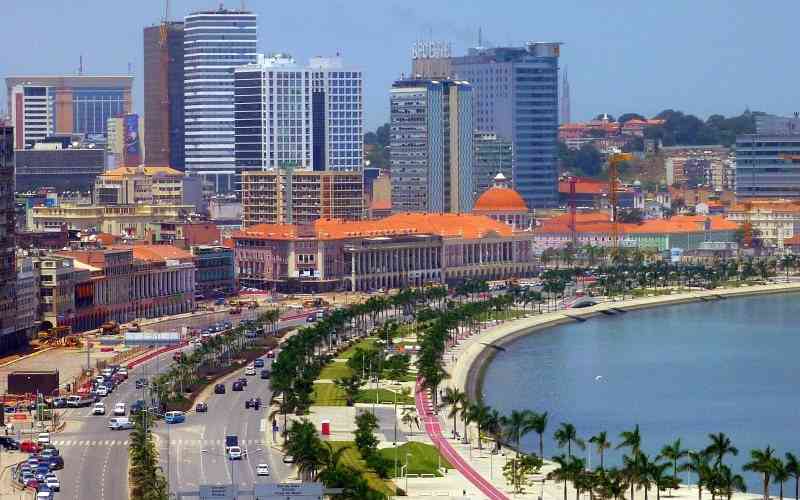
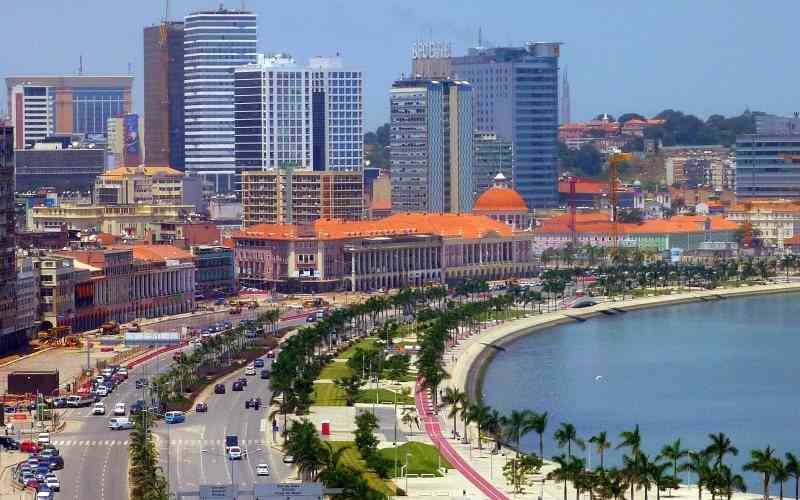
They met in the established centers of West Africa and the glittering corporate backdrop of the North. But this November, the Africa Financial Summit (AFIS) and its caravan of 1,250 policymakers, central bankers, investors and fintech disruptors are charting a new path. They are heading south towards Luanda, the capital of Angola.
According to the Deputy CEO of AFIS, this choice is neither accidental nor merely geographical. It reflects Africa's search for a financial system capable of meeting its ambitions.
“Angola is at the center of a rapidly changing region,” says Mauri. “The country has made great progress in modernizing its banking sector and diversifying its economy beyond oil under the Angola Vision 2050 framework.”
For AFIS, Luanda represents much more than a host city. This is an indication of where opportunity is emerging.
Projects like the Lobito Corridor, a $1.2 billion transportation network linking Angola, Zambia and the Democratic Republic of Congo, reflect the type of cross-border investment that is increasingly shaping Africa's economic future.
The move also reflects AFIS's own evolution. Having established itself in West and North Africa, Summit is expanding its footprint in Southern Africa, as well as deepening engagement with Lusophone and Anglophone markets.
Yet Luanda's importance goes beyond geography. The city serves as a fitting backdrop for a conversation increasingly dominating boardrooms, ministries and central banks across the continent: how to build a more integrated African financial system.
To ordinary Africans, this phrase may seem abstract. In fact its implications are deeply practical.
“For small businesses, financial integration means an entrepreneur in Dar es Salaam can do business with customers in neighboring countries without excessive friction, currency barriers or prohibitive costs,” explains Morrie.
This is far from today's reality.
Cross-border payments across Africa are still the most expensive in the world. Remittance costs average around 8 percent, while businesses often face regulatory hurdles, foreign exchange restrictions and fragmented payment systems.
Its consequences are felt most acutely by those already deprived of formal finance. More than 70 percent of African workers work in the informal economy, while millions remain excluded from traditional banking systems. Agriculture, despite employing a large portion of the continent's workforce, receives only a small share of commercial credit.
He says, “AFIS brings together the entire financial ecosystem to close these gaps. We want to ensure that financial services serve the real economy, including SMEs who struggle to access financing today.”
However, there are also reasons for optimism.
Stay informed. Subscribe to our newsletter
Across the continent, an architecture of integration is slowly taking shape. The African Continental Free Trade Area has created a framework for deeper economic cooperation.
Pan-African banks continue to expand across borders. Pan-African payment and settlement systems are increasingly involving financial institutions, while domestic capital is playing an increasingly important role in climate finance and trade finance.
“There are encouraging signs on a number of fronts,” says Morrie. “The direction is right.” But he quickly adds a caveat.
“The pace needs to be picked up.”
The urgency arises from the scale of the obstacles that remain. Africa's financial landscape is still fragmented across 54 jurisdictions, each with its own regulatory requirements and compliance standards. For fintech companies seeking continental scale, expansion can be prohibitively expensive.
Access to long-term capital remains another challenge. Infrastructure financing needs remain far greater than available funding, while pension funds and institutional investors often allocate only a small portion of their assets to productive investments in African markets.
“The sovereign credit-rating system is another major hurdle,” argues Maury. “African institutions and global rating agencies are at an impasse over how to measure African risk, artificially increasing borrowing costs across the continent.”
So the discussion moves beyond integration to something more ambitious: financial sovereignty.
For decades, Africa's growth story has been heavily dependent on external capital. Yet the continent is not short of financial resources.
Pension funds, sovereign wealth funds and insurance companies collectively manage more than a trillion dollars of assets. The challenge is that much of that money is invested outside Africa or concentrated in short-term government securities.
“About $1.1 trillion in institutional investor capital is held by African pension funds, insurance companies and sovereign funds,” says Maury. “Yet much of it is allocated to short-term government debt or invested outside Africa entirely.”
Additionally, Africa loses an estimated $100 billion annually through illicit financial flows.
For AFIS, addressing this imbalance means raising domestic capital on an unprecedented scale.
“External financing dependence reflects deeper structural realities,” he says. “But if Africa wants to stand on its own feet, African financial institutions must invest locally.”
Still, Mory acknowledges that the broader goal of African financial sovereignty will not be achieved overnight.
“This is a worthwhile long-term goal, but it requires an honest assessment of where Africa stands today.”
However, the building blocks are increasingly visible: growing pan-African banks, expanding fintech ecosystems, the AfCFTA framework and growing intra-African investment flows.
The African Development Bank's emphasis on a new African financial framework for development, along with the planned launch of the Africa Credit Rating Agency, reflects a broader effort to strengthen the continent's financial autonomy and reshape perceptions of African risk.
“Financial sovereignty is ultimately a generational project,” says Maury. “A summit like AFIS is part of how the industry moves this forward by building the networks, trust and shared standards that make this possible.”
Seen from that perspective, Luanda is much more than the venue for another financial conference. It symbolizes a continent that is trying to finance its future on its own terms.
The journey toward financial sovereignty may still be long, but for two days in November, many of the people shaping the future will gather in Angola's capital to discuss how to get closer.