“You have no need to fear the African Court on Human and Peoples' Rights, which is designed to protect rather than oppress. I call on African Union member states that have not yet ratified the Protocol to please do so without delay.
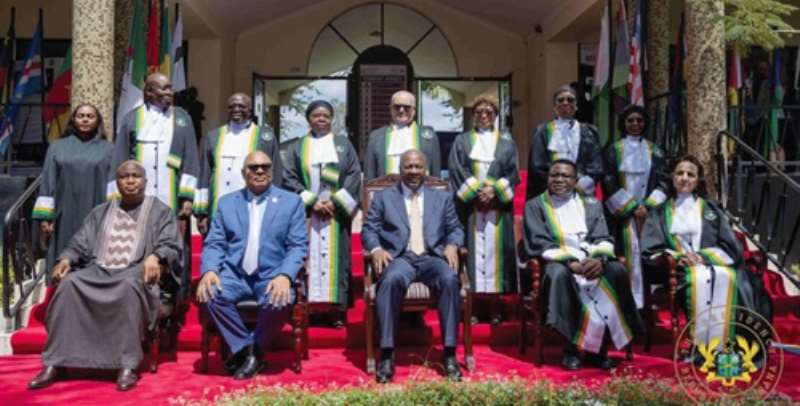
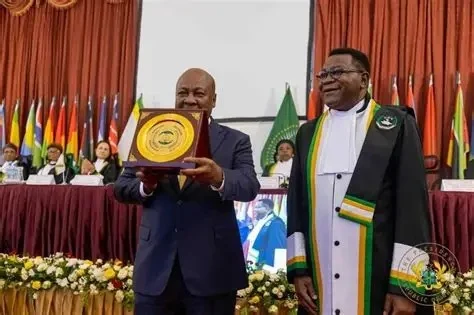
“To my colleagues in those countries, I assure you that you have nothing to fear from the African Continental Court,” President John Dramani Mahama said as special guest at the inauguration of the 2026 Judicial Year of the African Court in Arusha, Tanzania on Monday, March 2.
The 2026 Judicial Year is themed “20 Years of Service in Defense of Human and People's Rights”. “.
Therefore, President Mahama used this platform to challenge African heads of state, who are reluctant to sign the Protocol, not to fear the African Court and ultimately provide their citizens with unfettered access to continental justice.
Since its establishment 20 years ago, many African countries have yet to ratify the protocol granting jurisdiction to the African Court, and even fewer countries have announced plans to allow individuals and non-governmental organizations direct access to it.
Documents available with the Communication for Development and Advocacy Consult (CDA Consult) indicate that, to date, only 12 African countries have ratified the Protocol and submitted a declaration, but unfortunately four countries later withdrew their declaration.
The countries that signed and acceded to the declaration are Ghana, Burkina Faso, Malawi, Mali, Tanzania, Rwanda, Côte d'Ivoire, Benin, Tunisia, Gambia, Niger and Guinea-Bissau; However, Rwanda withdrew its declaration on February 24, 2016, followed by Tanzania on November 14, 2019, Benin on March 24, 2020, and Côte d'Ivoire on April 28, 2020.
According to African Court data available to CDA Consult, 54 of the 55 member states of the African Union, excluding Morocco, have ratified or acceded to the African Charter and, therefore, have committed themselves to respecting the principles set out therein.
Currently only 34 member states have ratified the protocol. Only 8 of these States have filed declarations under Article 34(6) of the Protocol by which they accept the competence of the African Court to consider applications filed by individuals and NGOs.
In the absence of such a declaration, an application against non-declaring states must first be submitted to the Banjul Commission, which may – after a preliminary examination – decide to refer the case to the African Court.
26 States have ratified the Protocol but have not yet submitted a Special Declaration: Algeria, Burundi, Benin, Cameroon, Chad, Comoros, Côte d'Ivoire, Congo, Gabon, Kenya, Libya, Lesotho, Madagascar, Mozambique, Mauritania, Mauritius, Nigeria, Republic of the Congo, Rwanda, Sahrawi Arab Democratic Republic, South Africa, Senegal, Togo, Tanzania, Uganda and Zambia.
Speaking on this disturbing data, President Mahama urged all member states to make this declaration, warning that the destiny of the continent is shared and no nation will stand alone in the face of injustice. “We are each other's protectors. That is why we need an institution that serves all but is beholden to no one: the African Court.”
Recalling the relevance of the African Court, President Mahama recounted his own family history, highlighting his father's repeated detention, first after the 1966 coup that overthrew Kwame Nkrumah and then in 1974 for writing a letter to then military ruler General IK Achiampong to offer unsolicited advice.
“Although I stand before you as a head of state, I am the same child whose father was detained for serving his country and advising its leader.”
President Mahama said, “I am still the boy who has learned how dangerous it can be to challenge those in power, who can act with impunity.
“The impact of social injustice and human rights violations goes beyond individuals; they affect entire families and communities.”
The president drew a direct line from Africa's painful past to the current mission of the African Court, invoking the names of some of the continent's martyrs, such as Patrice Lumumba, Thomas Sankara and Steve Biko, and exiled leaders such as Ghana's Nana Prempeh I and Yaya Asantewaa.
He argued, if the Court had already existed, “we would have achieved justice against racist apartheid criminals, colonialists, and even our own oppressive African dictators who tortured and killed many people.”
As he declared the 2026 judicial year officially open, President Mahama urged African countries to deepen their commitment to the Court so that by its 40th anniversary, “it stands as the leading international judicial body and a model for others.”
President Mahama said, “The time has come for us to rise to the challenge of fulfilling the promises we made to future generations, the promises we have signed and pledged to keep. Now is the time for Africa to step into its own greatness.”
According to the timetable of the African Court, on Friday, March 6, 2026, the Court will deliver six judgments adopted during its 78th and 79th ordinary sessions.