
bilateral friction
As viral videos of migrant abuses spread outrage in Accra, Pretoria was forced to confront a damaging reality: It cannot claim continental leadership while failing to protect African citizens within its borders.
By
Africa Report
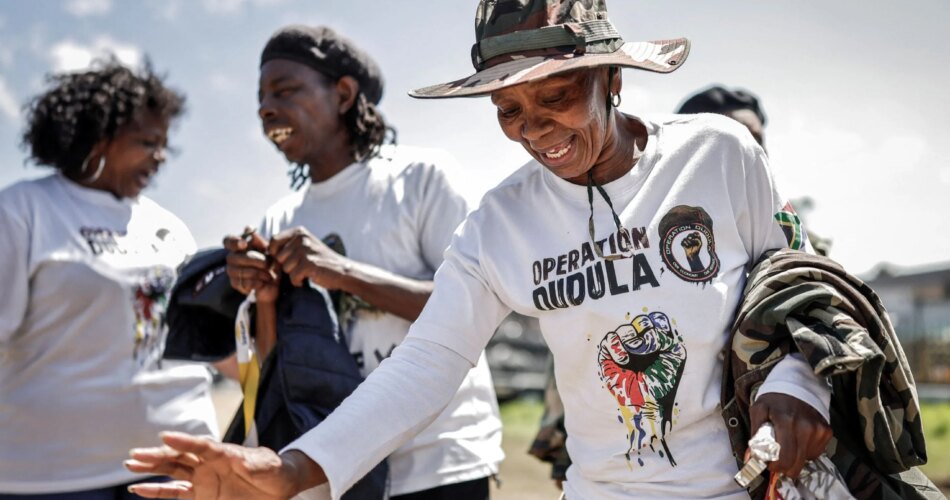
A member of the vigilante group known as Operation Dudula, which means “to push back” in Zulu, gestures during a protest near the Nasrec Expo Center in Johannesburg ahead of the opening of the G20 leaders' summit on November 22, 2025. © Marco Longari/AFP
Ghana has summoned South Africa's acting high commissioner over a series of xenophobic incidents targeting foreign nationals, including Ghanaians, after videos of migrants being harassed and asked to leave the country circulated online.
The move turns a familiar domestic flashpoint in South Africa – anger over jobs, crime and public services for African immigrants – into a diplomatic problem for Pretoria. This gives Accra an opportunity to frame the issue not only as a consular matter, but also as a Betrayal of African solidarity, which Ghana says it showed During South Africa's anti-apartheid struggle.
Samuel Okudzeto Ablakwa, Foreign Minister of GhanaActing High Commissioner to South Africa Thando Dalamba was summoned following what Ghana's Foreign Ministry described as “xenophobic incidents” in South Africa. One case involved a legal resident of Ghana in KwaZulu-Natal who was reportedly confronted and told to return home and “fix his country”. Ghana's ministry also warned of “escalating tensions”, saying foreign nationals, including Ghanaians, were advised to stay indoors for their safety.
The diplomatic protest followed earlier talks between Abalakwa and ronald lamolaMinister of International Relations and Cooperation of South Africa. Ablakwa said he had released “trending videos” that showed Ghanaians being subjected to “extremely disturbing xenophobic attacks”. According to Ghanaian reporting and South African media, South African officials expressed sympathy for the victims and promised an investigation.
Champion of African integration?
For South AfricaThis episode revives an old and harmful contradiction. The country presents itself as one of the continent's diplomatic giants, a champion of African integration and a beneficiary of anti-apartheid solidarity. Yet it has repeatedly struggled to protect African immigrants from harassment, mob violence and organized anti-foreigner campaigns.
Abalakwa's language was ridiculed. Ghana's Foreign Ministry said it reminded Pretoria of Accra's support for the anti-apartheid struggle and stressed that attacks on law-abiding foreigners were contrary to “the principles of African solidarity”. That history matters. Under Kwame Nkrumah, Ghana established itself as a center of liberation politics and Pan-African organization. The message from Accra now is that South Africa cannot invoke that past abroad while tolerating attacks on the African diaspora at home.
The immediate trigger appears to have been the circulation of the video confronting the Ghanaians. But its deeper background is South Africa's increasingly organized anti-immigrant politics.
African immigrants were 'intimidated'
In recent months, Operation Dudula and other surveillance groups have targeted foreign nationals at clinics, schools and businesses, often demanding identification documents and accusing migrants of undermining public services. The Johannesburg High Court ruled that the group's clinic blockade was illegal, while the South African government has said that health care must remain available to all under the law.
Rights groups say this pattern goes beyond isolated street violence. Despite constitutional protections, anti-immigrant groups in South Africa have blocked migrants from health care and education, Human Rights Watch has warned. The strategies have also spilled over into everyday intimidation: checking documents at clinic entrances, closing foreign-owned shops, and pressuring local officials to treat migrants as political liabilities rather than residents with legal rights.
The economic recovery is real, even if the scapegoat is illusory. South Africa's official unemployment rate It stood at 31.4% in the fourth quarter of 2025, slightly lower than 31.9% in the previous quarter, but still the highest in the world. According to official figures, youth unemployment remains high at 43.8%.
These figures help explain why anti-immigrant rhetoric spreads so easily in townships and poor urban communities. But they do not prove that migrants are the cause of unemployment. South Africa's labor crisis is rooted in weak growth, a failed education-to-work pipeline, power and logistics bottlenecks and the long tail of apartheid spatial exclusion. Foreign nationals have become the direct targets of frustrations to which the state has failed to respond.
Foreign nationals less than 4% of the population
Statistics also complicate politics. South Africa's foreign-born population is not high by global standards. Official figures cited AP The number of foreign nationals in 2022 is approximately 2.4 million or about 3.9% of the population. Yet the politics of immigration has become much larger than the demographic reality, as it sits at the intersection of jobs, crime, housing, health care, and local political competition.
That's why ghanaThe intervention may extend beyond a consular dispute. South Africa has been here before. In 2019, attacks on foreign nationals, including Nigerians, led to a serious diplomatic dispute with Abuja, including Nigeria's decision to boycott the World Economic Forum in Cape Town and recall its ambassador. The response also placed South African businesses elsewhere in the continent under scrutiny.
Accra has not gone that far. But the summons is a warning that Pretoria's inability to curb anti-migrant vigilantes could soon become a continental reputation problem.
with AFP