
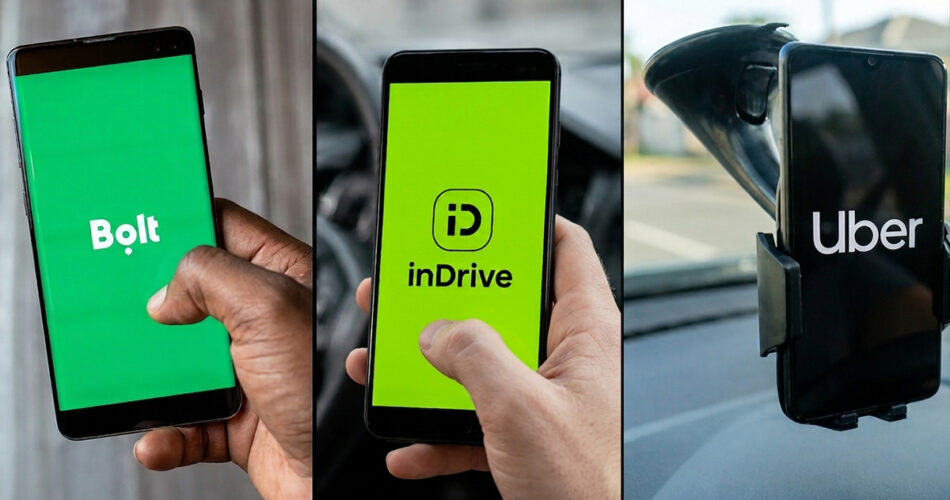
E-hailing platforms have enabled hundreds of thousands of drivers to earn income despite persistent unemployment and economic challenges. (Image via Gemini)
South Africa's e-hailing sector has evolved from a convenient transportation option to a significant contributor to the country's growth. digital The economy is creating hundreds of thousands of income-generating opportunities.
This is because the country is struggling with the world's highest unemployment rate.
Executives from SA's three largest e-hailing platforms – Uber, inDrive and Bolt – told ITWeb that ride-hailing platforms have become an important source of flexible work for South Africans who might otherwise struggle to find employment.
Despite many challenges in the sector, over the past decade, it has seen growing consumer demand and growing participation in the gig economy. He says the e-hailing industry now supports a wide ecosystem of businesses ranging from vehicle financiers and insurers to fuel retailers and township enterprises.
The most visible impact is its role in creating thousands of earning opportunities for drivers, couriers and small business operators.
According to Sbu Ngwane, Senior GM of Bolt South Africa, Bolt has onboarded more than 500,000 driver partners since entering South Africa a decade ago, which highlights the scale. digital The platform has enabled participation in the gig economy.
“Bolt has helped expand access to flexible gig work opportunities by enabling South Africans to participate in the growing platform economy. For many driver partners, ride-hailing provides an important source of income, whether as a primary earning activity, or as a supplement to existing income streams.
“The flexibility provided by the platform allows individuals to generate earnings on terms tailored to their individual circumstances. This shows the role gig work can play in increasing access to earning opportunities.”

SBU Ngwane, senior GM of Bolt South Africa.
Meanwhile, Uber says it has enabled more than one million flexible economic opportunities in SA through its mobility and delivery platforms.
Deepesh Thomas, director and GM for Sub-Saharan Africa and Morocco at Uber, says the platform economy is increasingly filling the gap left by traditional employment channels.
“We have invested R17 billion in the local economy and enabled over one million flexible economic opportunities, with drivers earning on average 57% more than their next best alternative,” says Thomas.
“In an environment where traditional employment pathways are inadequate to meet demand and youth unemployment remains structurally high, platform-enabled work has become a critical access point to income, flexibility and entrepreneurship for individuals who were previously unemployed or underemployed.”
He further said that Uber's investment aims to have a multi-faceted impact, reducing barriers to entry through fuel support, vehicle financing models with vehicle suppliers and innovation in last-mile delivery.
Many drivers work on multiple e-hailing platforms simultaneously, switching between apps like Uber, Bolt, inDrive, and others to maximize earning opportunities.

Deepesh Thomas, director and GM of Sub-Saharan Africa and Morocco at Uber. (Image supplied)
For inDrive, which operates in more than 16 metropolitan areas and a growing number of townships and secondary cities, affordability and low platform fees have become key drivers of participation in the digital economy.
Asif Black, country representative for inDrive South Africa, says the company is seeing a growing number of people using ride-hailing as a primary or supplemental source of income.
Black explains, “InDrive has created a low-barrier entry point into the digital economy by enabling thousands of South Africans to earn income through ride-hailing. We see that, based on the hours drivers work on the platform, many of them are individuals who are currently unemployed, underemployed, or actively looking for additional income to support their households.”
In addition to the drivers, the broader ecosystem also generates meaningful economic activity.
He further added, “This includes vehicle owners, fleet operators, mechanics, fuel stations, vehicle finance providers, insurers and other small businesses that indirectly benefit from the increased demand and activity driven by ride-hailing services.”
Although none of the operators provided formal GDP contribution figures, all three point to the growing economic footprint of ride-hailing in South Africa.
The impact of this sector extends far beyond the drivers using the platform. He says each trip generates activity in a number of industries, including vehicle financing, insurance, fuel sales, maintenance services, telecommunications and fleet management.
Bolt argues that the scale of activity generated through its platform reflects the growing importance of digital mobility services within the broader economy.
Ngwane says: “Although Bolt does not publicly disclose GDP contribution figures, the company has invested R3 billion in South Africa over the past decade, demonstrating its long-term commitment to the market and confidence in the country's growth potential. Over the same period, 30 million passengers have used the Bolt platform at least once, while more than 500,000 driver operators have joined the platform.”
Uber says its impact goes beyond transport, with the company estimating it has contributed R394 million in added value to SA's night-time economy. It has recently announced plans to invest a further R5 billion to expand its local operations, including its courier Service.
A study conducted by research firm Ipsos, commissioned by Bolt South Africa, Estimate SA's gig economy will be worth more than $5 billion (about R90 billion), with between 1.8 million and two million participants, accounting for up to 7.9% of the labor force.
According to the study, 70% of South African gig workers turn to ride-hailing for flexible earning opportunities – as a secondary income – while another 30% depend on it as their primary livelihood.

Ashif Black, Country Representative for Indrive South Africa. (Image supplied)
According to e-haulers, the growth momentum of the sector is not over yet. All three operators have reported continued demand for e-hailing services due to changes in consumer behaviour, urbanization and growing concerns about safety and convenience.
Uber points to broader spending trends that indicate ride-hailing is becoming embedded in daily life.
Thomas explains, “We are seeing a significant shift in consumer behaviour, with ride-hailing becoming a mainstream solution for urban routines, social occasions and time-pressured lifestyles. This is supported by the 2026 Discovery Bank and Visa SpendTrends report, which highlights that ride-hailing usage in South Africa is growing faster than traditional fuel expenditure, especially among younger consumers.”
“Looking ahead, our future growth is linked to sustainable innovation, particularly the expansion of our green initiatives, such as the rollout of electric vehicles and motorbike services to provide affordable connectivity in underserved areas.”
Meanwhile, Indrive says demand for e-hailing is increasingly coming from townships and secondary cities where public transport options may be limited.

The trend suggests that future expansion may not only be focused to major metropolises such as Johannesburg, Cape Town and Durban, but also to increasingly disadvantaged communities, where digital mobility platforms are becoming part of the transport landscape.
“The fact that 30 million passengers in SA have used the platform over the past decade shows the growing demand for app-based mobility services and their important role in everyday transport,” says Ngwane.
As demand continues to grow, so too does the opportunity for more South Africans to participate in the gig economy and generate income through flexible earning models, he adds.
Despite its economic contribution, the e-hailing sector faces significant challenges.
Over the past few years, drivers and operators for Uber, Bolt and InDrive have staged nationwide protests, urging the government to speed up the process of regulating the e-hailing industry to reduce what they call “atrocious working conditions” and “unfair pay”.
Other concerns include safety and security issues, with incidents of violence and crime involving drivers, passengers and criminals making headlines from time to time.
Operators have invested heavily in security technologies, including panic buttons, real-time tracking, identity verification systems, and partnerships with security providers.
However, officials argue that technology alone cannot solve the problem. They highlight regulatory uncertainty as another major concern.
These include delays in licensing processes, inconsistent rules between municipalities and provinces, and the absence of a fully-aligned national framework governing ride-hailing services.
Thomas says licensing reform will have the biggest impact on future growth.
“To maximize our ability to expand access to opportunity, we advocate for clear, forward-looking regulations that recognize the unique nature of the platform economy. Efficient, digitized and consistent licensing processes across provinces are the most important factors that will unlock further opportunities for drivers and small operators,” he stressed.
Ngwane believes collaboration will be essential to address issues such as infrastructure limitations, which also continue to affect operations.
Other problems include congested roads, poor road maintenance and lack of dedicated pick-up and drop-off zones at transport hubs, creating inefficiencies for both drivers and passengers.
“South Africa is an important market with significant growth potential, but it also presents a unique operating environment. Key challenges include public safety concerns, regulatory complexity, infrastructure constraints, traffic congestion and macroeconomic pressures impacting both riders and driver operators.
According to Ngwane, “Tackling these challenges requires continued collaboration between industry, government, law enforcement and other stakeholders to create a safer, more efficient and more inclusive mobility ecosystem.”