
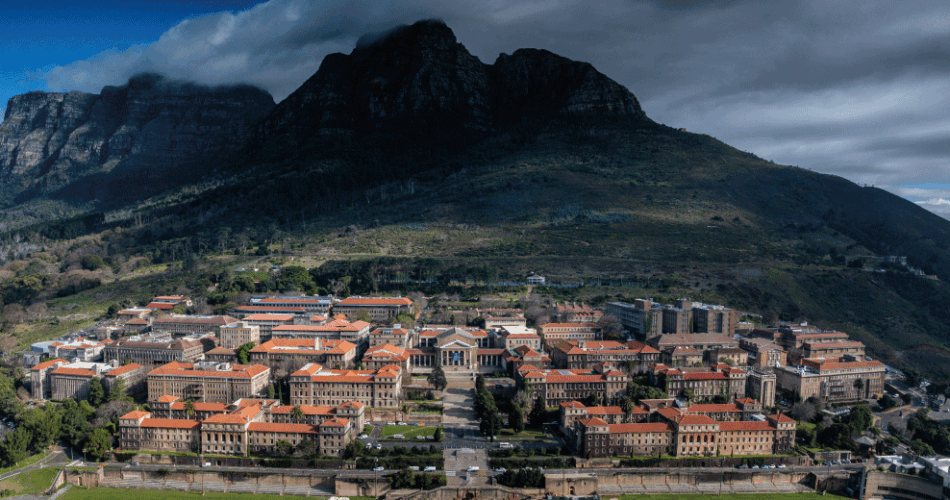
South Africans increasingly regard university as the default route to dignity, stability and upward mobility. But as graduate unemployment rises and the technical skills shortage deepens, the country may need a more honest conversation about what higher education can realistically deliver.
South Africa has spent three decades making university degrees a national symbol. A child accepted into university is often viewed not just as a student, but as evidence that the family is moving forward. The university came to represent the dignity, upward mobility and participation of the post-apartheid middle class. After decades of exclusion, expanding access to higher education was morally necessary and politically inevitable. But somewhere along the way, the degree started carrying too much weight.
South Africa is increasingly behaving as if university is the default route to respectable adulthood. Schools celebrate graduation above all else. Politicians proclaim rising enrollment figures as evidence of progress. Parents push children toward degrees, even when labor-market realities suggest otherwise. Meanwhile, vocational and technical education remains at a culturally low level despite a persistent shortage of technical skills in the economy. The gap between the university system and the labor market is becoming harder to ignore.
Statistics South Africa's quarterly labor force survey shows that overall graduates perform better than non-graduates, but graduate unemployment has nevertheless increased significantly over the past decade, especially among young graduates. At the same time, South Africa faces a continuing shortage of jobs related to engineering, technical trades and specialized infrastructure. Municipal systems struggle in part because technical expertise is scarce. Eskom has repeatedly struggled with skills retention problems. Construction, logistics and manufacturing all require the type of competency the country does not produce in sufficient numbers. Yet the prestige hierarchy persists: universities first, everything else second.
TVET colleges and apprenticeships exist, but their symbolic status in the public imagination is low. An artisan, technician or millwright is often treated as if they have undertaken a secondary option compared to someone who has completed a normal university degree, even though the artisan may enter increasingly stable employment and may have already accumulated practical experience. Over time, university degrees became tied to class aspiration and political symbolism.
After 1994, expanding access to university has been closely linked to correcting historical injustices. Government funding structures, enrollment targets and NSFAS expansion all push towards mass participation in higher education. Much of it was necessary and many lives were changed through it. But universities were also inheriting students from a school system that, for more than thirty years in a democracy, had largely produced poor educational outcomes. Some students come exceptionally prepared. Others arrive with little preparation in literacy, numeracy, writing, and analytical skills after years of living in highly disorganized educational environments. Universities are expected to absorb growing enrolments, compensate for long-ago failures in the educational pipeline and produce employable graduates in an economy still unable to generate sufficient skilled work.
Its results are visible across the region. DHET and Council on Higher Education reports have repeatedly shown serious completion problems, with many students failing to graduate within the regulation time and large numbers of students never graduating. This is not just an academic issue. Students spend years gaining qualifications, often accumulating debt or consuming NSFAS funding, only to leave institution without a degree, without technical skills and without entering the labor market early enough to gain meaningful practical experience elsewhere.
At the same time, the signaling power of many degrees weakens as graduate numbers grow faster than economic demand. Credential inflation follows naturally. Jobs that once required matriculation, workplace training, or technical proficiency are increasingly in demand, as degrees have become convenient filtering tools in a crowded labor market.
This creates an uncomfortable political problem. South Africa has quietly collapsed educational success into a single institutional pathway. University attendance has become such a moral high that both the education system and the labor market have been distorted.
A society does not need identical educational trajectories to produce equal dignity. It requires competency, stability, and many respectable pathways into adulthood.
Germany, Switzerland, and many East Asian economies long ago developed strong technical and business systems as well as universities. South Africa moved in the opposite direction. Despite the economy's continued dependence on technically skilled labor, university degrees increasingly absorbed social prestige, while technical training was associated with failure.
The irony is that many families already privately understand this paradox. Many people know graduates who are struggling to find work. Many people know qualified people working outside their area. Yet the symbolic power of the degree remains so strong that the system continues to reproduce itself.
Universities themselves are getting trapped in this system. They are expected to act simultaneously as sites of intellectual development, engines of social mobility, mass identity systems, and buffers against youth unemployment. These functions do not naturally align, especially at scale.
Recent concerns over artificial intelligence have highlighted, rather than created, some of this uncertainty. Once software could generate competent undergraduate prose in seconds, universities were forced to confront questions they had previously been postponing: what is actually being assessed, what a degree certifies and whether the current model still holds the credibility that society assumes. But AI is not the central crisis. This came when deep structural problems already existed.
South Africa does not need less educated people. There needs to be a more honest conversation about what education is really for, what universities can realistically provide and what skills the economy really needs. Universities matter. But artisans, technicians, mechanics, healthcare workers and countless other types of capabilities are also undervalued in the country. The problem is not that too few South Africans read. It is that many people are pushed towards the same educational path for social and symbolic reasons that the economy can no longer absorb.