
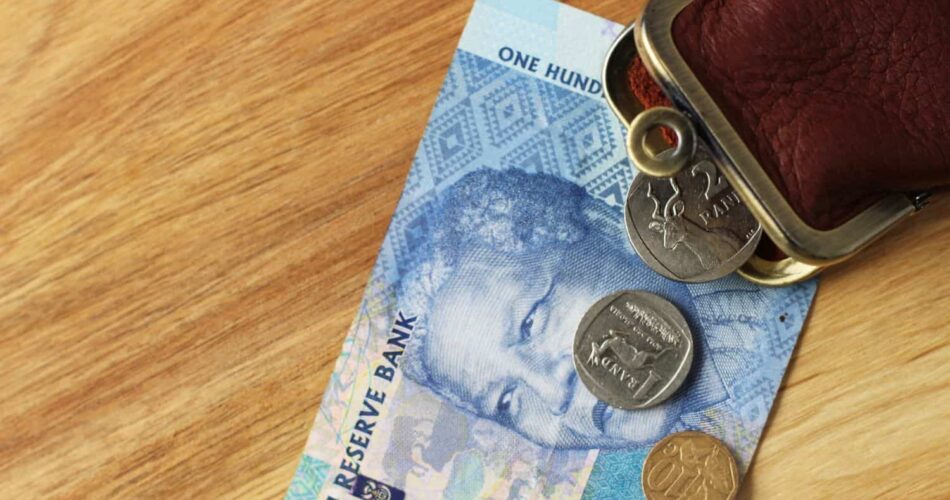
'To truly understand financial behavior in South Africa, one needs to go beyond the spreadsheets into the lived realities in rural villages, townships and informal settlements.'
For years, a familiar narrative has shaped how we understand South Africans and their finances: they are highly indebted, save little and tend to consume conspicuously.
Cohan Govender, group head of personal banking at Standard Bank Personal and Private Banking, said this narrative is reinforced by the data, showing low household savings rates, rising unsecured lending and high levels of personal debt. On the surface, the conclusion seems obvious. But this is also incomplete.
“To truly understand financial behavior in South Africa, one needs to move beyond spreadsheets and into the lived realities of rural villages, townships and informal settlements,” he said.
“There, a very different story unfolds. The story is not one of reckless consumption, but of aspiration, resilience and, in many cases, investment under constraint.”
Is this really conspicuous consumption?
Govender said homes financed through conventional mortgages would be correctly classified as an asset, an investment in long-term wealth and stability. But when a house is built through a personal loan or credit card, it is often dismissed as evidence of financial negligence.
“This is not just an issue of semantics,” he said. “It reflects a deep structural bias in how we define ‘good’ financial behavior, which privileges access to formal, secure credit and penalizes those who must navigate the system differently.
“Yes, unsecured debt can fund consumption, but it can also fund transformation. It builds houses where there were none. It pays school fees which opens up future earning potential.
“It buys vehicles that are not status symbols, but lifelines that enable people to reach work opportunities, arrive on time, and maintain employment in an economy where public transportation is often unreliable.”
Govender said that in such cases, what may appear as conspicuous consumption is, in fact, a survival strategy and, sometimes, a form of long-term investment.
Invisible savings for the financial sector
He said the same misinterpretation applies to how we measure savings. “South Africa is often described as a country of ‘disruptions’, yet this approach relies heavily on formal financial data and ignores the deeply embedded culture of collective savings outside traditional systems.”
Govender highlighted that stokvels continue to grow, raising billions of dollars in various communities. making reference to National Stockwell Association of South AfricaHe said more than 11 million South Africans participate in stockwellsMore than Rs 50 billion circulates annually through these schemes.
“This figure does not include informal plans between families and friends,” he said.
“Since contributions are often deposited into a single account, only one account holder is visible in the formal system, causing many savers to appear absent in the data.
“It appears that low individual saving masks broader collective indiscipline. It is not a failure to save, but a different model of saving.”
spending patterns
Govender said investments in housing, education or small businesses are often not reflected in traditional metrics.
A family may show some liquid savings while actively building a house or raising funds for education. It is actively investing in physical and human capital with long-term value.
“This raises an important point: not all forms of saving are visible, and not all forms of consumption are wasteful,” he said.
“In fact, many South Africans who appear highly indebted on paper may, in fact, have a lower overall debt burden than those who have access to secure finance.
“The difference is not in the scale of borrowing, but in its structure. It is short-term and unsecured, which certainly makes it riskier, but not inherently less purposeful.”
issue is not failing to save
He questions whether the real issue is not that South Africans are failing to save or that they are investing poorly.
“Perhaps this is because our frameworks for understanding financial behavior have not kept pace with the realities of the diversity of our economy,” Govender said.
“We continue to measure financial health through a narrow lens that ignores informality, access barriers, and cultural practices.
“In doing so, we risk misdiagnosing the problem and misdirecting the solutions. To improve financial inclusion and economic resilience, we must start by acknowledging this complexity. Financial progress for many South Africans is not linear; it does not begin with savings accounts and end with wealth accumulation.”