
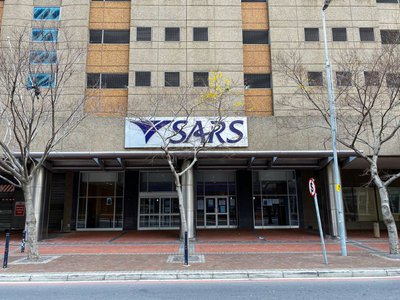
Speaking during a parliamentary briefing on the 2026 national budget, SARS Commissioner Edward Kieswetter Told MPs that organized financial crime has grown faster than the formal economy, posing a major threat to fiscal stability and state capacity.
Kieswetter said estimates show the illegal economy now accounts for between 12% and 15% of GDP — a sharp increase from about 5% two decades ago.
He warned that the magnitude of the problem translates into massive revenue losses for the state.
“Over the last 15 to 20 years, the illegal economy has actually grown faster than the formal economy… If you translate that into numbers, that means the size of our illegal economy is between 800 billion and 1.2 trillion rand, and if you translate that into taxes, it's between 200 and 300 billion that we're not collecting.”
He said the figures underlined a “strong business case” for coordinated national action to disrupt criminal networks operating across regions and borders.
Call for a presidential-led enforcement program
Kieswetter told Parliament that fragmented enforcement efforts across departments had weakened the country's response to illicit trade, corruption and organized tax crime.
He said government agencies often work in silos without a unified system to measure progress or coordinate strategy.
“Each department is carrying out its own narrow mandate, but we have no national dashboard to measure whether we are making progress in tackling crime, corruption and the illicit economy.”
To address this, SARS has proposed a Presidential-led National Illicit Economic Disruption Program which aims to improve accountability and coordination across multiple ministries and enforcement bodies.
He also called for the creation of a central command platform to strengthen inter-agency cooperation and support intelligence-driven enforcement.
Border control, targeted enforcement and prosecution reforms
Kieswetter stressed that current spending patterns do not adequately address systemic vulnerabilities, particularly at borders and within high-risk supply chains.
He proposed that the government allocate funds to integrated projects rather than fragmented departmental initiatives.
“We are proposing that money be allocated to a project – for example fixing the border line between South Africa and Mozambique so that when we leave we know that we have really gone some way and demonstrated what a smart modern border would look like.”
He said enforcement should initially focus on high-risk sectors such as tobacco, fuel and alcohol, where illicit trade significantly undermines legitimate economic activity and tax collection.
The Commissioner also recommended special prosecution units and dedicated courts for speedy disposal of cases involving illegal trade and confiscation.
“At the moment a lot of our seizures get stuck in a lengthy process and so this creates uncertainty whether dedicated prosecution and courts will strengthen enforcement.”
International example and compliance pressure
Kieswetter suggested that South Africa could consider stronger compliance measures used in other countries to improve tax collection.
“Australia has recently introduced an order that prevents you from travelling. When you get to the airport, they check if you owe any debt to the tax authority, and they say you can't holiday if you haven't paid tax. Maybe we should think about some of those things.”
Funding pressure and structural under-resources
The SARS Commissioner warned that the Revenue Authority remains structurally weak despite increasing demands on its enforcement capacity.
He said funding growth has not kept pace with inflation, limiting investment in technology and specialized skills.
“Our allocation over the last seven years has grown by an average of about 3.7% per year in an inflationary environment that has seen salaries grow by more than 70% by 5.4%, so we are underinvesting in true institutional investment.”
Kieswetter said SARS is estimated to be South AfricaThe total tax gap, including unpaid VAT and personal income tax, is approximately R500 billion.
“Believe us when we say that SARS is still structurally underfunded and unless we take into account that we will not reduce the tax gap, it is more than three times the primary surplus that we are not collecting.”
He said the additional funds would be used to expand enforcement capacity and modernize systems.
“If you gave us an extra two and a half billion we would accelerate our investment in people, we need forensic investigators and analysts who can tackle syndicated crime, we also need to accelerate our investment in technology and data science.”
Technology and long-term improvement
Kieswetter stressed that strengthening SARS as an institution is central to improving revenue collection and protecting the fiscal integrity of the country.
He said continued investment in data-driven enforcement would allow the government to respond more effectively to complex financial crime networks.
“Lasting value comes from the structural improvement of our revenue administration capacity, which will support fiscal integrity into the future.”
He said SARS had collected R12.9 billion through targeted debt recovery initiatives, but warned that the nature of tax debt was becoming increasingly complex, involving organized syndicates and large corporate cases.
Kieswetter said tackling the illicit economy and strengthening revenue administration are essential to protecting South Africa's economic sovereignty and long-term financial stability.
Find us on social media
Follow ECR Newswatch WhatsApp Channel Here