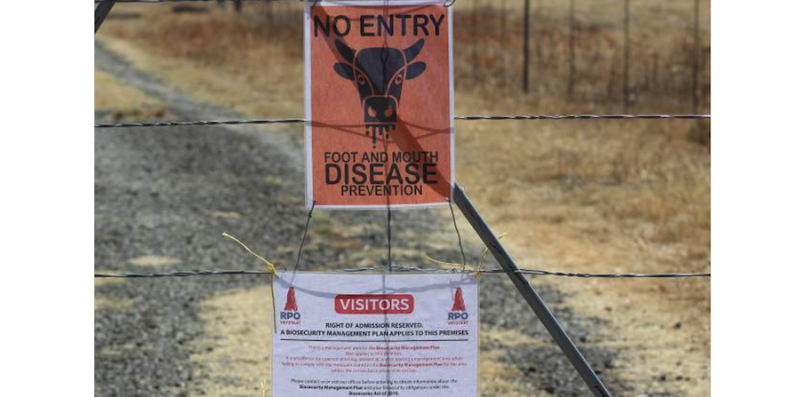
The outbreak was reported on February 18 when veterinary officials identified cattle exhibiting clinical signs consistent with FMD at a cattle post in Mahallese, located in the Botha-Bothe district, near the border with South Africa's Free State province, according to a statement released on Tuesday. news.az report, citing by Xinhua.
“Laboratory tests conducted on 17 cattle confirmed that six tested positive FMD Antibodies,” the ministry said. It added that additional samples have been sent to a reference laboratory of the World Organization for Animal Health in Botswana for virus typing and vaccine matching.
The infected cattle are kept under strict quarantine measures. Neighboring cattle posts are also under precautionary quarantine and are being monitored through active surveillance to prevent further spread of the disease.
The ministry called on cattle herders, traders and the public to remain vigilant. Officials urge immediate reporting of any suspicious symptoms, including excessive drooling, lameness, sores in the mouth or on the hooves, to the nearest veterinary office.
Foot-and-mouth disease is a highly contagious viral disease that affects two-hoofed animals such as cattle, sheep, goats and pigs. Although it does not usually pose a direct threat to human health, outbreaks can have serious economic consequences due to livestock losses and trade restrictions.
Lesotho, a country completely surrounded by South Africa, is facing extreme concerns given the regional context. Earlier this month, the South African government declared the nationwide FMD outbreak a “national disaster.” According to a recent report by South Africa's Bureau of Food and Agricultural Policy, 24,400 FMD cases were recorded in domestic livestock in 2025.
Authorities have not yet confirmed whether the outbreak in Lesotho is linked to cross-border transmission from South Africa, and the investigation is ongoing.