
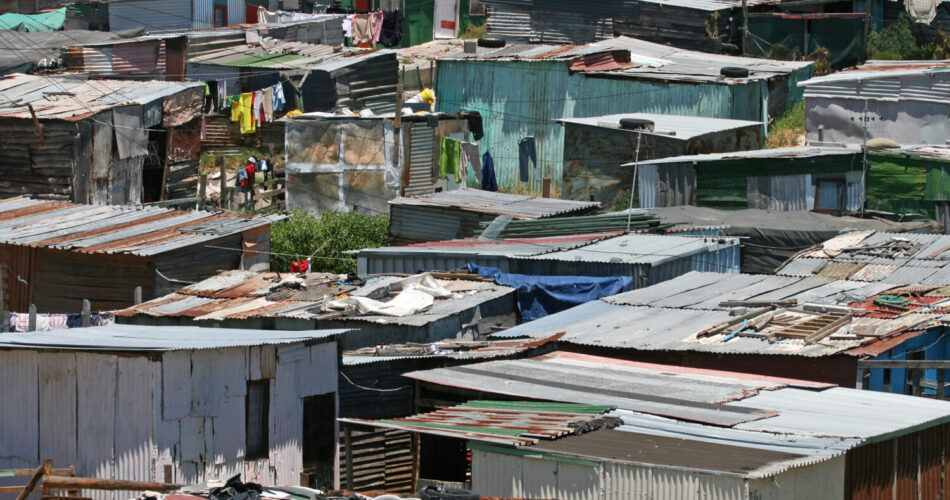
These are the economic realities that a large portion of the population faces.
South Africa's most vulnerable groups are bearing the greatest burden of poverty and social exclusion, according to Statistics South Africa (Stats SA)'s latest Marginalized Groups Indicators Report for 2024.
The report, compiled by Statistician-General Risenga Maluleke, is based on data from the General Household Survey, the Quarterly Labor Force Survey and the Governance, Public Safety and Justice Survey, which tracks progress or the lack of it across five groups: children, youth, women, older persons and persons with disabilities.
“Marginalized groups are defined as a segment of the South African population that experiences greater risk of poverty and social exclusion than the general population,” Stats SA said in the report.
It states that “the sector requires special efforts at all levels of policy planning and implementation to, among other things, inform resource allocation”.
SA's children hungry, dependent on grants and often without both parents
There were approximately 21 million children aged 17 and under in South Africa in 2024, which is 33.3% of the total population. Nearly half of these children, 45.5%, lived only with their mother, while 18.8% did not live with either parent.
Statistics SA found that 7.4% were paternal orphans and 1.5% were double orphans, figures pointing to the fragile household structures in which many children are growing up.
The economic picture is equally troubling.
Stats SA reported that “68.8% of children were beneficiaries of social grants” and “about 30.6% of children lived in households without an employed adult”, this figure rising to 48.3% in the Eastern Cape.
Hunger remains a daily reality for 16.3% of children nationally, rising to 23.3% in the Northern Cape and 22.6% in KwaZulu-Natal, with the situation for children in non-metropolitan areas being worse at 18% compared to 13.3% in metro areas.
What is more encouraging is that in 2024, 98.6% of children of compulsory school age went to school.
However, Stats SA noted that the most common reason for not attending school among children aged 7–17 was being satisfied with the level of education, while the second most common reason was not having money for fees.
Also read: 'Survival of the Fittest': 'Acts of God' Brings Complexities of Homelessness to JFF (Video)
The unemployment crisis among the youth has deepened as almost half of the people are unable to find work.
South Africa's youth population aged 15 to 34 accounts for 33.6%, making the country demographically young.
Yet this youth upsurge has not translated into economic opportunity.
Stats SA found that the youth unemployment rate in 2024 was a damaging 45.5%, with labor force participation at only 50.8%.
This burden fell disproportionately on young women: “A higher percentage of young women (45.6%) than their male counterparts (37.6%) were not in employment, education and training (NEET),” the Stats SA report said.
Hunger was also a significant concern, with 15.7% of youth living in households that reported experiencing food insecurity, rising to 26.2% in the Northern Cape.
Security was another dimension of youth insecurity.
According to Stats SA, “about 17.7% of young people felt unsafe walking alone in their area during the day in 2024-25,” with 32.3% in the Western Cape and 24% in Gauteng recording the highest proportions. At night, the figures were much worse, with 74.3% in Mpumalanga and 70.4% in Gauteng reporting feeling unsafe.
Women are heads of households but face high rates of unemployment and hunger
There were 32.2 million women in South Africa in 2024, of which 42.4% of households were headed by women aged 15 and over.
Female-headed households were most prevalent in the Eastern Cape at 48.8% and in Mpumalanga at 46.7%.
Yet heading the household does not protect women from hardship, with Stats SA finding that “female-headed households were more likely to experience hunger, with 1.1% reporting compared to 11.5% of their male counterparts”.
The labor market remained unequal. The national female unemployment rate was 34.4%, rising to 43.7% in the North West and 4.5% in the Free State.
Women in non-metropolitan areas were hardest hit, facing an unemployment rate of 37.5% compared to 31% in metros.
Stats SA noted that only 15.8% of women had access to medical aid, with coverage in Limpopo being the lowest at 10%.
Personal safety remained a serious concern. Stats SA reported that “20.1% of women reportedly felt unsafe walking alone in their area of residence during the day” and 66.2% felt unsafe at night.
Older people remain dependent on grants as chronic disease and inequality increase
South Africa's elderly population, aged 60 years and above, is expected to number 5.5 million in 2024, which is 9% of the total population.
Women form the majority at 59.8%, while the Eastern Cape has the highest recorded share of older persons at a provincial level, at 11.1%.
The white population group had the highest proportion of persons aged 60 years and older at 27.2%.
Grants dominate as the primary source of income for older persons, with salaries and wages accounting for only 22.9% of household income.
Health challenges were widespread: “Nationally, chronic diseases affected 60% of older persons,” while only 21.9% had access to medical assistance, with white older persons accounting for 70%, compared to only 6.6% among black Africans.
Stats SA further reported that 11% of elderly persons living in households reported suffering from hunger, and 6.8% felt unsafe walking alone in their neighborhood at night.
Also read: Lesufi's Sopa in numbers: Here's how much the Premier is pushing for Gauteng
Disability in SA: gaps in education and increasing burden with age.
Based on 2022 census data, approximately 6% of South Africans reported living with a disability in 2024.
The Eastern Cape and Free State recorded the highest provincial rates at 8.5% and 8.4% respectively, while Gauteng had the lowest at 4.9%.
Women were disproportionately affected, with 7% having disability compared to 4.9% among men.
The report highlighted a clear pattern: “Analysis by age groups showed that the prevalence of disability increases with age.” More than 43.1% of individuals aged 75 years and older were reportedly living with a disability.
Educational attainment among people with disabilities was low, with the majority of people aged 25 and over reporting only 25.3% had any secondary schooling, and 17.7% had no schooling at all.
Stats SA found that “Black Africans with disabilities have a higher proportion of individuals with only some primary education or no schooling as their highest level of education”, while white individuals with disabilities are more likely to have attained matriculation or higher.
Read further: These are the monthly amounts needed to rise above the poverty line in South Africa