
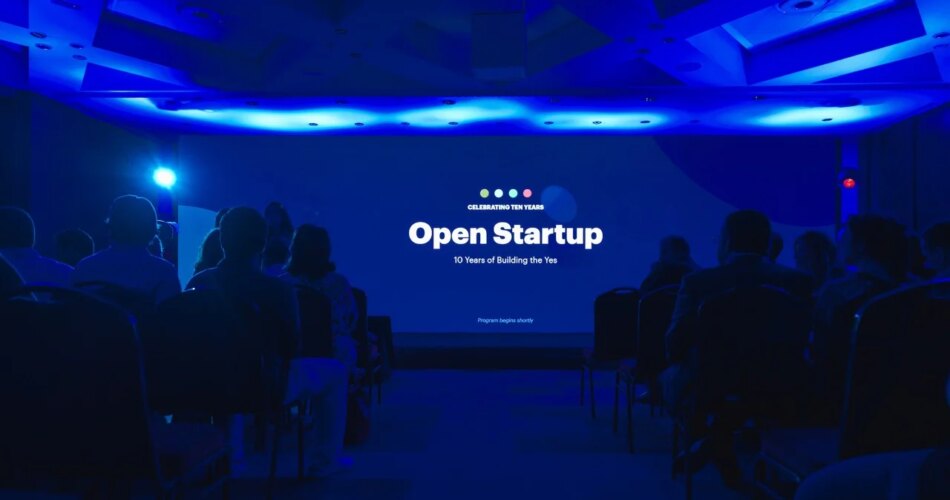
- Open Startup has just turned 10 years old. The Tunisia-born accelerator is changing directions.
- Its new plan, The Science Road, targets African “deep tech”. This means companies are built on real science, not just apps.
- For the first time, it is backing the founders with its own money. The new branch is called Openers First.
- Selected startups can receive up to $20,000. This is approximately KES 2.6 million.
- The scheme extends from Tunis to South Africa. It leverages science centers such as CERI and LaunchLab at Stellenbosch University.
- The problem: No one knows what the size of the fund is, who its backers are, or how many startups it will fund.
Open Startup, a pan-African nonprofit that has spent a decade helping founders turn ideas into companies, is celebrating its tenth birthday by shifting its focus. On June 29, the Tunisia-born organization announced a new strategic direction it calls The Science Road, aimed solely at African science and “deep tech” ventures. Along with this comes Openers First, a new investment arm that will put seed money into some of these selected ventures.
Framing is a bet: that the continent's next generation of valuable companies will emerge from laboratories, not just app stores.
What does “deep tech” really mean?
If the term is unfamiliar, it's worth taking it slow, as it sits at the center of this declaration.
Deep tech describes companies built on a genuine scientific or engineering breakthrough, rather than a clever app or new way to move money. Think medical diagnostics, new materials, biotechnology, climate hardware, robotics, or applied artificial intelligence. These businesses usually start in a university laboratory, take several years to develop, and require patient capital before they can earn a shilling of revenue.
This profile makes them harder to fund than the fintech and consumer platforms that dominate African tech. Investors prefer software that reaches the market faster and returns money quickly. So science-led founders often get stuck in what the industry calls the “valley of death”: research too advanced for grants, too early for a general investor, and too risky.
YesheyheyYeslE news
Make technology–Ish Yours Favorite News source
Star tech-ish.com on Google. We curate your daily feed.
1 Tap “Open Google” below
2 Find tech-ish.com in the list
3 tap ✓ to make us a favorite
Why does this matter beyond Tunisia?
That gap is the problem the open startup says it wants to attack, and the numbers around it explain the opportunity.
Most African venture money still flows into certain markets and certain regions. We have previously reported that Kenya led the continent with nearly US$984 million in 2025, part of a rebound to nearly US$3.2 billion, with the “Big Four” of Kenya, Egypt, South Africa and Nigeria securing 82% of all funding. Deep Tech is a thin slice of that too. according to A recent analysis in NatureAfrican deep tech ventures have raised more than US$3 billion over the past decade, accounting for about 15% of the continent's startup funding, while the research systems that nurture them remain woefully weak.
In other words, the science is there, the appetite is growing, but the pipeline from lab to company is broken in many places at once. This is the space that Open Startups is trying to occupy.
Who is Open Startup?
Open Startup began as a university entrepreneurship competition in Tunisia in 2016 and has evolved into a continental platform that connects founders with investors, corporations, universities and policymakers. The organization says it has worked with more than 3,000 founders and more than 1,000 startups in more than 20 African countries, supported by a community of mentors, advisors and trained coaches.
A note on those figures: Open Startup's own website currently lists more conservative numbers, citing more than 600 startups supported, including more than 40 deep tech ventures. The difference most likely reflects different counts, with larger figures including lighter-touch engagements like competitions and bootcamps on top of full acceleration. We have sought clarification from the organization.
Its founder and chief executive, Dr. Houda Ghozi, is a former business strategy professor with a doctorate from the University Paris Dauphiné, and has long argued that Africa should add value to its own science rather than export raw capacity.
How is Science Road structured?
Science Road transforms existing startup programs into an acceleration platform with two clear lanes. The first is for very early, pre-seed innovators who are trying to turn research into something investable. The second is for seed-stage startups that are ready to scale a proven technology.
Running beneath it is Openers First, a new investment arm that aims to bridge the awkward gap between the two stages where many science ventures stall. A linked Science Road program listing indicates that selected startups can become eligible for small investment tickets of up to US$20,000 to support their seed fundraising, which is approximately KES 2.6 million at current rates. This is minor money, but for a pre-revenue science venture it could be the difference between a prototype and a pitch.
Geographically the scheme extends from Tunis to South Africa. The open startup says it will deepen work with South African partners including CERI, Stellenbosch University and LaunchLab. CERI, the Center for Epidemic Response and Innovation, is a Stellenbosch institute led by Professor Tulio de Oliveira, known globally for genomic surveillance during the COVID-19 pandemic. LaunchLab is the university's startup incubator, which last year opened a dedicated biotech lab for science founders. These are exactly the kind of lab-to-market bridges that have deep technical needs, and they are still rare on the continent.
money question
It is important to be clear about what was announced and what was not.
Open Startups has not disclosed the size of the Openers First Fund, who is backing it, or how many ventures it expects to finance. Its previous work has relied on a long list of partners, including KfW's AfricaGrow, AfricaInvest, Digital Africa, the European Union, the United States Department of State, and universities like MIT and Columbia, so the ability to convene serious institutions is real. We've covered plenty of similar efforts before, from Google's AI-focused accelerator groups to Microsoft-linked programs, and the recurring lesson is that it's easy to provide advice and visibility, while it's not easy to provide patient capital.
Ghozi herself sees part of the challenge as cultural. talking to CNBC Africa Around the launch, he estimated that there are only 300 to 500 deep tech startups in Africa today, concentrated in South Africa, Nigeria, Ghana, Tunisia and Morocco, and said that very few scientists still see starting a company as a realistic path. He argued that role models matter as much as money at this level.
So the practical solution is straightforward. The decade-old African accelerator is publicly betting that science enterprises are the continent's next growth engine, and putting its own small investigations behind that vision. What remains to be seen now is not the rebrand but the money: how big Openers First proves to be, how many science founders it actually funds, and whether big investors follow it into a corner of African tech that is easy to admire and hard to finance.
How MultiChoice hurt Showmax to save DStv
technologyIsh