
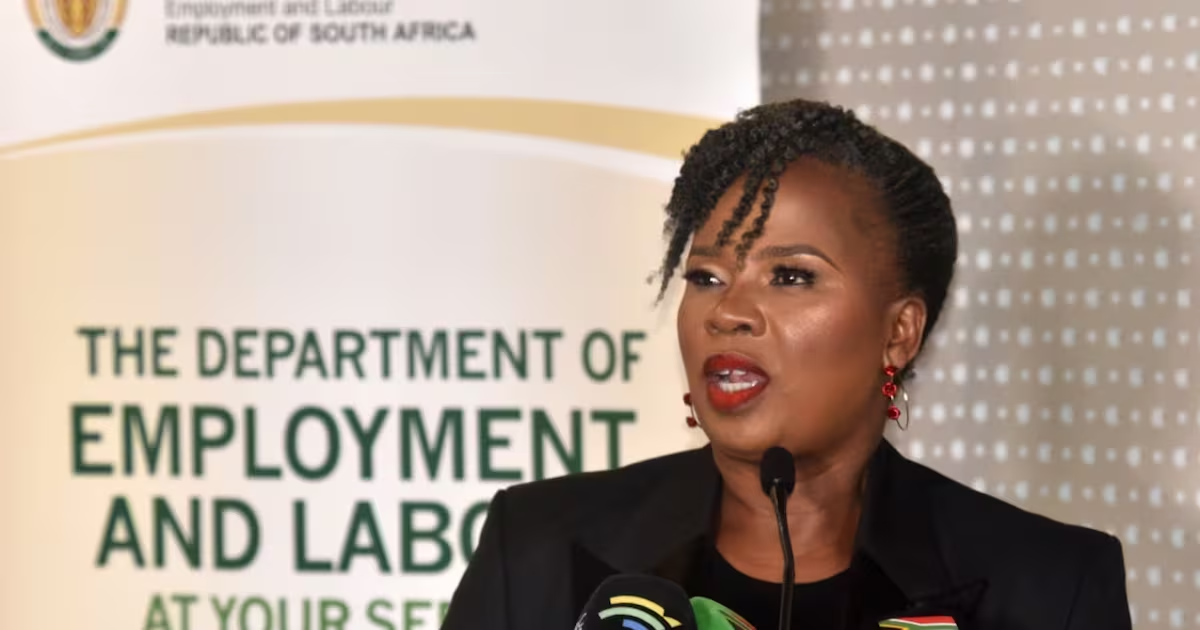
The Department of Employment and Labor has estimated that President Cyril Ramaphosa's proposal to appoint 10,000 additional labor inspectors could cost the medium term expenditure framework (MTEF) about R10 billion, according to a written parliamentary reply.
The figures were revealed in response to a question by Employment and Labor Minister Nomakhosazana Meth from Andile Nchabeleng, MK party MP, about the feasibility and cost implications of the plan announced during the State of the Nation address on 12 February.
In his reply to the National Assembly, Meth said the expansion of the inspectorate is aimed at addressing long-standing deficiencies in labor inspection and enforcement across the country.
Administrative data collected by the inspectorate over almost two decades shows that only 2%–5% of workplaces in South Africa have been covered through advocacy, inspection and enforcement activities.
Meth said the scale of the labor market far exceeds current inspection capacity. He cited several indicators of the number of workplaces operating.
These include Stats SA's quarterly employment survey, which uses approximately 20,000 VAT-registered businesses in the formal sector, and the Employment Equity Commission report, which records 29,269 named employers that submitted employment equity reports in 2024.
Other estimates referred to by the department include approximately 4 million registered companies recorded by the South African Revenue Service and approximately 2.7 million small, medium and micro enterprises estimated by the South African Chamber of Commerce and Industry.
The department also cited International Labor Organization guidelines, which recommend a ratio of one labor inspector for every 10,000 workers in developing economies. Excluding workers in the informal economy and some SMMEs, there are currently approximately 16.8 million employed people in South Africa, which further increases the scale of the surveillance challenge.
Meth said the appointment of an additional 10,000 inspectors would “significantly improve the inspectorate's operational reach and impact on the South African labor market”. The department said the increase will help meet the growing demand for its services, which also include the regulation of undocumented migrant workers.
Financial estimates included in the reply indicate that employing 10,000 inspectors would cost approximately R3.7 billion per year in salaries and wages. Over the MTEF period, total costs are expected to reach approximately R10bn.
The estimated expenditure will include basic salary, holiday pay and gratuity, performance-based allowances and bonuses, statutory contributions such as pension and medical aid, as well as tools of the trade required by inspectors.
The department said funding for the initiative is expected to come from the National Treasury, which typically finances commitments announced by the President during his State of the Nation address.
Meth also confirmed that a detailed project and implementation plan is still being developed. Once finalized, the outline will be presented internally for approval before introduction. The department indicated that the implementation framework is expected to be completed by March 13.