
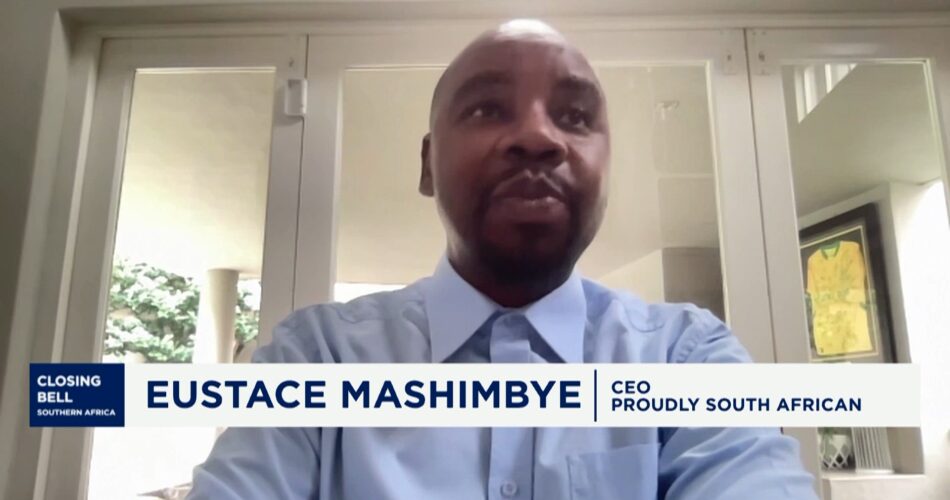
The 'Buy Local' movement is rapidly gaining momentum as South Africa prepares to host the upcoming Buy Local Summit and Expo. At the forefront of this initiative is Eustace Mashimbe, CEO of Proudly South African, who has stressed the critical importance of localization to the economic sustainability of the country.
During an exclusive interview, Mashimbe outlined the multi-pronged approach Proudly South African is taking to advance this agenda. He underlined that the campaign is all-encompassing, focusing on four key areas: consumer education, private sector participation, public sector procurement and access to local products.
Consumer education is the cornerstone of this strategy. As international retailers flood the South African market with competitive pricing, local consumers find themselves in a bind, often forced to prioritize cost over the local economy. Mashimbe stressed the need to change this mindset and highlighted the important role of broadcasters and digital platforms in spreading the buy local message. “We are grateful to those who have supported our campaign, including the Department of Trade, Industry and Competition (DTIC) and private sector corporates,” he says.
A key gap identified by Mashimbe is the lack of strong legislative support for local procurement. Recent legal setbacks have undermined efforts to give preference to local producers in public sector procurement – an area where enhancement could significantly benefit the local economy. “We hope that the private sector and government policymakers will address these challenges at the summit,” Mashimbe commented.
Despite the challenges, significant progress has been made in the private sector. The upcoming summit will see twelve new corporate commitments to increase local sourcing – indicating a growing trend among businesses willing to 'ring-fence' spending for local goods and services.
However, localization efforts must contend with macroeconomic constraints. Geopolitical tensions and illicit trade practices such as counterfeit goods and under-invoicing pose significant threats. These factors have put pressure on both local and international corporations to modify business practices in ways that sometimes weaken local commitments.
In addressing these broader challenges, Proudly seeks greater alignment between South African government policies and private sector initiatives. In particular, the impact of offshore e-commerce retailers such as Sheen and Tim has caused significant concern due to job displacement. Studies estimate that without intervention, job losses could reach 34,000 by 2030. Mashimbe has called for increased tariffs and VAT on low-value parcels to mitigate these impacts.
The upcoming summit will tackle illicit trade through a series of expert panel discussions featuring insights from international guests, including a representative from Brazil, to share best practices in combating counterfeit goods. By collaborating with the South African Revenue Service (SARS) and other government agencies, Proudly South African aims to promote policies that support local products rather than reducing domestic market share.
Concluding the interview, Mashimbe expressed optimism about the summit's potential to inspire further action from both public bodies and private enterprises to embrace the localization imperative. “A lot of work is being done and a lot remains to be done. But with collective effort and policy support, there is a lot of room for progress,” Mashimbe said.
Proudly South Africans hope that the dialogue at the summit will lead to actionable commitments and policy changes to strengthen the country's economic future while protecting its industries and workforce.